Who could I write one true sentence to today?
Who is still waiting for their thank-you?
Every Thanksgiving leaves something behind. There's the turkey in the fridge, the pie with two slices missing, and, if you've been doing this program, a handful of leaves still hanging on the tree. Those leaves are the Left Overs this chapter is about: notes written for people who weren't at your table.
Left Overs is the name for the days between Thanksgiving and November 30. Because Thanksgiving moves around the calendar, this stretch is one day long in some years and seven days long in others. Everything from the first Thursday of November to Thanksgiving fits into a fixed 21 days, so all the change from year to year lands here, at the end of the month, in a block that can stretch or shrink. It's the calendar's shock absorber.
Think of these days as the Participate days of Thanksgiving's unit: Thanksgiving Day started the giving, and Left Overs finishes it. In most years there are three or more of them, which gives the end of November the same three-one-three shape as the weeks before it: three days leading in, a Celebrate day, and three days of giving.
The rest of November looks like this:
The Left Overs days (one to seven, depending on the year). These are Participate days, and they run in order: Day 1 is always the Friday after Thanksgiving. Each one has its own reading, and each one ends with finishing and sending some of the notes that didn't reach the table. A short year uses the first days and saves the rest for another November.
November 30: The Pivot. The last notes go out, the leaves come down, the trunk is cut down to a stump, and the house gets ready for December.
Each Left Overs day has the same three parts as every other day this month: a picture for the heart, a point for the head, and a practice for the hands.
John Kralik started 2008 in about as rough a place as a person can be and still get out of bed. He was a lawyer in Pasadena, California, and his small law firm was losing money. He was going through his second divorce, he was close to bankruptcy, and he was living in a small apartment he could barely afford. The woman he had been dating had just ended things, and his relationships with his own kids were strained.
On New Year's Day he took a walk in the mountains above Pasadena. Somewhere on that walk, a thought came to him that he later described as an inner voice: "Until you learn to be grateful for the things that you have, you will not receive the things that you want." So he decided to try something small. He would write one thank-you note every day for a year.
The first note was for his oldest son, for the coffee maker he had given his dad for Christmas. Kralik didn't have his son's address, so he called to ask for it, and his son offered to take him to lunch. At lunch, his son paid back a $4,000 loan that Kralik had forgotten about. Kralik went home and wrote a second note, this one for the lunch.
The notes kept coming: family, friends, coworkers, clients. One morning, out of ideas, he was standing in line at his neighborhood Starbucks when the barista, Scott, greeted him by name the way he did every day. Kralik wrote Scott a note. Scott opened it expecting a complaint.
The notes didn't fix everything, and nobody can say how much of what came next they caused. But by the end of the year Kralik's relationships with a lot of the people in his life had gotten better, and in 2009 he was appointed a judge on the Los Angeles Superior Court, something he had wanted for most of his life. He wrote a book about that year, 365 Thank Yous.
Kralik's advice for a good note is short: be sincere, and find one true sentence that means something. He wrote cards, by hand, one a day, and most of them ran only a few lines.
That's what these Left Overs days are for. Thanksgiving is over, and the tree probably still has some leaves on it: notes started and never finished, photos still waiting for words on the back, names you meant to get to. None of them needs a long letter. One true sentence is enough for a thank-you note.
Before you write, stand in front of the tree for a minute and think back to Thanksgiving morning. Which note you received surprised you most? Chances are it was short and true, and somebody took the time to write it down.
Today, write one note with one true sentence in it, and send it.
Stand in front of the tree and take stock of what's left: leaves still blank, photos waiting for words, notes written but not yet sent.
Pick one and finish it today. Start with the line from its week if that helps ("Thank you, ___, for making my life better," or "Thank you, ___, for making me feel valued"), then add one true sentence about what they did.
Mail it or deliver it today.
In your gratitude journal, write down one moment from Thanksgiving Day you don't want to forget.
Kids' story: read "One True Thing" together, from The Thank-You Adventure in Wanderful Woods.
Time: 15 to 20 minutes, plus the delivery.
With kids: ask, "Who should get a thank-you that hasn't gotten one yet?" A child can draw the picture and tell you the one sentence to write.
If today is full: for a lot of families, the day after Thanksgiving means travel, shopping, or leftovers with relatives. One sentence fits in a car or a checkout line. So do the spoken thank-yous you started counting on the Invisible day: the cashier, the server, and whoever did the dishes all count.
In the shortest years: this may be the only Left Overs day. It covers what matters most, so start here.
Hello, my wonderful story friends! Last time, at the Thankful Feast, the Great Big Present Swap came tumbling down, and Ricky laughed first. Then Mr. Moose and Mr. Monkey lit a little squash lantern from the last of the Feast fire. Today is the day after, and Ricky notices something about the Wishing Tree.
Have you ever wanted to say thank you, but you didn’t know how to say it all? Let’s go see what Ricky is thinking about.
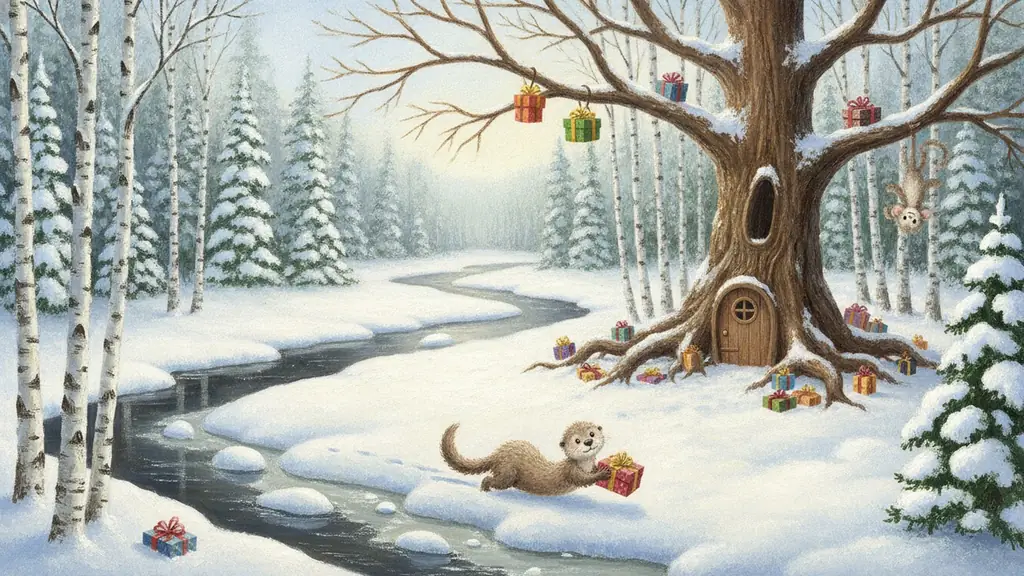
The morning after the Thankful Feast, Sunny Square looked like it had snowed presents.
There were presents on the roof of the Moose home. There were presents in the branches of the Wishing Tree. There was a present out on the ice of Rainbow River, and an otter came sliding across on her belly, whiiiiish, picked it up, and slid it back again, just for fun.
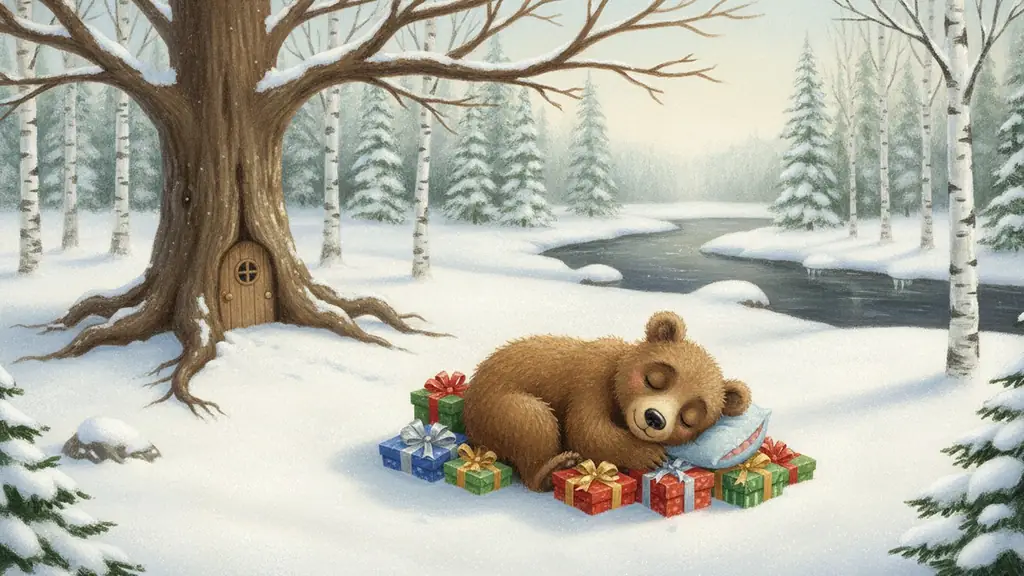
And in the middle of everything, in a great big heap of presents, lay Bruno, fast asleep, with one present for a pillow and two more for a blanket.
He opened one eye. “I got my wish,” he said happily. “A nap.”
“Haw haw haw,” he added, and went back to sleep.
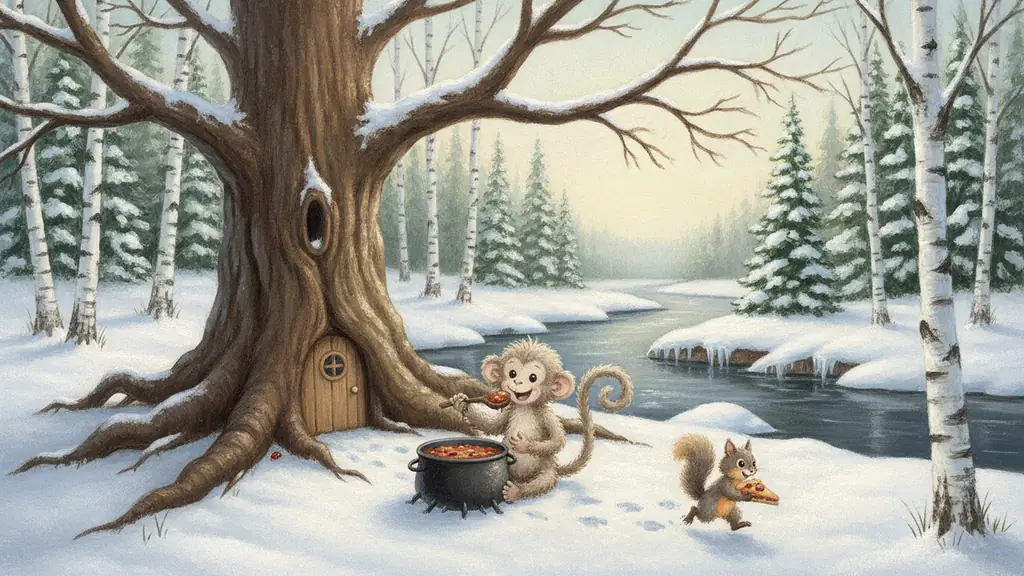
On the lowest branch of the Wishing Tree, the little squash lantern was still glowing. Its leaf-shaped lights flickered gold across the snow.
Mr. Monkey was eating leftover stew for breakfast, cold, straight out of the big pot, when Sammy zipped by with a slice of leftover pie.
“Hey! What’s the best thing to put in a pie?” And she was gone.
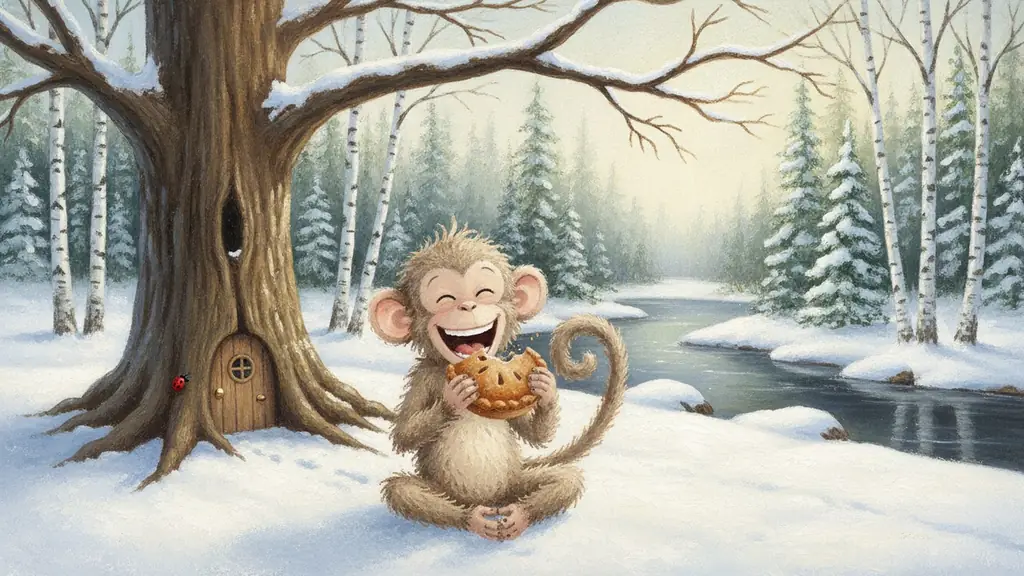
Mr. Monkey looked at his spoon. He looked at the pie crumbs she’d left behind. He thought about it all through his stew.
Then from the top of a tree came her voice: “YOUR TEETH!”
“Hee hee hee!” went Mr. Monkey, and he put his teeth right into the last bite of pie.
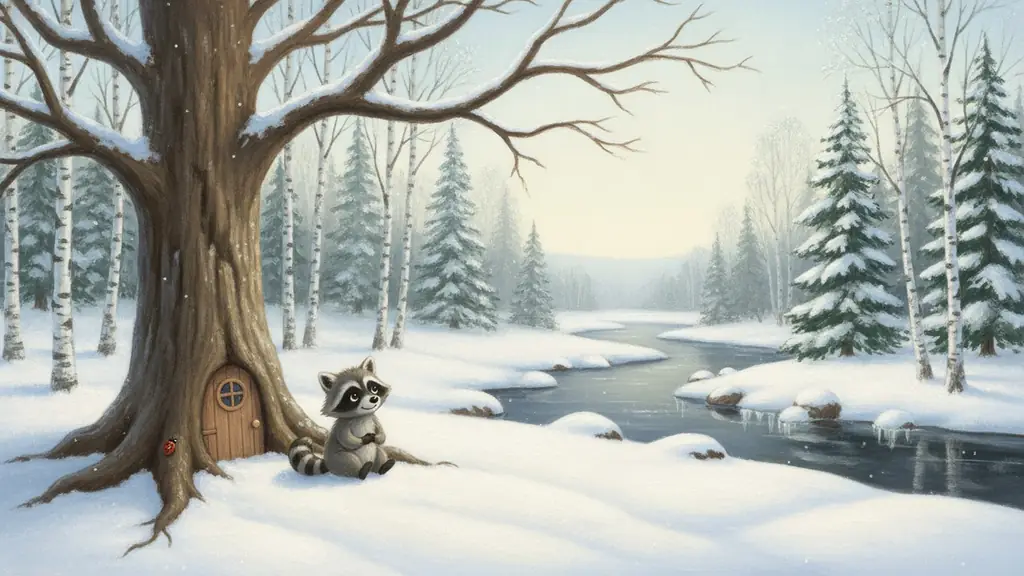
That’s when he noticed Ricky. Ricky was sitting all by himself under the Wishing Tree, looking up.
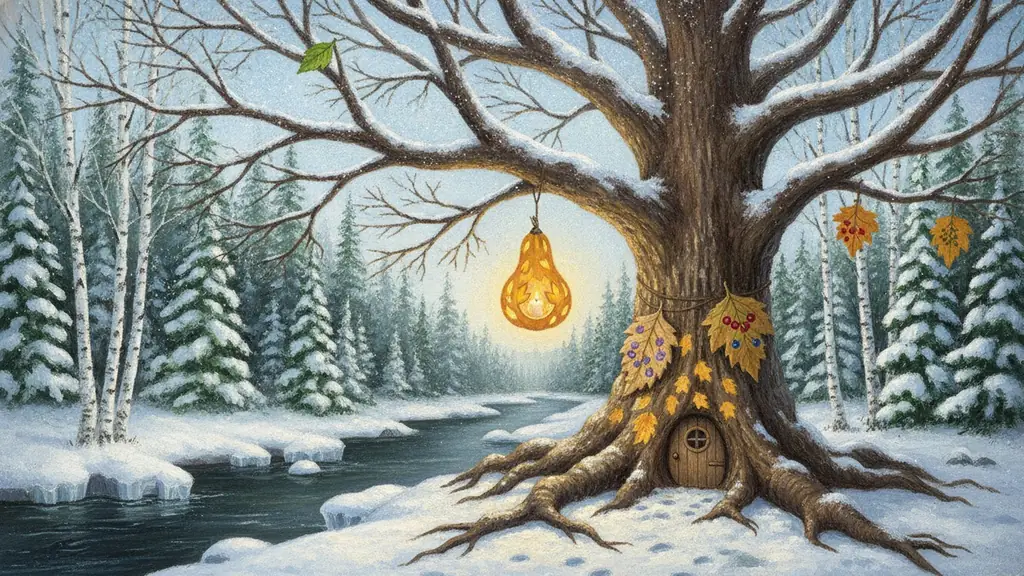
Most of the painted leaves were gone now. Everybody had taken theirs down at the Opening. But a few were still left: the leaves for the things nobody notices, the treehouse and the woodpile and the cellar. The maple leaf, for the maple. The birch leaf, for the spring. And way up at the very top, the leaf with no name.
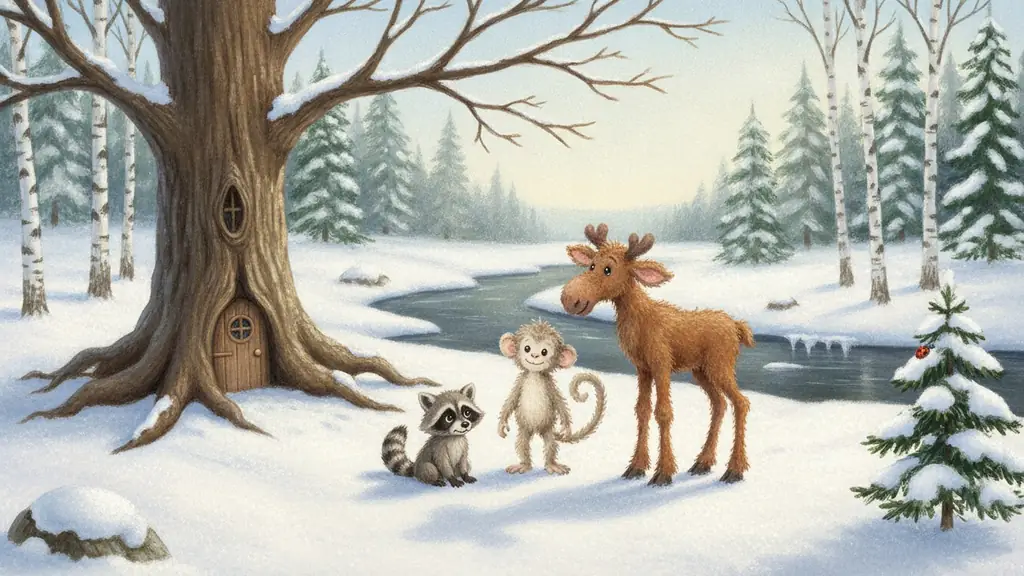
“Ricky?” said Mr. Monkey. “What are you looking at?”
“There aren’t any from me,” said Ricky quietly.
Mr. Moose came over and looked up, too.
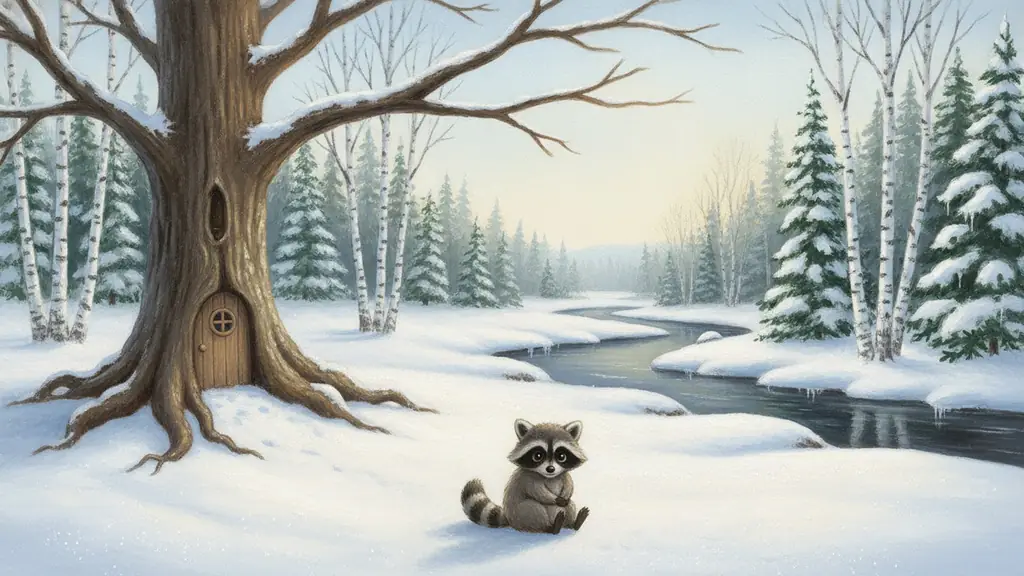
“Everybody made me leaves,” said Ricky. “Two leaves. One with me in the presents, and one with everybody in a row. I looked at them all night.” He hugged his knees. “And I didn’t make one single leaf for anybody. Not one. I was too busy with the Swap.”
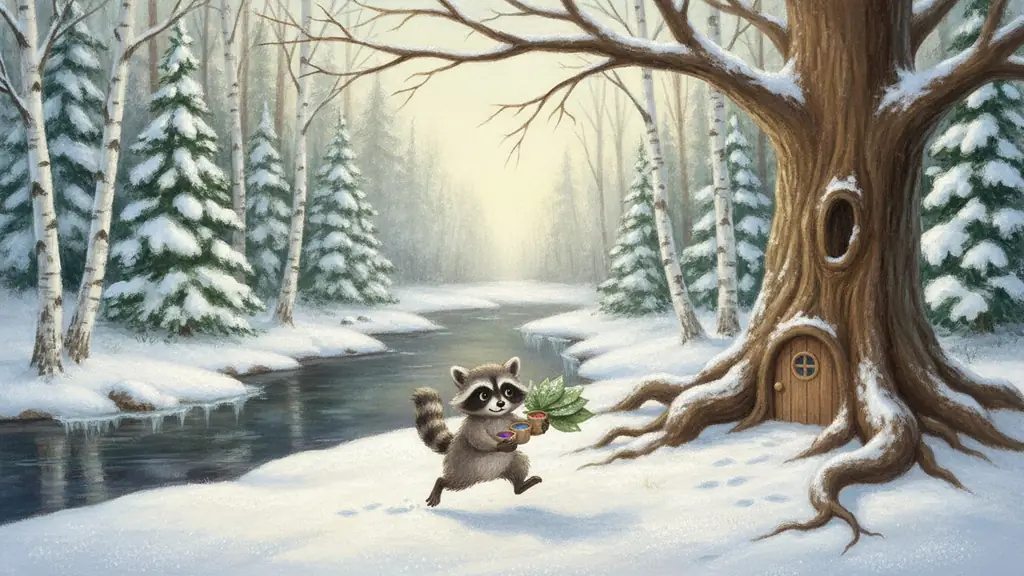
Then he jumped up. “So I’ll make them now! For everybody! Right now! And they’ll be the best leaves in the whole history of leaves!”
He ran and got the paint and a big pile of leaves, and he started making rules. “Rule one. Every leaf has to say EVERYTHING.”
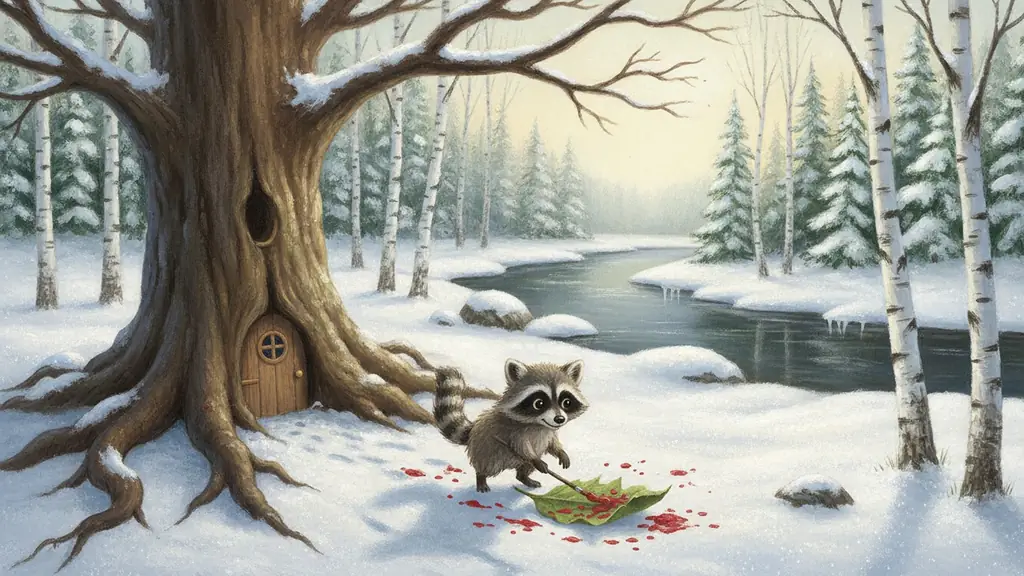
He picked up a leaf for Mr. Moose and started painting. He painted Mr. Moose catching the rules on his antlers. He painted Mr. Moose measuring forty-seven pinecones tall. He painted the willow, and the river, and the bark slide, and Bruno, and all the presents, and the frog, and the Feast fire, and the snow.
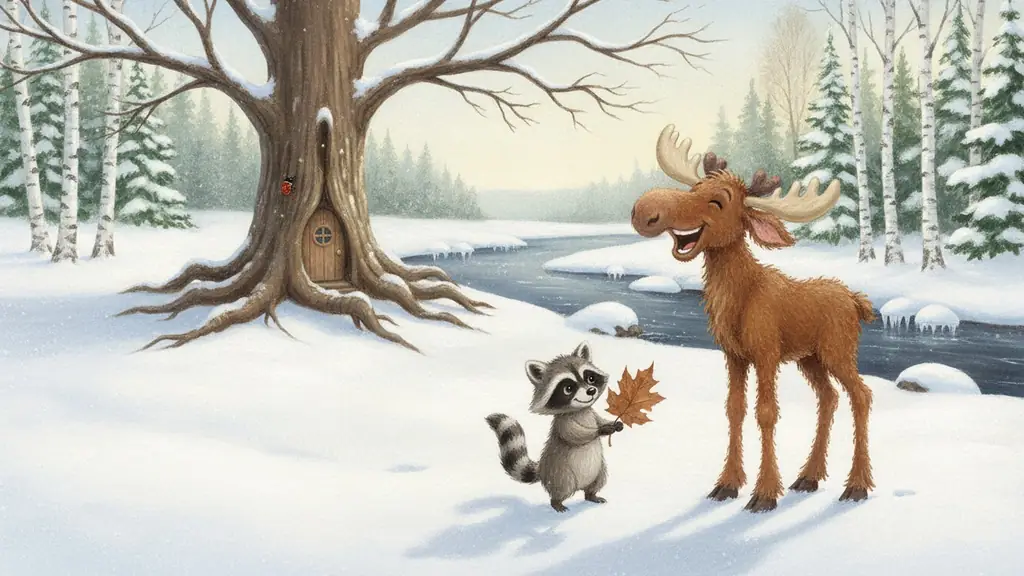
He painted so much that when he was done, the whole leaf was one big brown smudge.
Ricky held it up. “That’s you,” he said. “And everything.”
“Which part is me?” asked Mr. Moose.
Ricky looked at it. “All of it.”
“Ha-ha-ha!” laughed Mr. Moose.
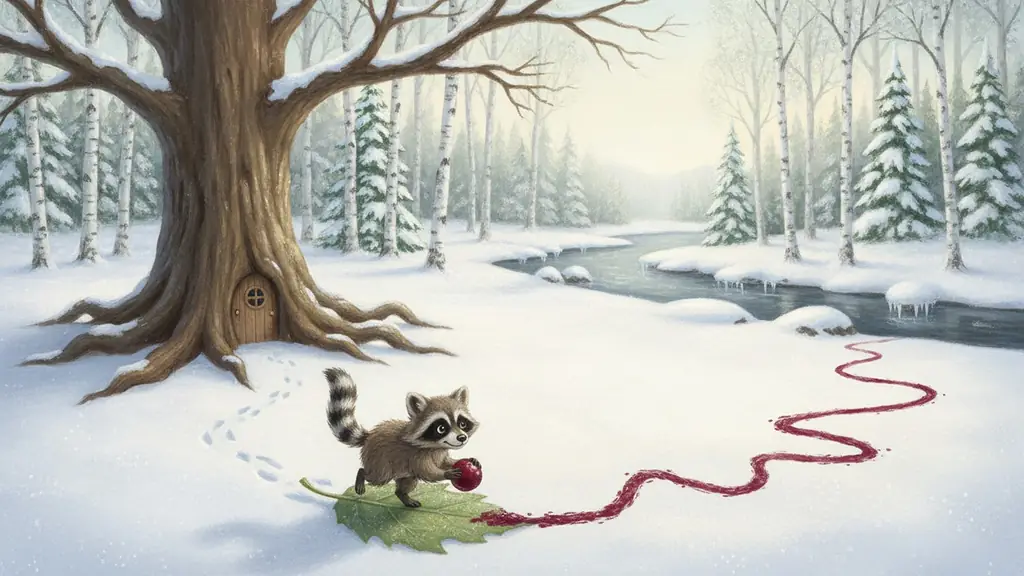
So Ricky tried another one. This time, he decided to say it all in words. “Thank you, Mr. Moose, for catching my rules, and for being my Sign-Up Helper, and for holding the cards up, and for…” He painted the words as fast as he could. They went across the leaf. They went off the end of the leaf.
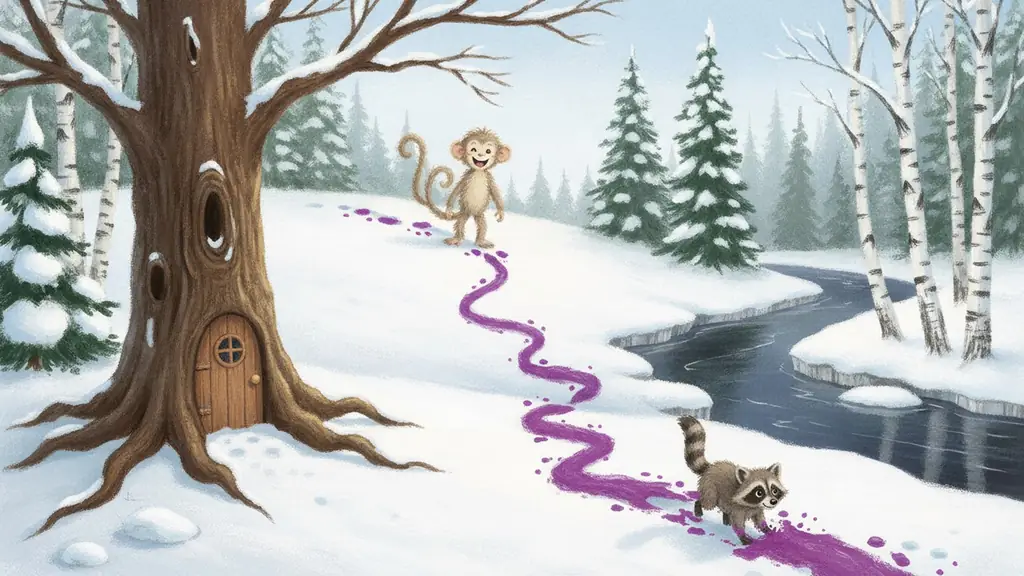
They went across the snow and down the hill and halfway to the river, a long, wiggly line of berry paint, with Ricky crawling along at the end of it, still painting.
He looked up from the bottom of the hill. “I’m not done yet.”
“Hee hee hee!” went Mr. Monkey from the top.
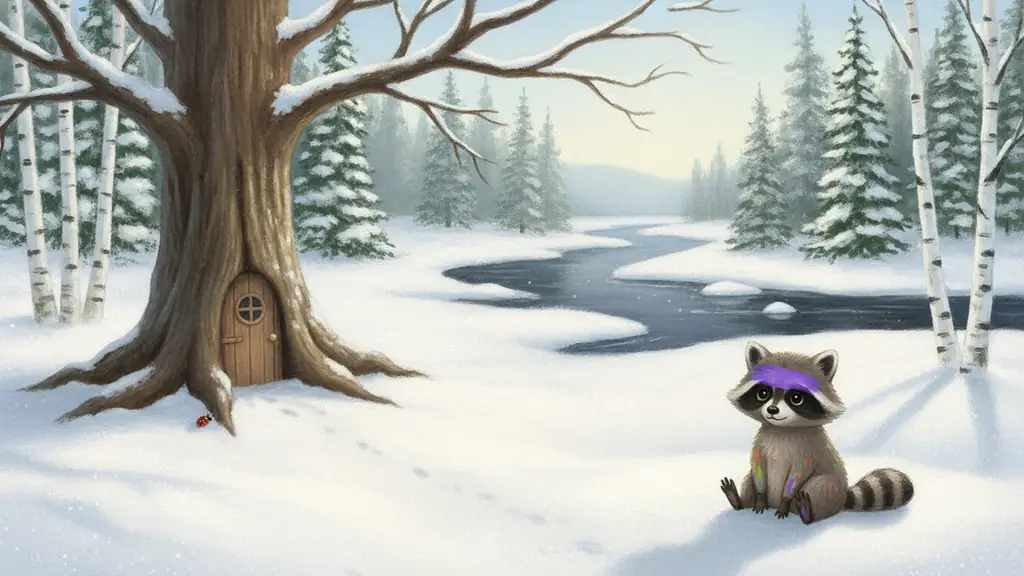
Ricky sat down in the snow at the end of his long line of words. There was paint on his paws. There was paint on his tail. There was a big purple stripe right across his little black mask.
“It’s too much,” he said. His whiskers drooped. “I can’t say everything. There’s too much everything.”
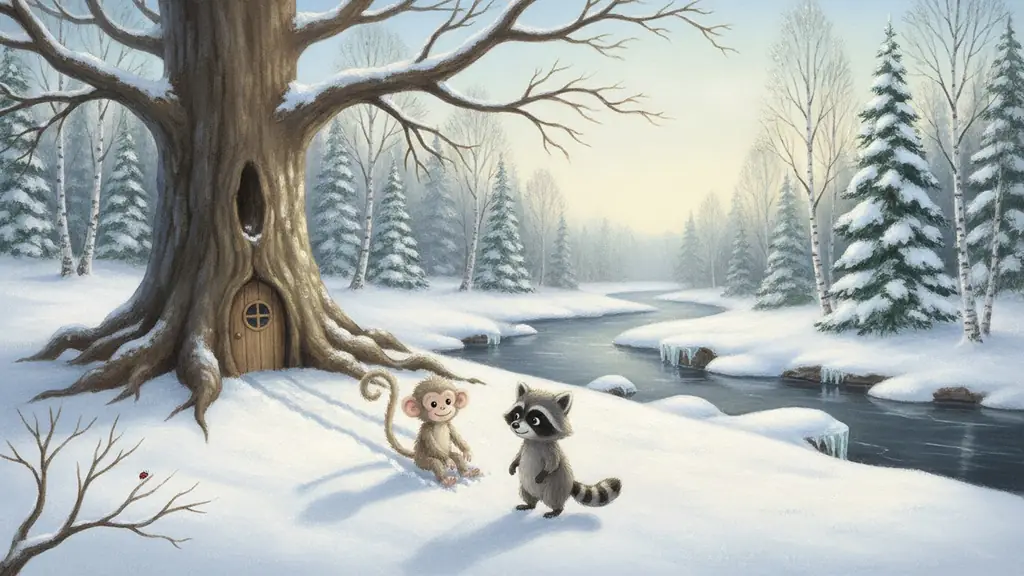
Mr. Monkey felt it in his chest. Ricky wanted so badly to say thank you, and every time he tried, it got bigger and harder. Mr. Monkey slid down the hill and sat right next to him in the snow.
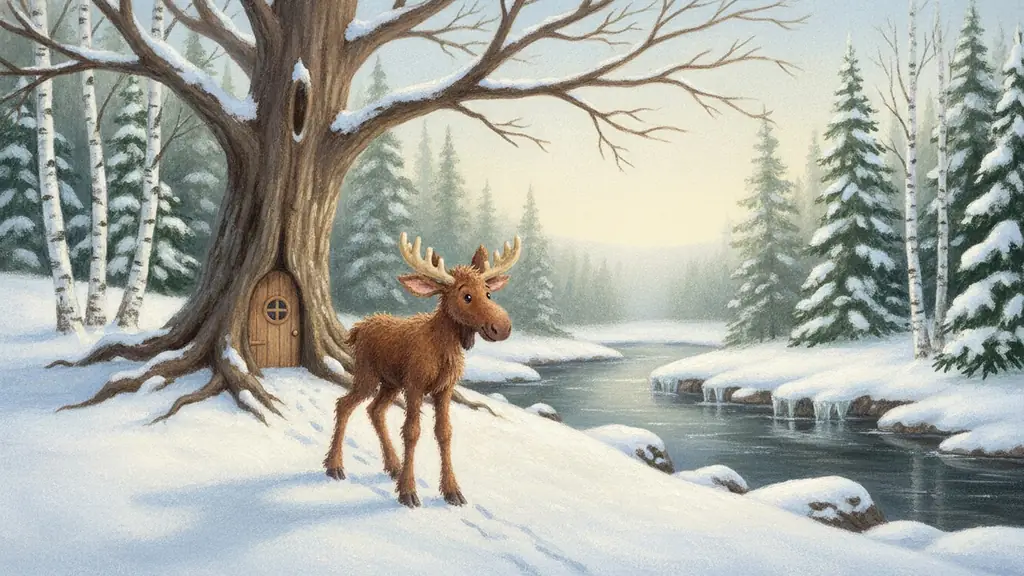
Mr. Moose came down slowly, thinking. He thought about Ricky’s two leaves, the ones Ricky had looked at all night. What was on them? Shiloh had painted just one thing: a row of friends, with nobody left out. Mr. Monkey had painted just one thing: Ricky making presents instead of swinging.
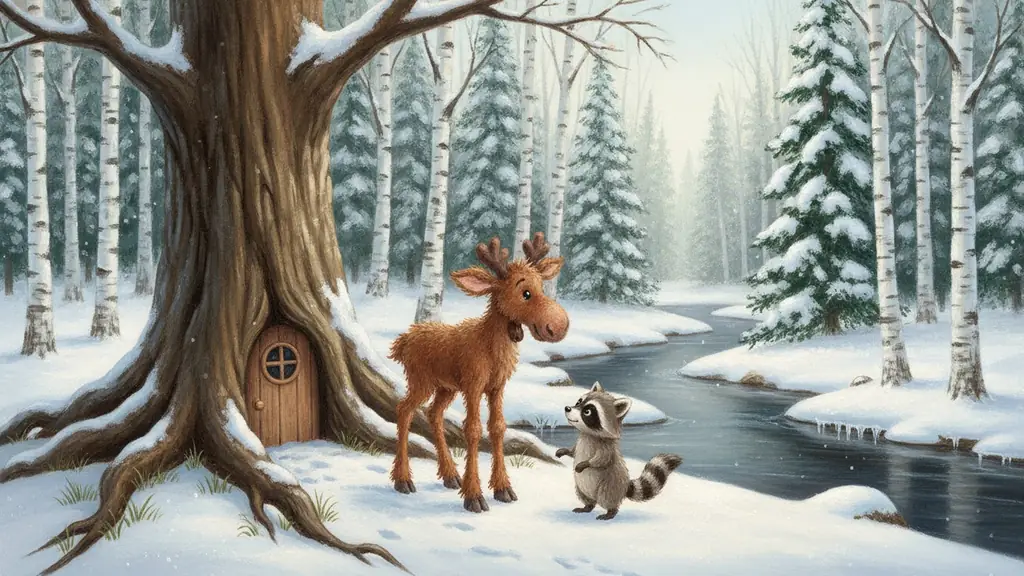
“Ricky,” said Mr. Moose. “Your leaves only had one thing on them each. And you looked at them all night.”
Ricky thought about that. “One thing,” he said.
“One true thing,” said Mr. Moose. “That’s enough.”
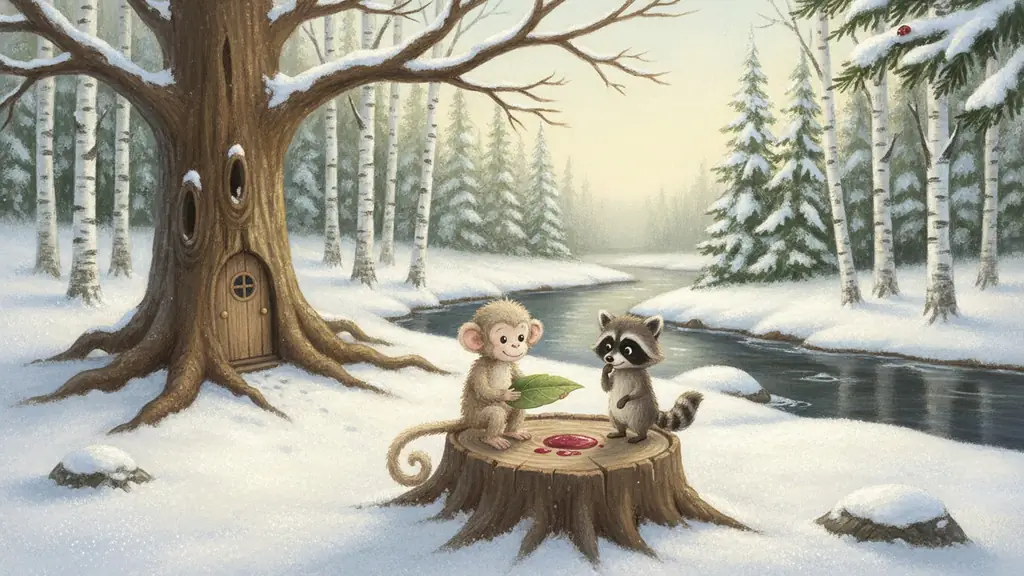
They walked back up the hill, past the long wiggly line of words. Mr. Moose found a fresh leaf, a big smooth one. Mr. Monkey held it flat on the stump. And Ricky dipped his paw in the berry juice and thought, very hard, about just one thing.
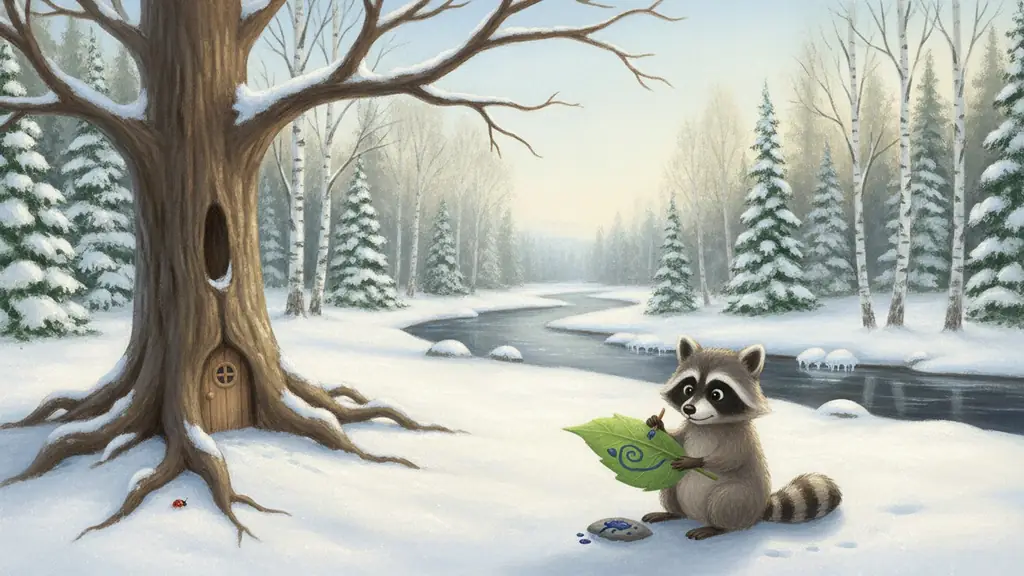
For Mr. Moose, he painted a moose standing in the river with a long, wet roll of bark hanging off his antlers. Just that.
For Mr. Monkey, he painted two friends swinging out over Rainbow River on the same vine. Just that.
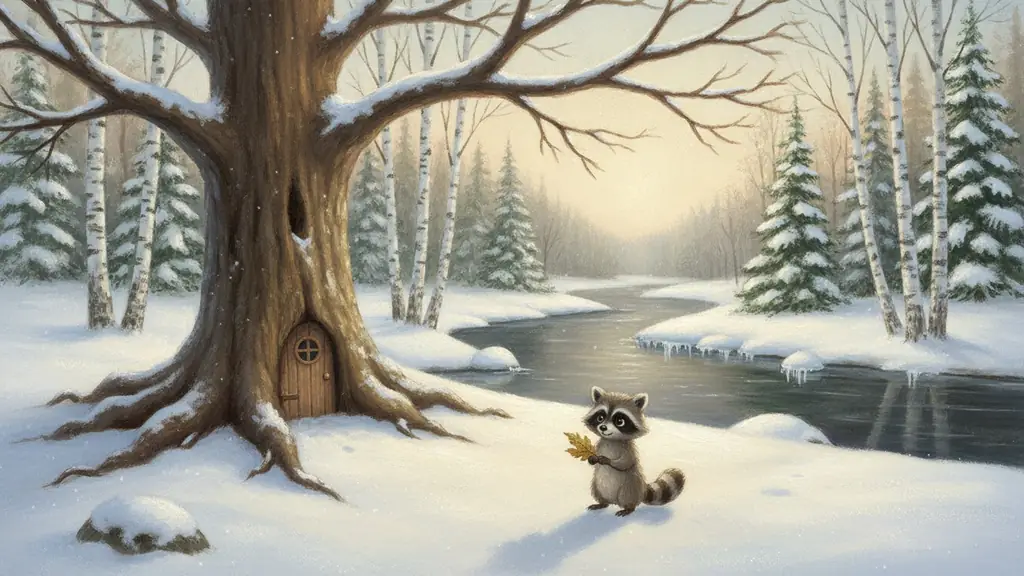
Then he picked up a third leaf, and stopped. “The hedgehogs,” he said. “They walked all the way from past the waterfall to bring their present. In the dark. They had to start home before the Feast was even over, because it’s such a long way. They came the farthest of anybody.”
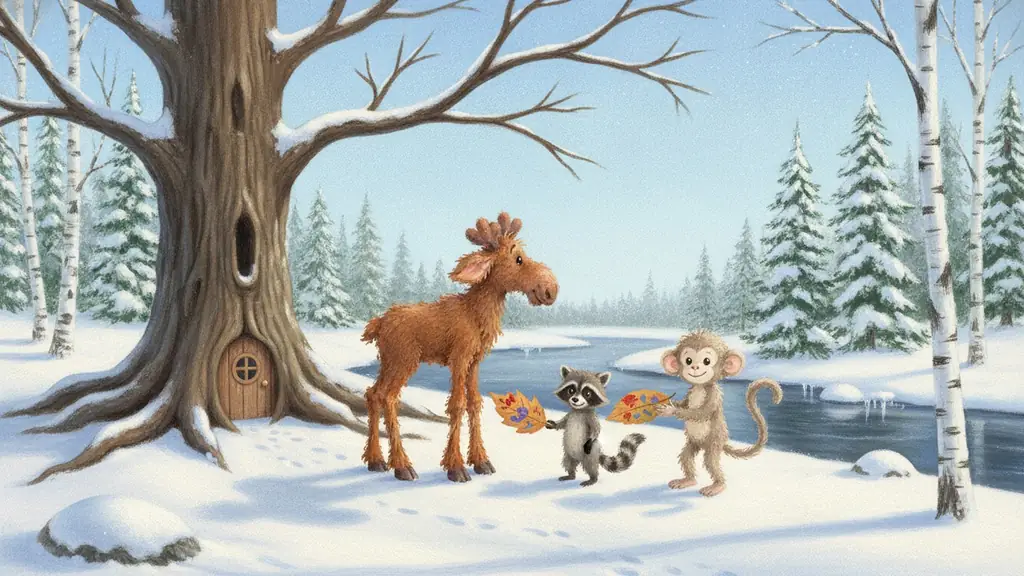
He painted a little hedgehog family walking along a long, long path, with a present on top of their spines. Just that.
When the leaves were dry, Ricky stood up. He didn’t tie the first two on the tree. He walked right over and held them out.
“For you,” he said. “And for you.”
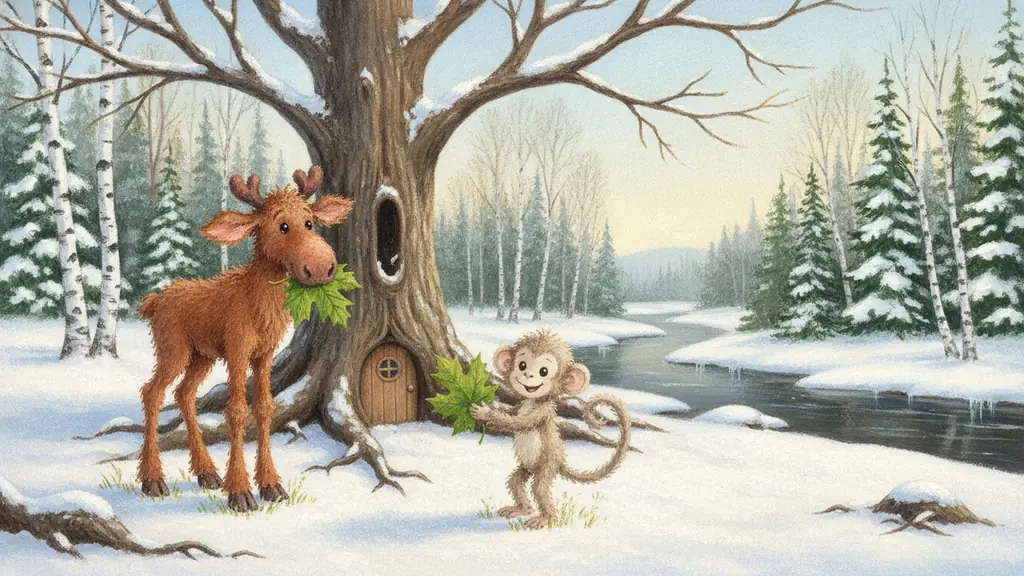
Mr. Moose and Mr. Monkey turned the leaves over and looked.
Mr. Monkey’s whole face lit up. “That’s us! On your vine!”
Mr. Moose didn’t say anything. He just looked at the bark roll on the antlers and smiled, slowly, all the way.
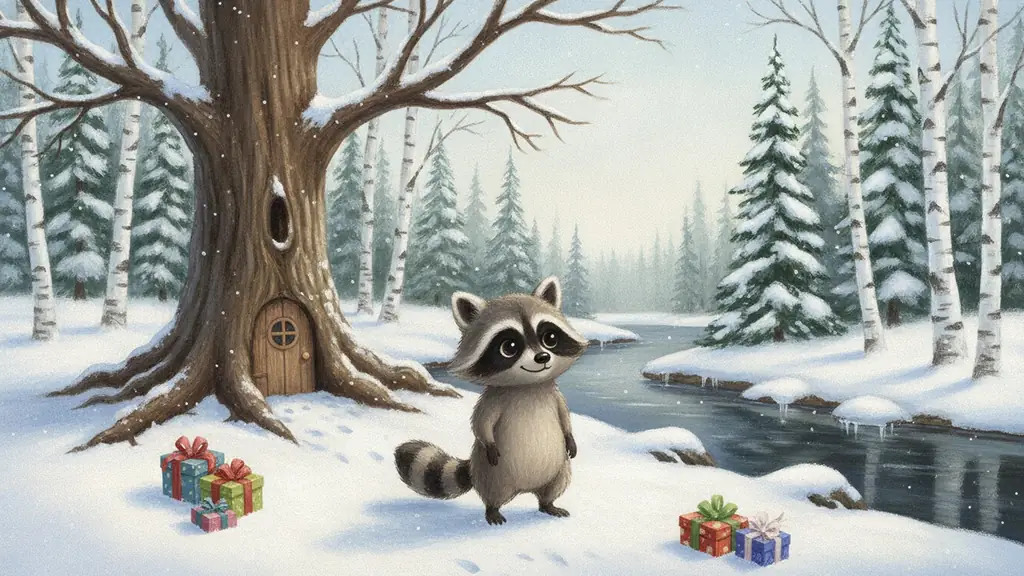
And Ricky watched their faces. He watched them for a long time. Something warm went all through him, from his ears down to his painty paws.
“That felt better,” he said slowly, “than the whole Swap.”
Then he turned around and looked at Sunny Square, all covered in presents. Presents on the roof. Presents in the tree. Presents under Bruno.
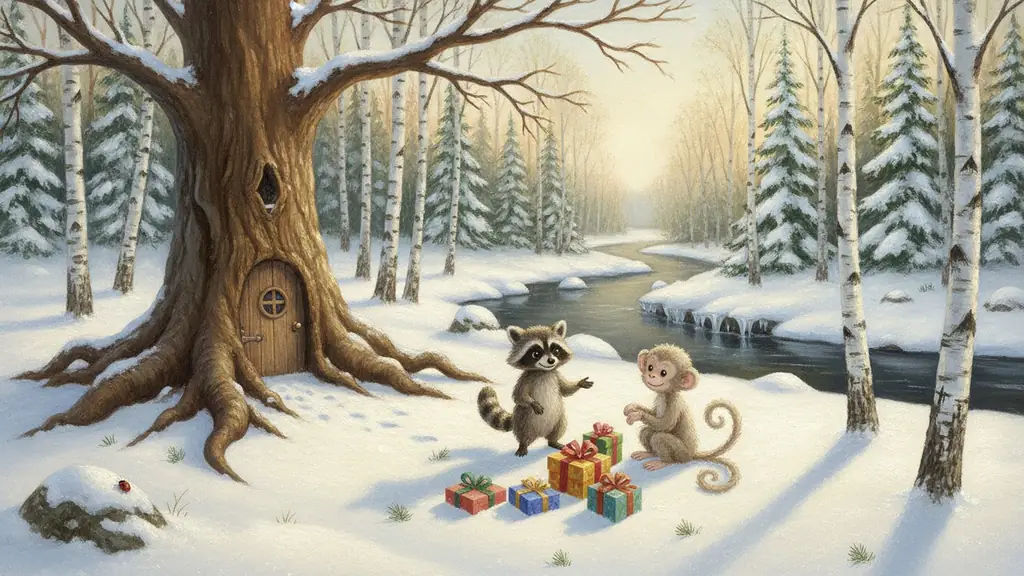
“What if we did it the other way?” said Ricky.
“What other way?” asked Mr. Monkey.
“The Swap was, everybody gives one and everybody gets one back,” said Ricky. “But the leaves aren’t like that. You just give them. You don’t get one back.” He looked at all the presents. “What if the presents were like the leaves?”
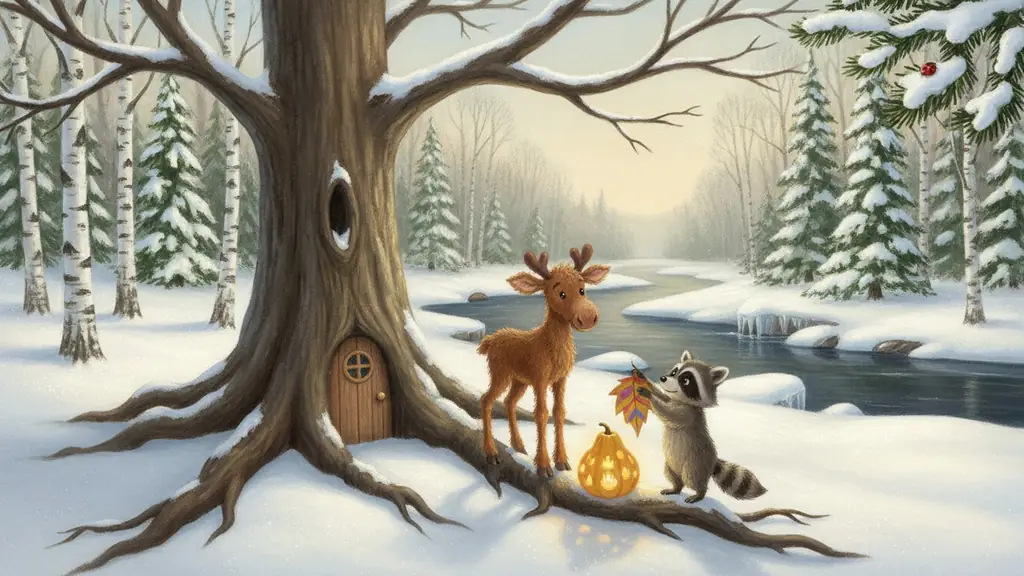
Mr. Moose looked at the presents, too. “Then who would get them?” he asked.
Ricky scratched his painty head. “I don’t know yet,” he said.
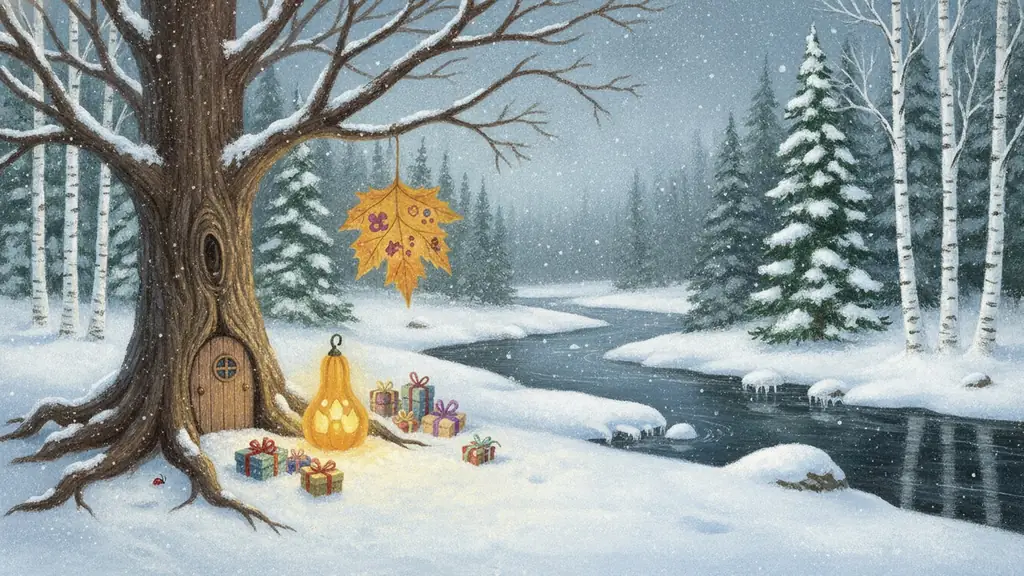
He tied the hedgehog leaf onto the Wishing Tree, right next to the squash lantern, so it would be ready.
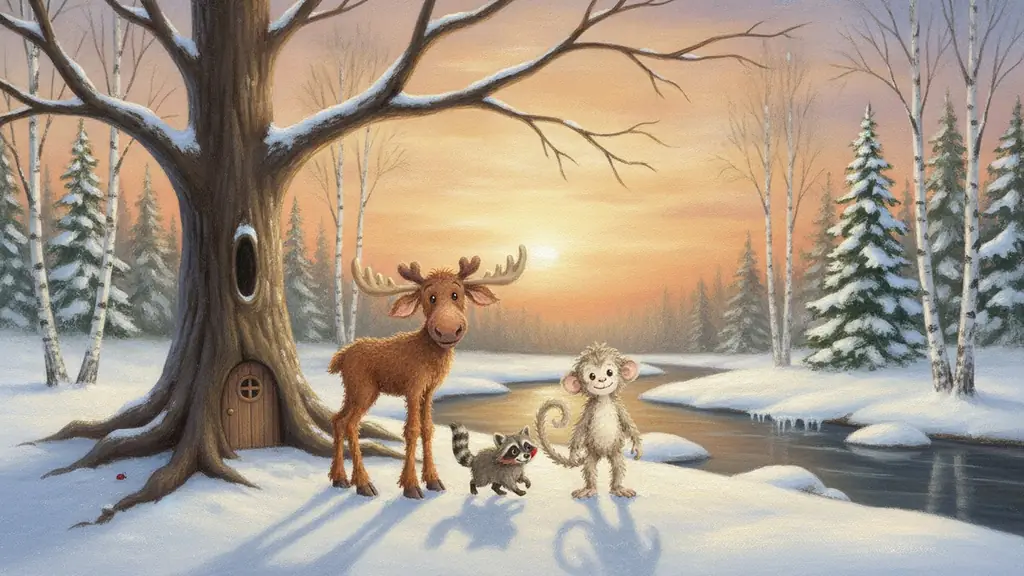
“What a day!” said Ricky as the sun went down. “Bruno slept on the presents. Sammy said the best thing in a pie is your teeth. I painted everything on one leaf and it turned brown, and I painted so many words they went halfway to the river. Then I painted one true thing. And I gave my first leaves ever.”
Mr. Monkey whistled, and Mr. Moose hummed, and together they sang:
We are better together,
Moose and Monkey forever.
And all through Sunny Square, the snow fell softly on the scattered presents, while the little lantern glowed beside the one leaf still waiting to go.