Impairment · Day 1
Monday, November 23, 2026
Protect & PlanExpectations
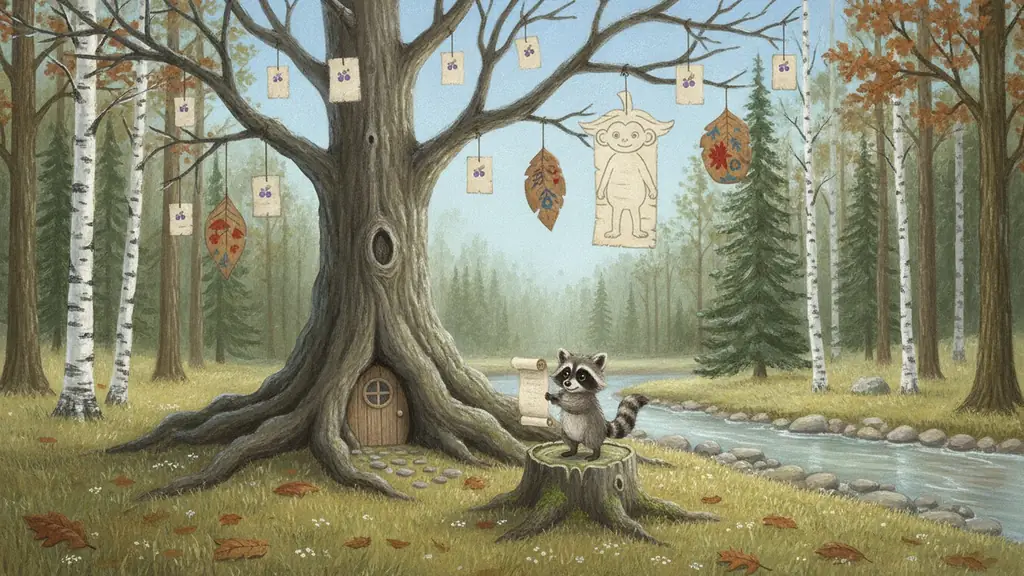 Today in the WoodsThe Spyglass
What am I expecting that could block my view?
What blocks my view of what I've been given?
Three days stand between you and Thanksgiving. For two weeks the rhythm has stayed the same: three days of noticing, a Thursday celebration, and three days of writing. This block bends that shape to fit the holiday. It runs only Monday through Wednesday, and its Thursday is Thanksgiving itself.
These three days have two jobs. The first is to protect. You've noticed a lot over the last two weeks, and it would be a shame to let a few common things block the view right before the big day, so each day names one of them: expectations on Monday, the invisible on Tuesday, and hurry on Wednesday. The second job is to plan. Somebody has to figure out who's coming, what's for dinner, and when the pies get baked. Instead of letting that work crowd out the gratitude, each day's Hands folds one piece of the holiday prep into the practice.
The block runs on a shorter rhythm than the last two weeks:
Monday: Expectations. The first thing that blocks the view is deciding ahead of time what should happen, including how other people should act. Today's prep is the gathering: who's coming, and the mail for anyone who isn't.
Tuesday: Invisible. The second is the comfort that never goes away, so it never gets noticed. Today's prep is the menu, and the last new leaves go on the tree.
Wednesday: Hurry. The third is having no room left to receive anything. Today's prep is the kitchen and the plan for Thursday morning, and tonight there's an optional doorstep delivery.
Thursday: Thanksgiving. This is the Celebrate day, and the day the tree finally gets read.
Every daily reading still has the same three parts: a picture for the heart, a point for the head, and a practice for the hands.
Imagine a family whose Thanksgiving has always ended with Grandma's pecan pie. Nobody remembers deciding that. It's just how Thanksgiving goes.
This year Grandma's hands have been bothering her, and she doesn't make the pie. Nobody makes a fuss out loud, but all afternoon somebody keeps bringing it up. "It's just not the same without the pie." "Remember the pie?" By evening, the missing pie has gotten more attention than anything that was actually on the table. Hardly anyone mentions the turkey somebody got up at five to start, or the rolls a teenager made for the first time. Hardly anyone mentions Grandma herself, sitting right there at the end of the table.
Nobody in that house is ungrateful. They just walked in expecting something, and when it didn't show up, the empty spot got all the attention.
Here's the point for today: expectations can close the door on gratitude.
An expectation is the quiet assumption that something should happen, where "should" has taken the place of "could." A trip to Costco makes the difference easy to see, even for kids.
Picture walking into Costco thinking, "I wonder what samples I'll get today." That's expecting. You've already decided the samples will be there. If they aren't, you're disappointed. If they are, they don't feel like a gift. They feel like what was supposed to happen.
Now picture walking in thinking, "Will there be samples today?" That's anticipating. You're open to the idea that there might not be any. If there aren't, no big deal, and if there are, it feels like a little gift.
Same store, same samples. The only thing that changed was the expectation, and it changed what you were able to feel.
That's what an expectation can do to gratitude. When we expect something, getting it feels like breaking even, and missing it feels like a loss, so there's no room left for thanks. Gratitude, remember, is noticing what you got instead of what you didn't, and an expectation points your attention at exactly the wrong half of that sentence.
This week is full of expectations, and most of them are pretty reasonable. The food will be good. Everyone will get along. The kids will behave. Nobody will be late. There's nothing wrong with hoping for any of that. The trouble starts when "I hope" quietly turns into "it should," because that's the moment Thursday's gifts start turning into Thursday's disappointments.
The expectations that do the most damage are usually about people: how they should act, what they should bring, when they should walk in the door. When someone falls short, we notice right away. By the time the pie is served, it's easy to be holding a long list of everyone's small failings and a very short list of what they gave.
Jesus had a picture for this. In the Sermon on the Mount, he asks, "Why do you look at the speck of sawdust in your brother's eye and pay no attention to the plank in your own eye?" Then he says, "You hypocrite, first take the plank out of your own eye, and then you will see clearly to remove the speck from your brother's eye." Hypocrite is the stage-actor word from the Preface. His point is about judging: before you go after anyone else's fault, deal with your own.
His image also works as a lesson about seeing, a step beyond his main point but a fair one for this week. A plank that close to your eye blocks the whole person, including whatever good they brought to the table. So before Thursday, check your own eye. The plank is often an expectation: a "should" about someone that has hardened into a verdict.
What are you expecting from Thursday, and what would you still notice if it didn't happen?
1. Name it, then loosen it. In your journal, write down one or two expectations you're carrying into Thanksgiving. Then rewrite each one with "might" instead of "will":
I expect ___. It might ___. If it doesn't, I'll still notice ___.
For example, "I expect the whole family to be there" becomes "The whole family might be there. If not, I'll still notice who came."
Kids can play too. Ask them what they think Thursday will be like, and then help them turn one "will" into a "might."
2. Plan the gathering. Today's prep is about people. Settle where you're gathering and who's coming, and send any last invites. Today is also mailing day for notes to people you won't see on Thursday, so they arrive in time. If your plan moved the mailing to Left Overs, or a few notes aren't written yet because life got busy, those can go out after Thanksgiving instead, as long as they're sent by November 30. Remember, No Hurry = No Worry.
Kids' story: read "The Spyglass" together, from The Thank-You Adventure in Wanderful Woods.
Time: 10 to 15 minutes for the journal, plus whatever the planning takes.
With younger kids: the Costco example works well at the dinner table, and so does any treat your kids have come to expect. For the speck and the plank, put a crumb on one fingertip and hold a cardboard tube up to your own eye; kids get it right away.
Watch the tone: today is about keeping the door open, so keep it light.
Thanksgiving morning starts with the "Enough Echo," a short call-and-response thank-you your household says together. Thursday's reading has a ready-made one. If your family would like to write its own, the back of this book has a simple template and a few questions to spark ideas. A grown-up can write it alone, or everyone can add a line, any time before Thursday. Writing your own is optional, since the ready-made Echo is enough on its own.
Hello, my wonderful story friends! Last time, Mr. Moose and Mr. Monkey followed Rainbow River all the way up to the little spring where it begins. Now the Thankful Feast is only three days away, and everybody in Wanderful Woods is wondering what they’ll get at the Great Big Present Swap.
Have you ever been so sure something was coming that you couldn’t stop watching for it? Let’s go see what Mr. Monkey is watching for.
The morning was so cold that Rainbow River had a thin skin of ice along its edges, and every twig on the Wishing Tree wore a little white coat of frost. Under the tree, Ricky stood on a stump with his bark roll and his most serious face.
“Three more days!” he announced. “Three more days until the Thankful Feast and the GREAT BIG PRESENT SWAP!”
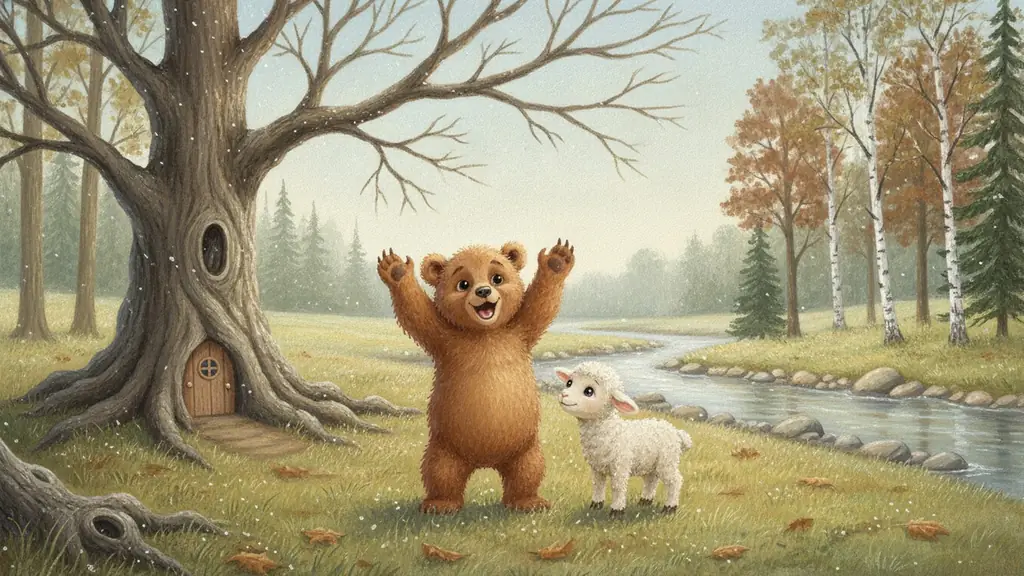
Everybody cheered. Bruno cheered so loud that frost shook off the branches and sprinkled down on Shiloh like sugar.
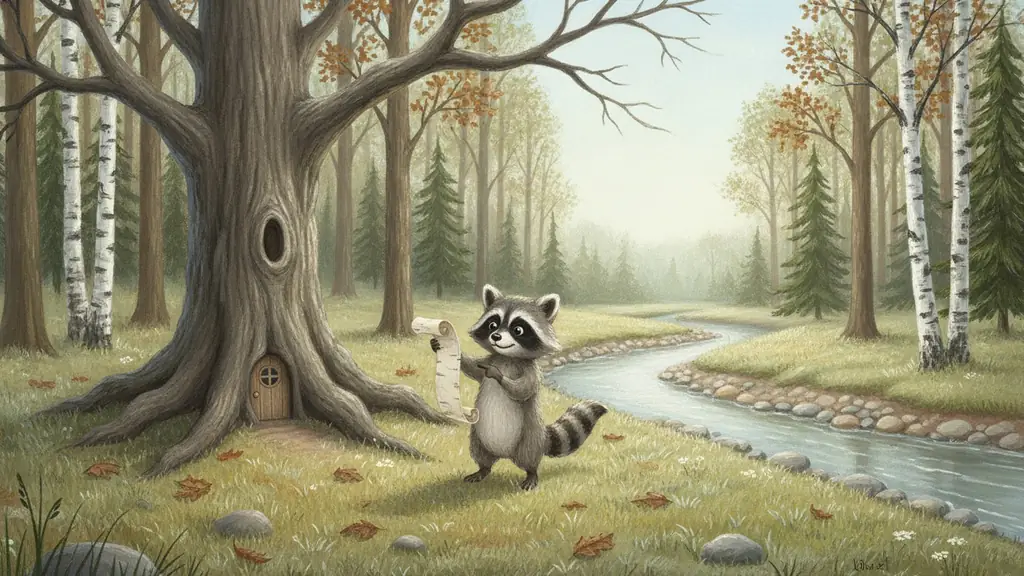
“Here’s how it works,” said Ricky. “Everybody puts their present in the pile, with a name leaf tied on. At the Feast, I climb to the top and pull them out, one at a time. And don’t forget rule thirty-six.” He held it up. “The size of a present is how far it came.”
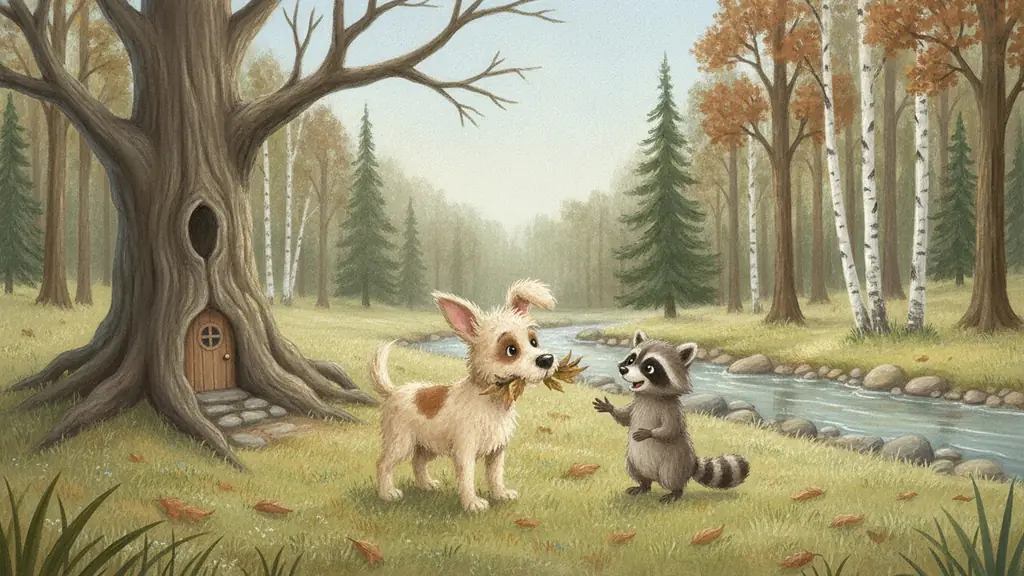
Dottie’s ears shot straight up. She had her present in her mouth, a stick wrapped in a leaf. “How far it came?”
“The farther it came,” said Ricky, “the bigger it is.”
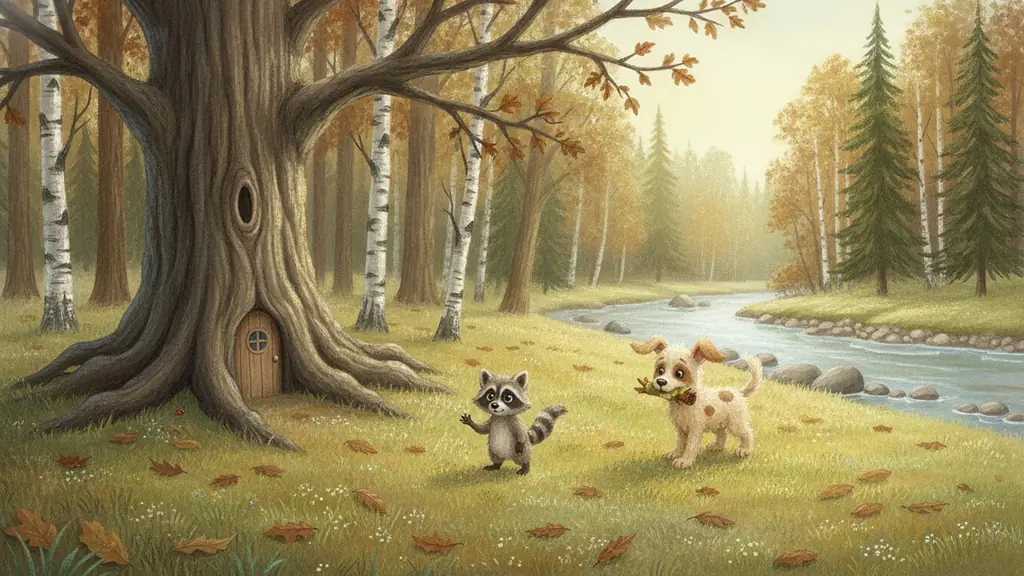
Dottie looked at her stick. Then she took off running. She ran to the river bend and back. She ran to Munching Meadow and back. She ran all the way around Learning Land and back, and skidded to a stop in front of Ricky, panting.
“Is it bigger now?”
“Um,” said Ricky.
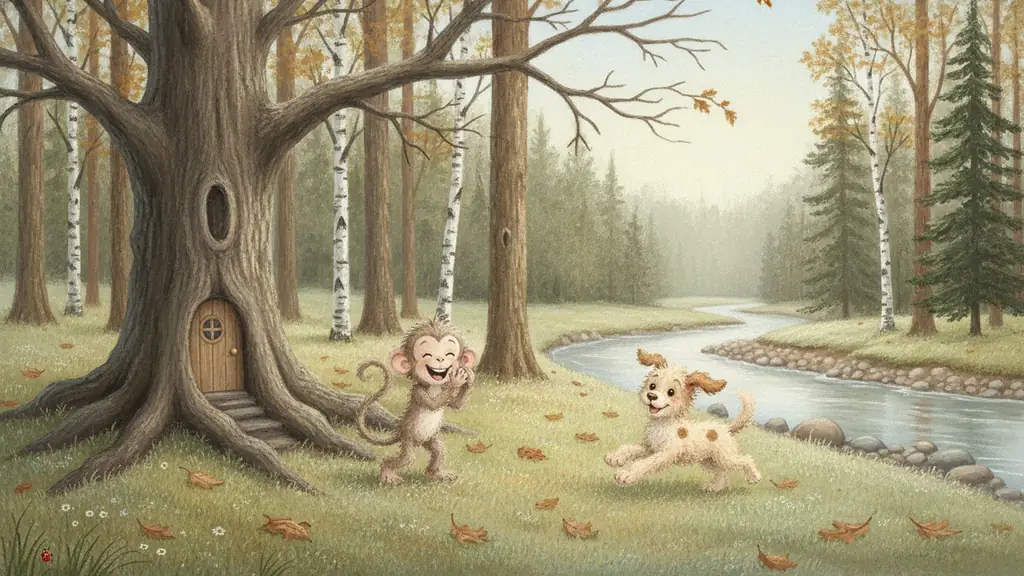
“Ha! Ha!” barked Dottie. “It’s getting HUGE!” And she was gone again.
“Hee hee hee!” went Mr. Monkey.
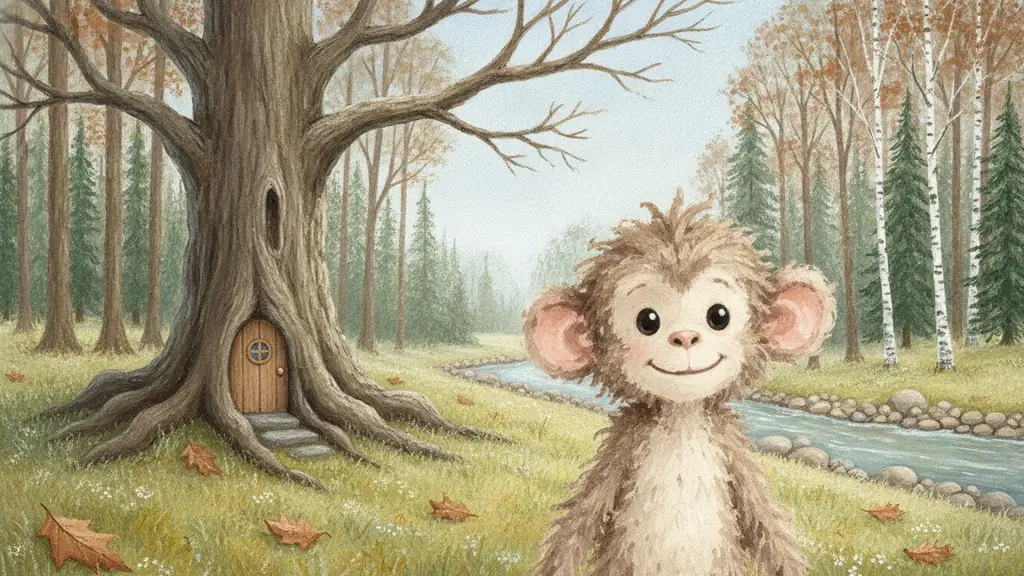
But then he stopped laughing, because he had just thought of something wonderful. Somewhere out there, far, far away, there might be a present coming for HIM. A present that came so far, it was the biggest one of all. A banana as big as him. Maybe even bigger.
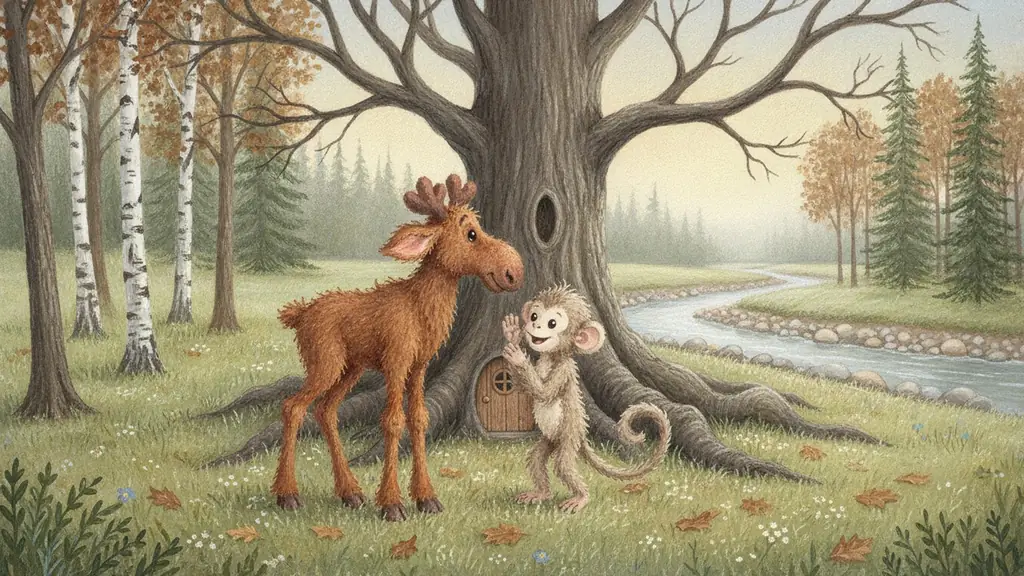
“Mr. Moose,” he whispered. “My banana is coming. It’s just coming from really far away. That’s why it isn’t here yet.”
“It might be,” said Mr. Moose.
“It IS,” said Mr. Monkey. “And I’m going to watch for it.”
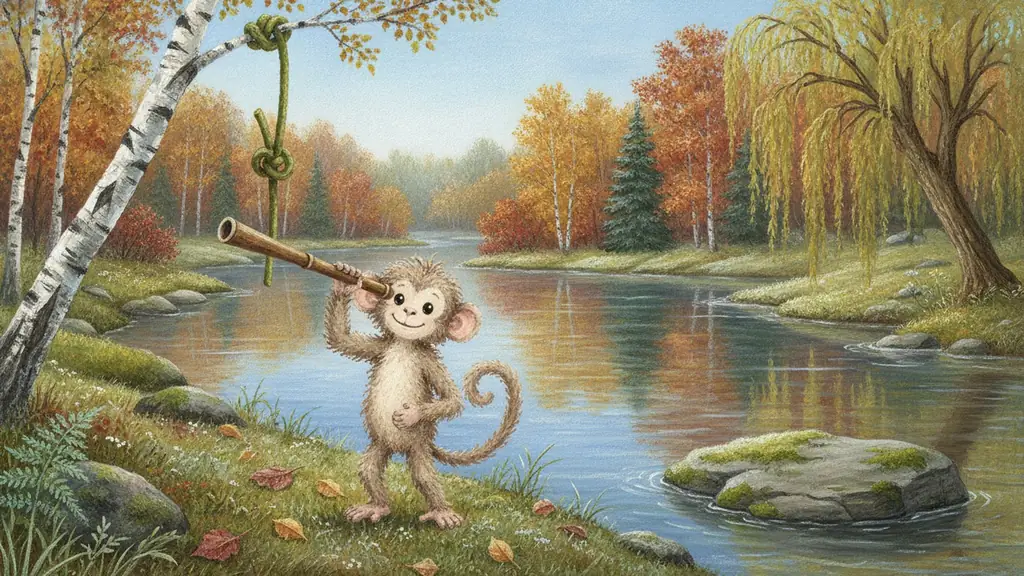
He ran down to the riverbank, snapped off a long hollow reed, and held it up to his eye. Through the reed, he could see one little round circle of the woods, and nothing else.
“A spyglass,” he said proudly.
So all morning, Mr. Monkey walked around Sunny Square with the spyglass to his eye, pointed down the path where the far-away presents would come.
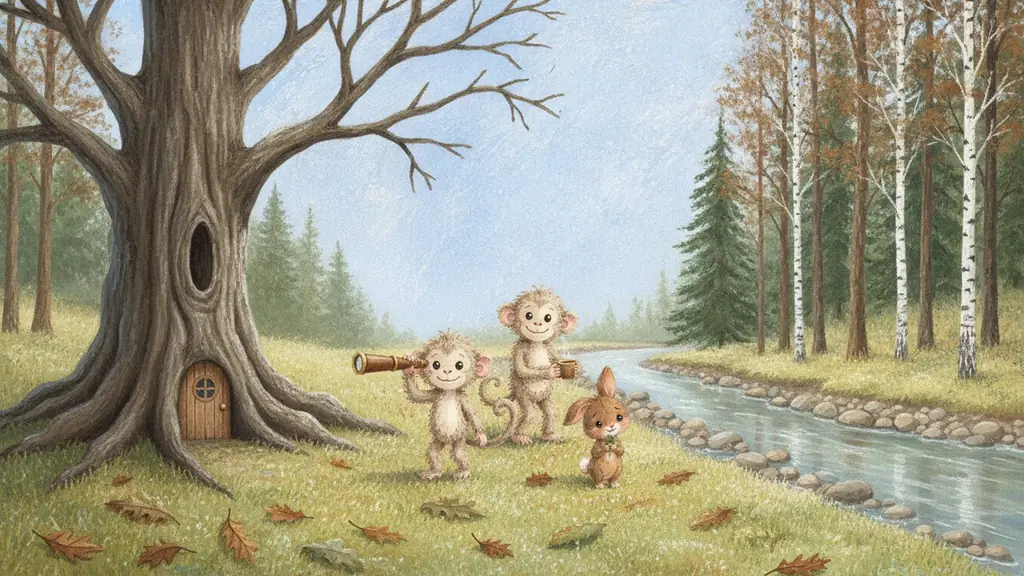
Mama Monkey came by with a cup of warm acorn cocoa. “For you,” she said. “It’s a cold one today.”
“Not now, Mama,” said Mr. Monkey, not looking. “I’m watching.”
Benji hopped up beside him. Mr. Monkey didn’t see him. He walked on, and Benji hopped along behind.
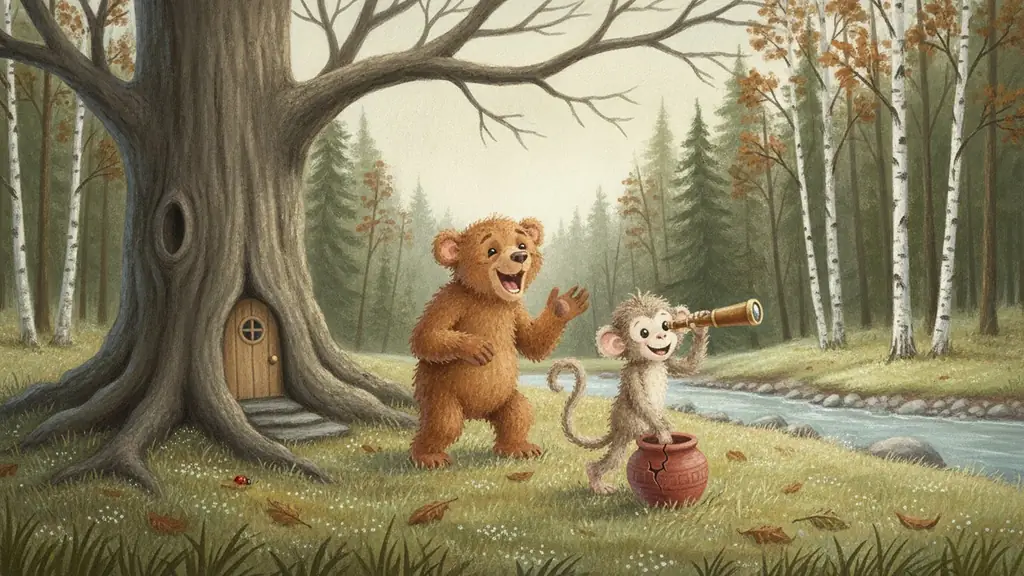
Then Mr. Monkey stepped, shloop, right into Bruno’s honey pot. He didn’t even notice. He just kept walking, with the pot stuck on his foot. Clonk-shloop. Clonk-shloop. Clonk-shloop.
“Mr. Monkey,” said Bruno. “You’re wearing my honey.”
“Shh,” said Mr. Monkey. “I’m watching.”
“Haw haw haw!” laughed Bruno.
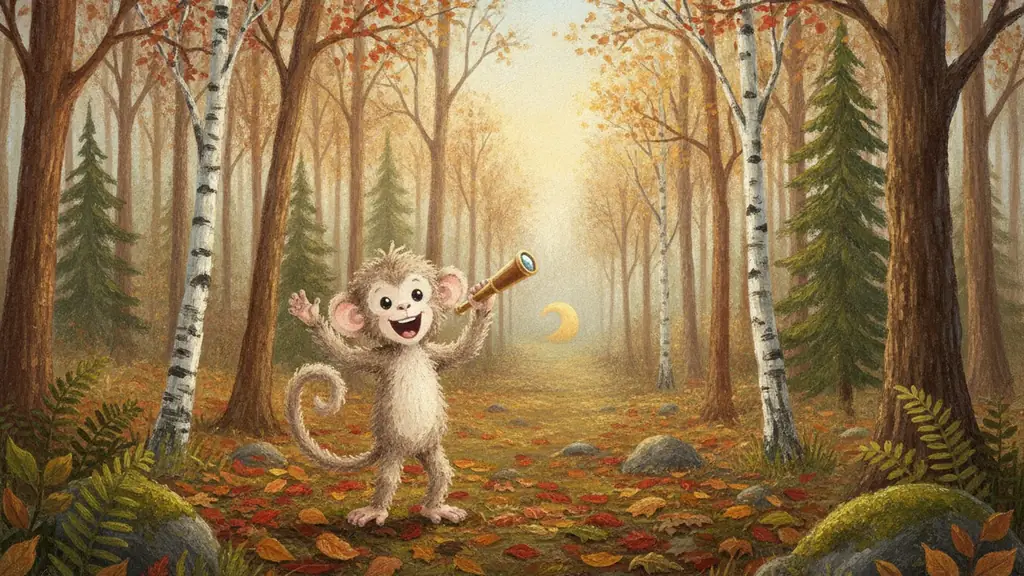
Then Mr. Monkey gasped. In the little round circle of his spyglass, something was coming down the path. Something long. Something curved. Something yellow.
“IT’S HERE!” he shouted. “MY BANANA!”
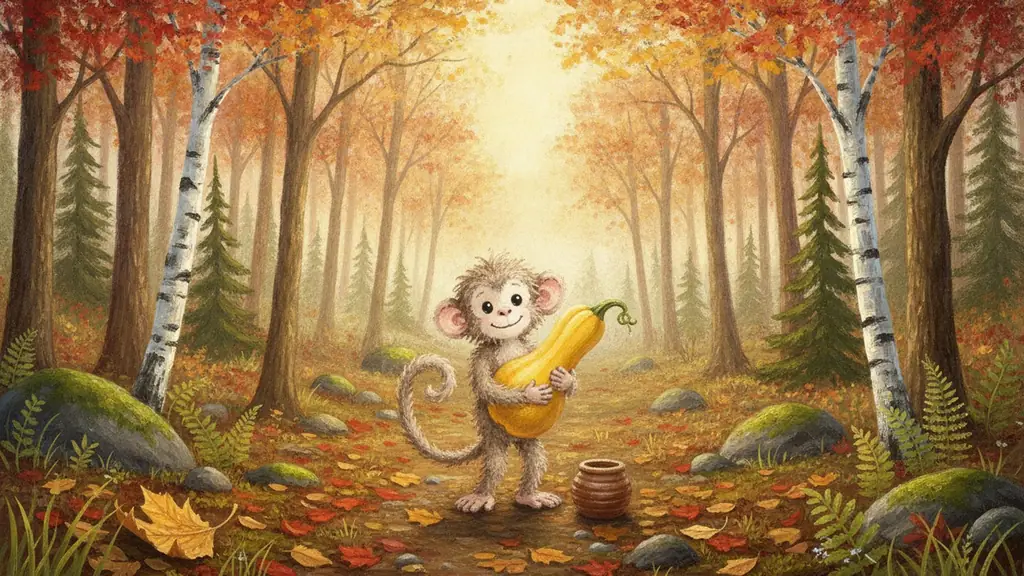
He ran, clonk-shloop, clonk-shloop, all the way down the path, and threw his arms around it. It was big. It was yellow. It was curved, just like a banana. So he grabbed the top to peel it.
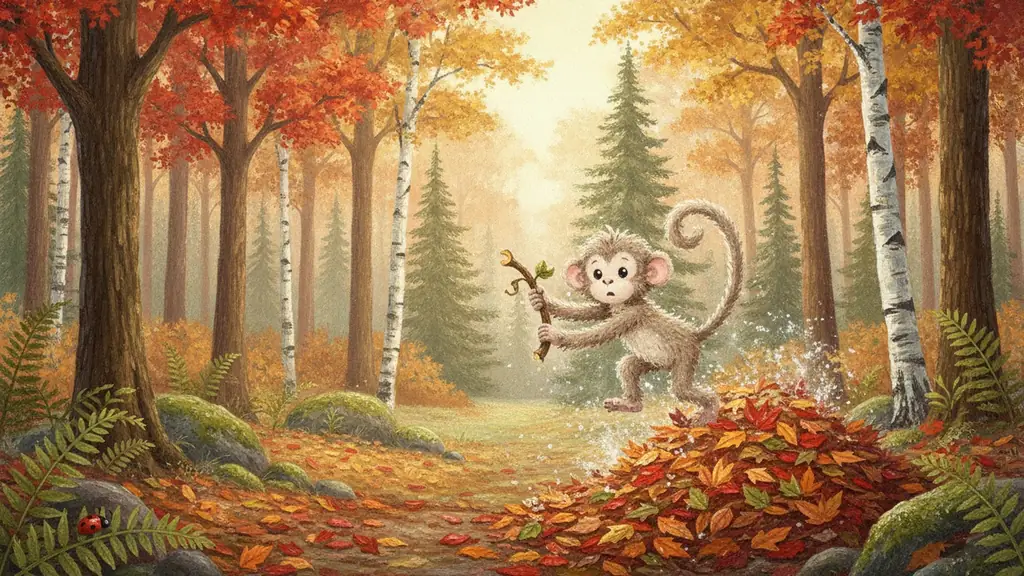
He pulled. It didn’t peel. He pulled harder. It still didn’t peel. He planted both feet, honey pot and all, and pulled with everything he had, until POP, the stem came off in his hands and he flew over backward into a pile of frosty leaves.
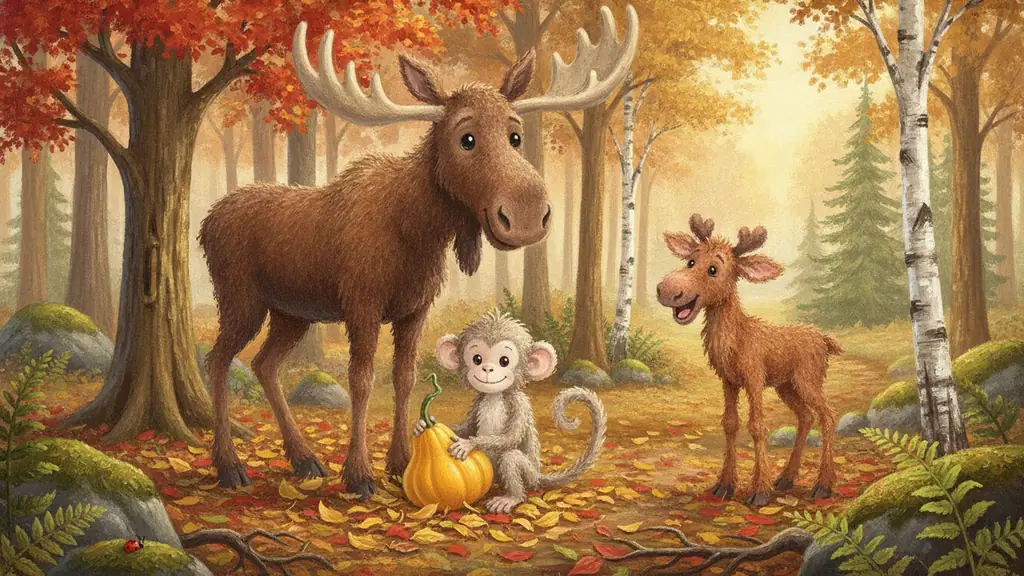
He sat up, holding the stem. Mama Moose was standing over him. She had been pushing the big yellow thing home.
“Mr. Monkey,” she said kindly, “that’s my squash. It’s for the Feast stew.”
Mr. Monkey looked at the stem in his hand. “It’s not a banana?”
“Ha-ha-ha!” laughed Mr. Moose, coming down the path behind him. “You tried to peel a squash!”
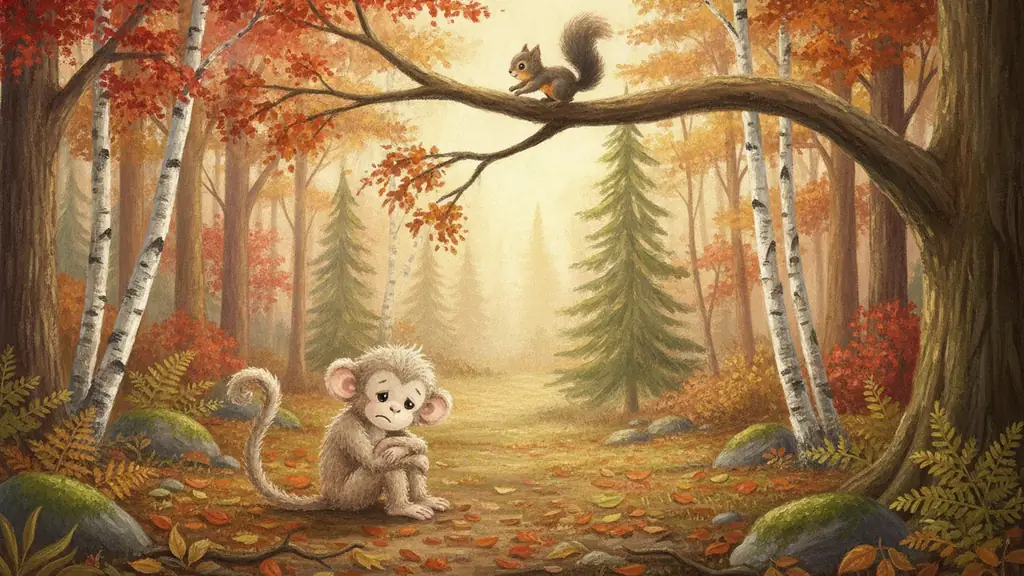
Just then Sammy zipped by on a branch overhead. “Hey! What has lots of eyes but can’t see a thing?” And she was gone before anybody could guess.
Mr. Monkey put the stem down on the squash, very gently, like he was giving it back. Then he sat in the leaves and looked at the path. It was empty. No banana. Nothing coming at all.
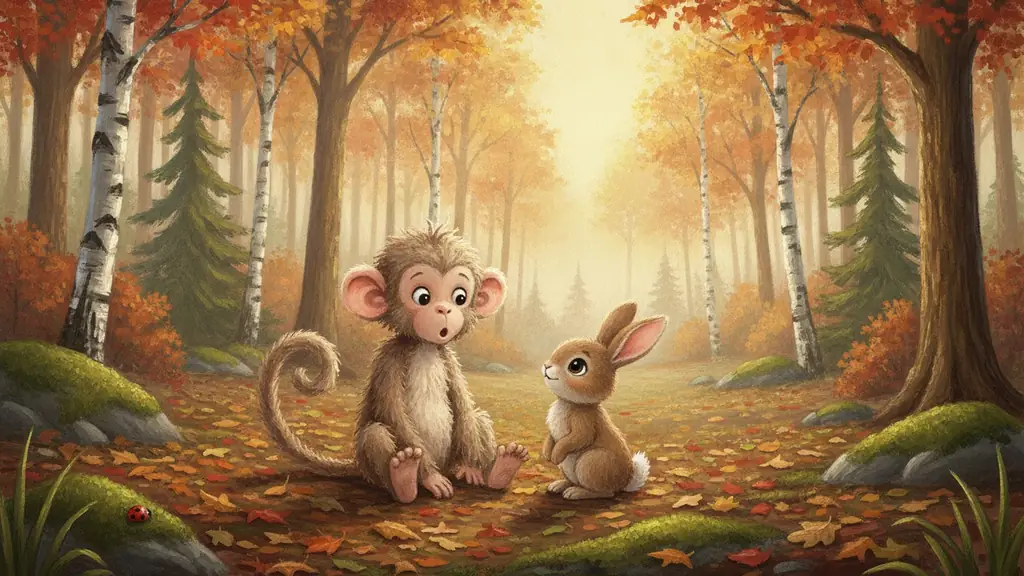
“I was so sure,” he said quietly.
That’s when he noticed Benji, sitting right next to him in the leaves. Benji had been there all along.
“Benji,” said Mr. Monkey. “How long have you been following me?”
“All morning,” said Benji softly. He wiggled his nose. “I wanted to ask you something. Are you still sitting next to me at the Feast? You said you would.”
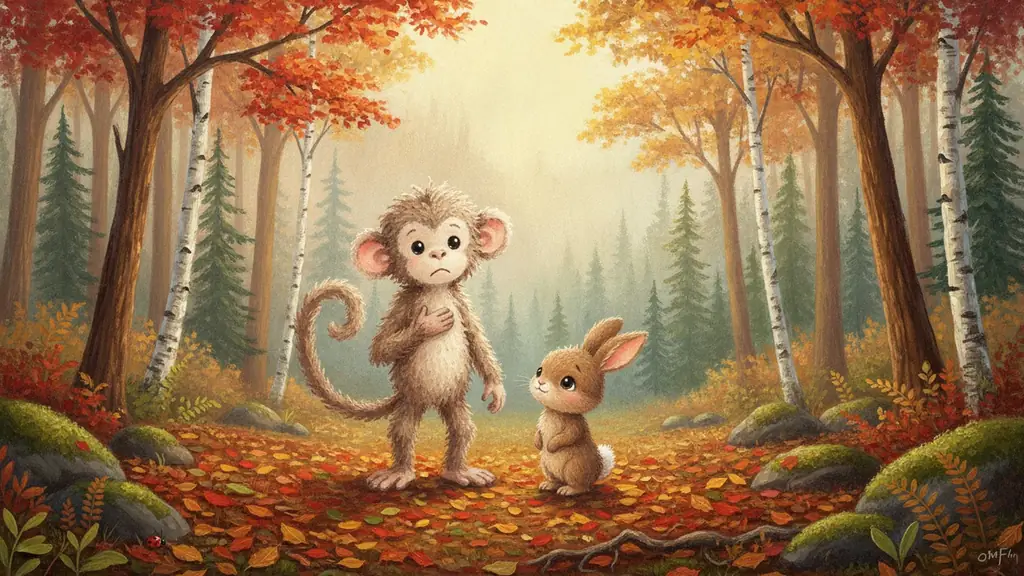
Mr. Monkey’s chest went tight. He had said he would. Weeks ago, on the very first day of signing up, Benji had whispered his wish: somebody to sit next to at the Thankful Feast. And Mr. Monkey had said, “ME!” And all morning he had been so busy watching for a banana that he walked right past Benji, again and again, and never saw him once.
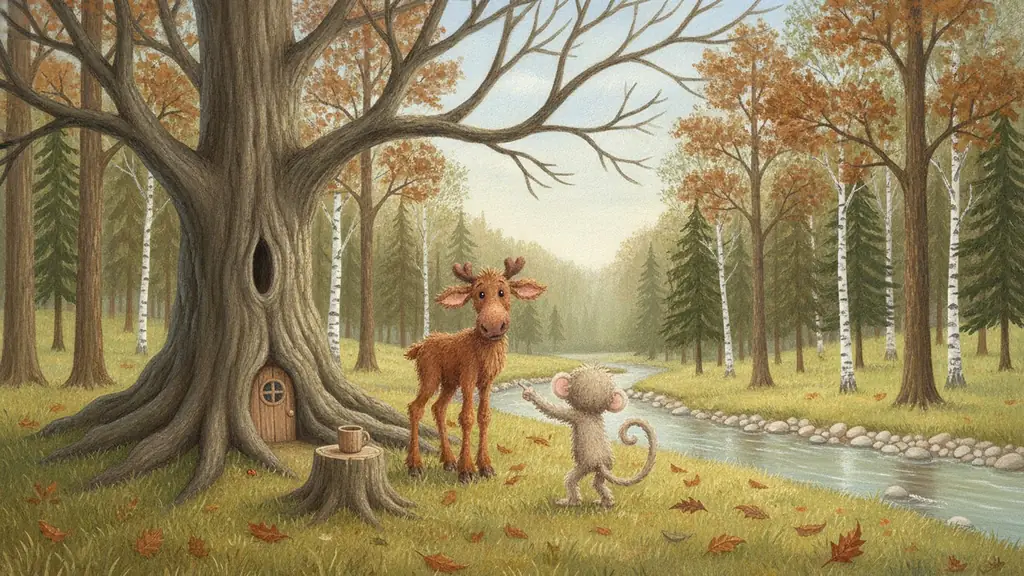
He thought about Mama Monkey’s cocoa, too. He looked back up the hill. There was the cup, sitting on a stump where she had left it, with no steam coming out of it anymore.
“Mr. Moose,” he said. “I missed everything.”
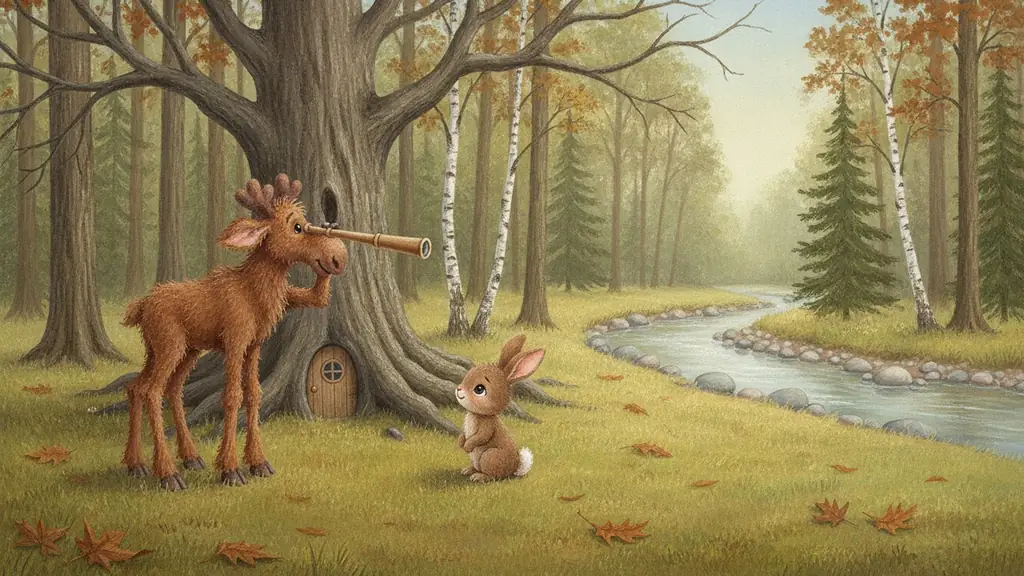
Mr. Moose picked up the spyglass and looked through it, slowly, the way he looked at everything. He pointed it at the path. He saw the path. He pointed it at the Wishing Tree. He saw a little round piece of the Wishing Tree. He pointed it at Benji, sitting right there, and he saw one ear.
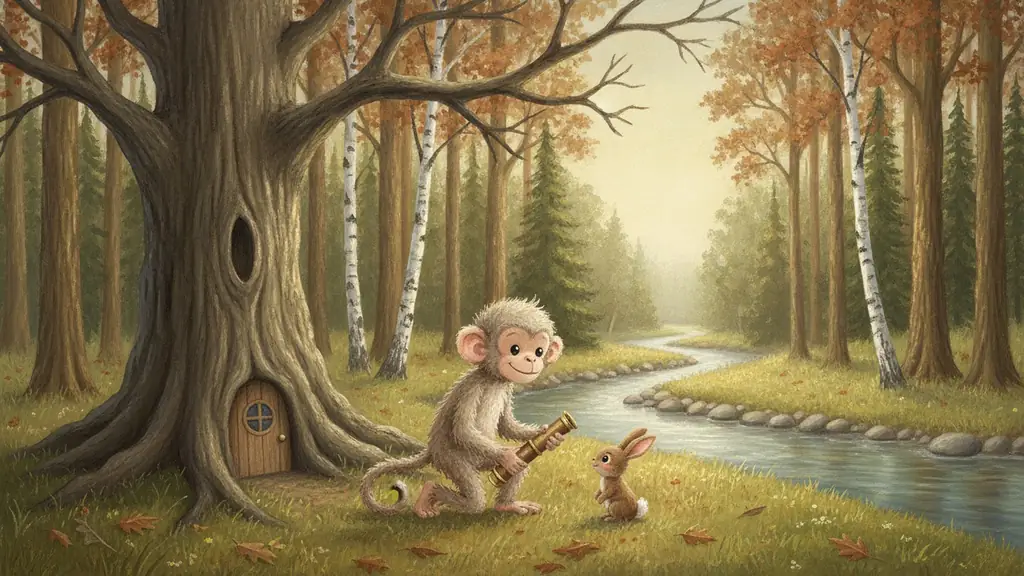
“It only shows the one thing you’re looking for,” said Mr. Moose. “Everything else disappears.”
Mr. Monkey looked at the spyglass. Then he looked at Benji, and the whole of Benji was there: both ears, his pink nose, his fluffy tail, his eyes, waiting.
“Yes,” said Mr. Monkey. “I’m sitting next to you. Right next to you.”
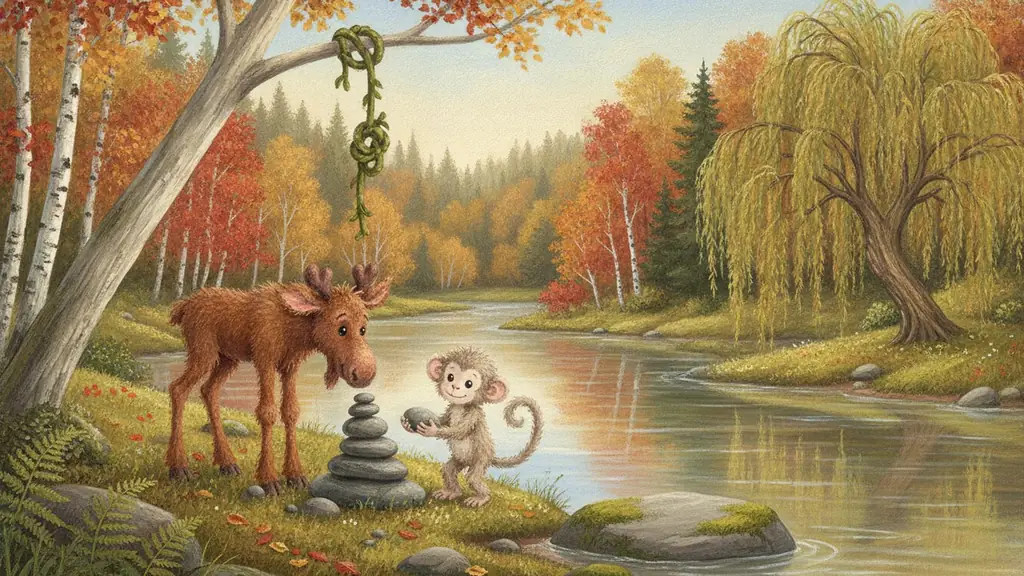
Benji’s ears went pink. “Hee hee,” he said.
Mr. Moose was still thinking. “Ricky has a list of who’s coming,” he said. “But nobody knows where they’re sitting yet. What if we make sure everybody has a place? Then nobody gets missed.”
“Rule four!” said Mr. Monkey.
They gathered smooth, round stones from the river, one for everybody who was coming to the Feast.
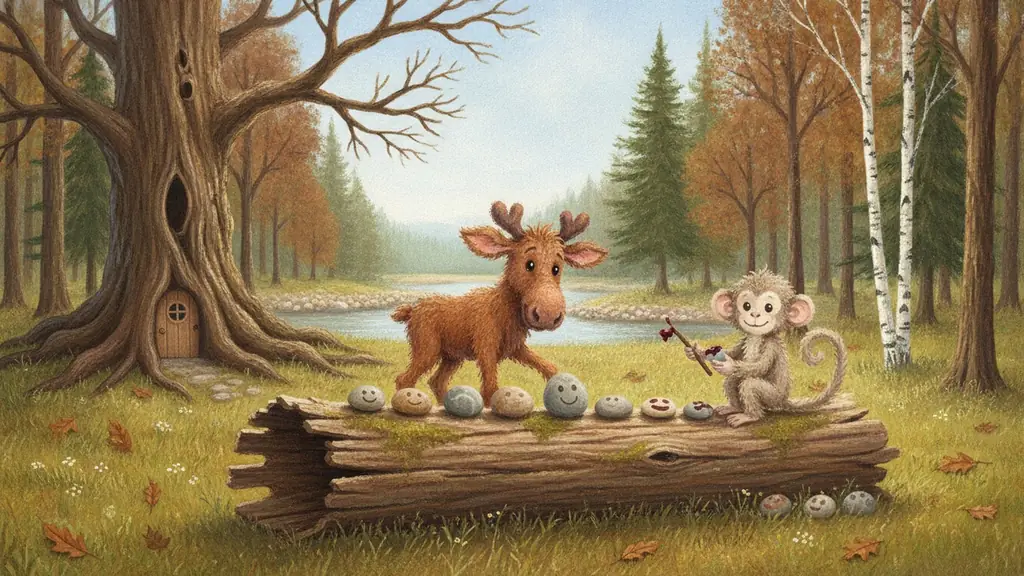
Mr. Monkey painted a face on each one with berry juice: a mask for Ricky, long ears for Benji, a curly coat for Shiloh, the biggest stone of all for Bruno, with a big purple paw print on it. Mr. Moose carried them up to the long Feast log in Sunny Square, one at a time, in his mouth, and set them down in a row.
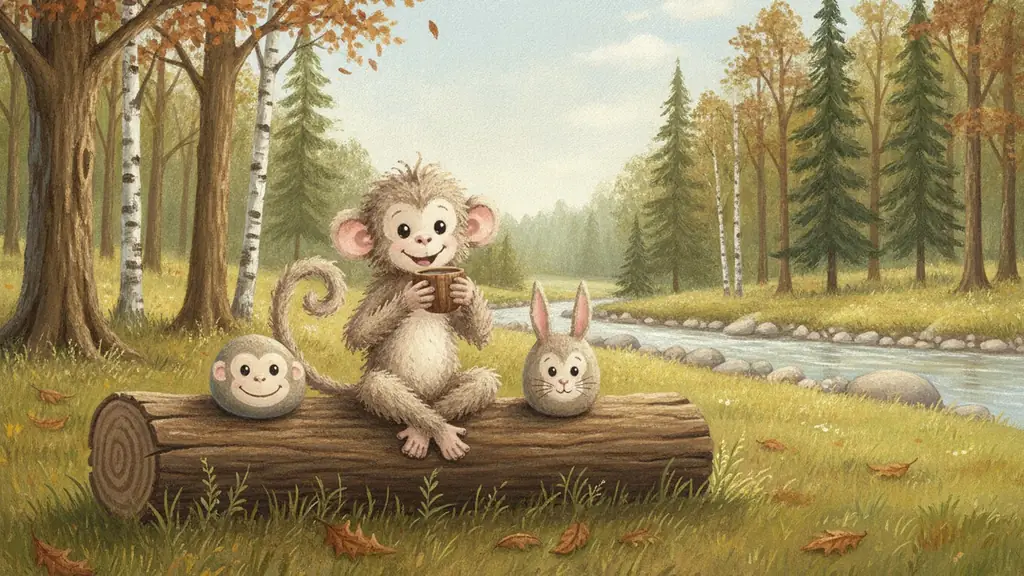
The very first two stones went right in the middle, side by side. A little monkey face. And a little bunny face, with long ears.
“There,” said Mr. Monkey. “Now nobody can miss it.”
Then he ran back up the hill, picked up Mama Monkey’s cup, and drank the whole thing, even though it was cold.
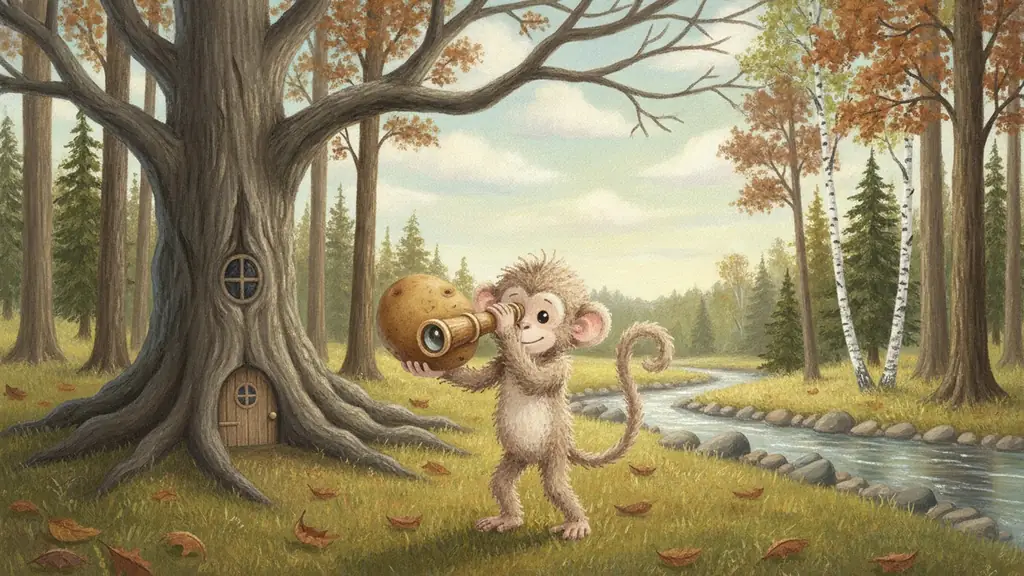
“Thank you, Mama!” he called up into the treehouse. “It’s still good!”
“A POTATO!” came Sammy’s voice from somewhere far off in the trees.
Everybody looked up. Then Mr. Monkey picked up a potato from Mama Moose’s basket and looked at it very closely through his spyglass. “It does have lots of eyes,” he said.
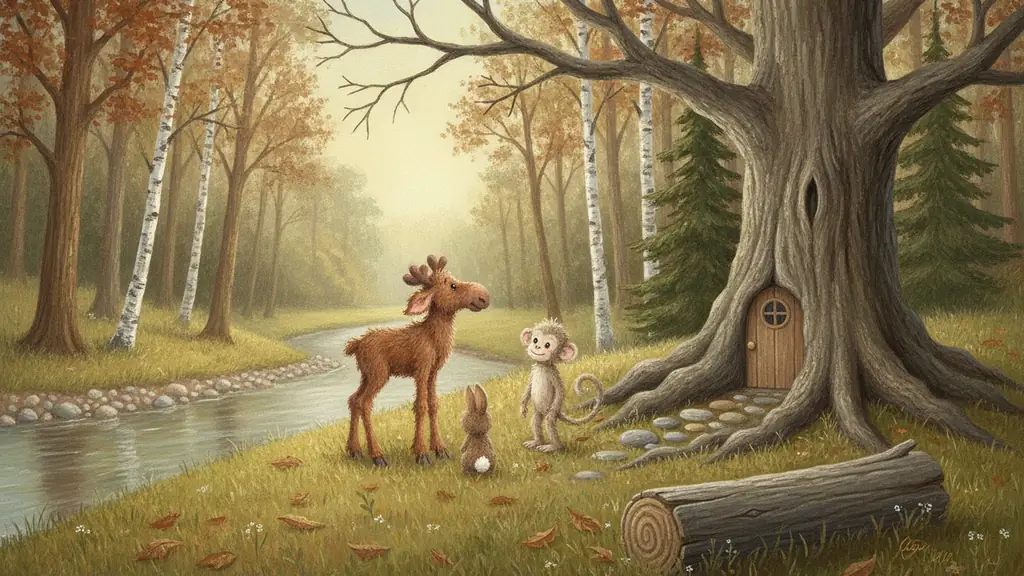
“Hee hee,” went Benji.
Mr. Moose looked down the row of stones. “Tessie,” he said slowly. “She lives way up past Whispering Water Way. If she’s coming on Thursday…”
“She’d have to start walking today!” said Mr. Monkey.
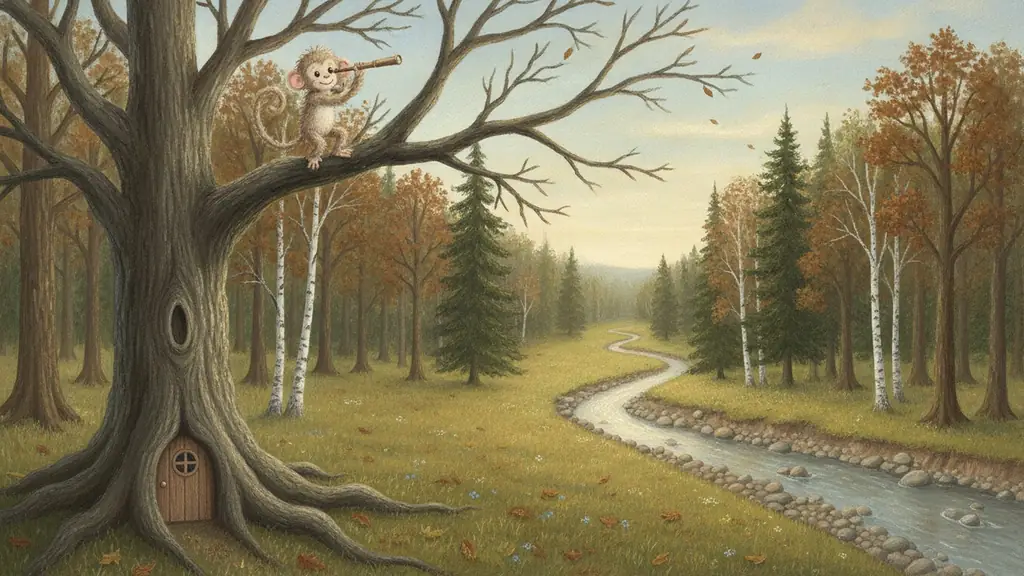
He climbed the Wishing Tree as high as he could go, put the spyglass to his eye, and pointed it far up the river path. This time, he wasn’t looking for anything. He just wondered what he would see.
And there, way, way up the path, was a little round shell, coming along very, very slowly.
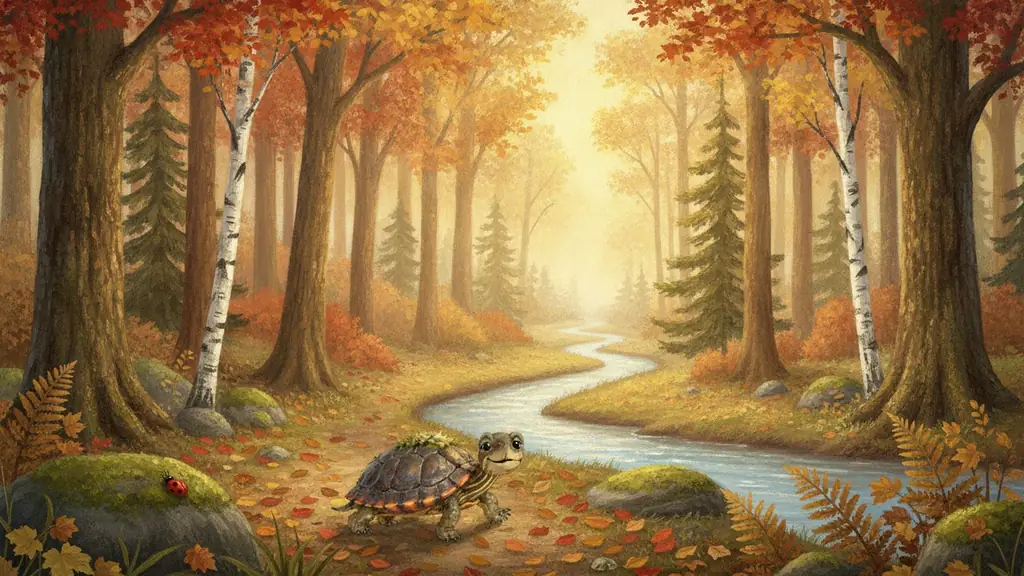
“Mr. Moose!” called Mr. Monkey. “It’s Tessie! She’s already coming!”
As the sun went down, the friends headed home past the long log with its row of painted faces.
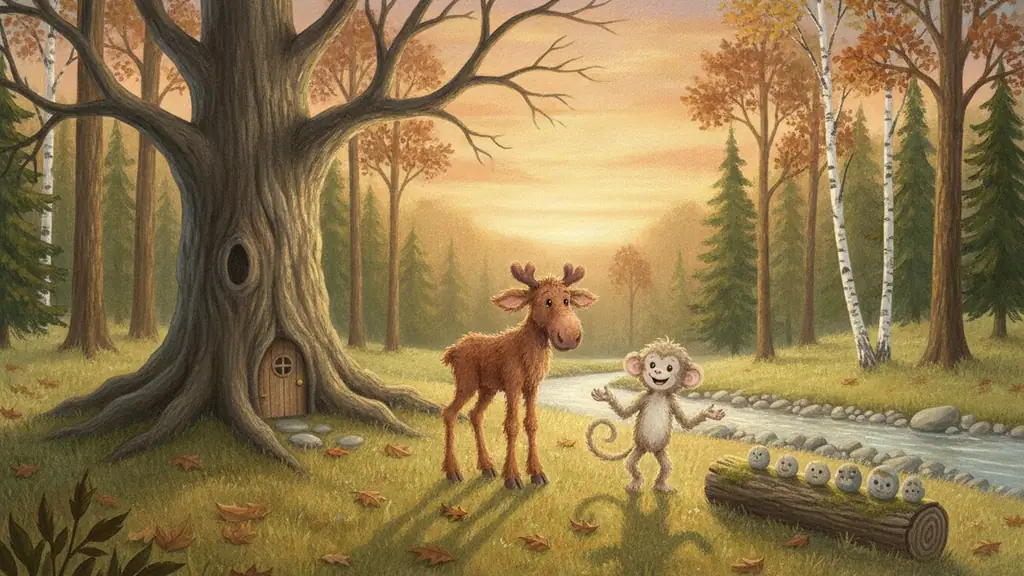
“What a day!” said Mr. Monkey. “I made a spyglass, and I wore Bruno’s honey pot on my foot. I tried to peel a squash, because I thought it was my banana. Dottie made her present bigger by running. Benji followed me all morning, and now we have stones, right next to each other. And Tessie is already on her way.”
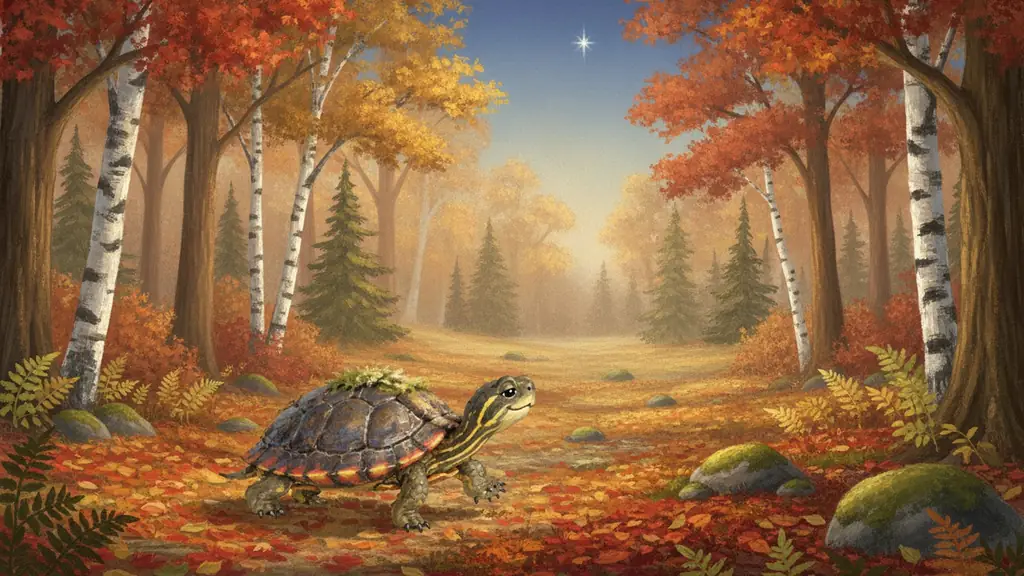
Mr. Monkey whistled, and Mr. Moose hummed, and together they sang:
We are better together,
Moose and Monkey forever.
And far up the river path, under the first evening star, one small turtle took one more slow step toward Sunny Square.