Impairment · Day 2
Tuesday, November 24, 2026
Protect & PlanInvisible
 Today in the WoodsThe Moss Boss
What have I stopped seeing because it's always there?
Picture a summer afternoon. Inside, the air conditioner keeps the house at the same comfortable temperature all day, but here's the funny part: nobody notices it. The house is comfortable, and the air conditioner never crosses anyone's mind.
Then you step out into the backyard, and right away you're thinking, Oh man, this is hot. All your attention goes straight to the discomfort, and the complaining starts almost before the door closes behind you.
The comfort was there the whole time. It just didn't register until it was gone.
The Preface gave this a name: the Comfort Constant. Psychologists call it the hedonic treadmill. Whatever we have long enough becomes normal, and we stop noticing it.
It seems to work something like this. We notice the variation, but we stop noticing the constant. When something stays the same all the time, our brains file it away as background, and what we notice is whatever changes. When the constant in our lives is comfort, the thing that changes, and so the thing we notice, is discomfort.
Turn that around, and you can see why comfort makes gratitude harder. When discomfort is the constant, a full meal or a shady spot on a hot day stands out, and it's easy to be thankful for. For most of us it's flipped. Food, shelter, safety, and a hundred small comforts are the constant, so what we mostly notice is what's missing. This is just how attention works, which means gratitude takes some forced focus.
So today's point is simple: the gifts we notice least are often the ones holding everything up. Today we go looking for the invisible ones on purpose, the things that work so well, and so quietly, that we forget they're gifts at all.
Some of those gifts come from people. Dinner shows up on the table, the dishes get done, and someone waits at pickup, day after day, until all of it becomes part of the constant. When a gift fades into the background, the thank-you usually fades with it.
Here's a quick thought experiment. Think back to yesterday and make your best guess: how many times did you say thank you out loud? More than ten, or fewer? For some of us, on some days, the honest answer is close to none. Now a second question: how often would you like to say it tomorrow? If thank you is something you want to say often, pick a number. Ten is a good place to start. Then take it as a challenge for tomorrow: say that many real thank-yous, or more. Each one should be sincere, said because someone actually did something, never just to hit the number. Counting is optional, though a tally can make it fun. Whatever the number turns out to be, the goal is to train our eyes to notice what's hard to see, and saying thank you out loud is one way to train them.
A simple principle helps here: "Practice Makes Permanent." A new habit starts on purpose, and at first it takes effort and attention. The more it's practiced, the less effort it takes, until one day it's just how a person sees and talks.
So far, this program has practiced gratitude in a more formal way. The leaves on the tree get thought through, written down, and turned to face the wall until it's time to read them. That's good work, but by itself it isn't enough. A thank-you said out loud happens in the moment, to the person, while they can hear it, and anyone else in the room hears it too.
That last part matters most with kids. “Say thank you” may be one of the most common things adults say to young children. It's easy for us to see everything people do for them, and we want them to notice it and to say so. But what if the best way to help kids grow in both the noticing and the saying has less to do with telling them and more to do with showing them? A pastor named Ted Roberts put it this way: "You can teach what you know, but you reproduce who you are." A household where people say thank you for small things, all day long, is teaching gratitude whether or not anyone planned a lesson.
What in your life works so quietly that you'd only notice it if it stopped?
1. Hunt for the invisible. Walk through your house, together if you can, and look for things that work so well you never think about them: the furnace, the roof, running water (hot and cold), the refrigerator, the lights, the road you drive on, and your own immune system, fighting off things you'll never even know about. Anything you'd notice right away if it stopped counts.
2. Count your thank-yous. This one runs in the background. Try to say ten real thank-yous out loud over the next day, especially for the everyday things nobody tends to notice: "Thank you for making dinner." "Thanks for doing the dishes." "Thank you for waiting for me." A thank-you counts when it names what the person did, so a quick "thanks" on the way out the door doesn't. If you want to keep count, use whatever’s easiest, like tally marks on a sticky note or a note on your phone. The number isn't a grade. It's a way to notice how often you already say it, and to say it a little more.
3. Write invisible leaves. Pick a few and write them as leaves. The thing goes on the front ("Hot water," "Our roof," "The heater"), and on the back, write what life would be like without it and why you're glad it's there. These are the last new leaves to go on the Thanks Giving Tree this month. Hang them with the writing facing the wall.
4. Plan the menu. Today's prep is about food. Decide what you're making, figure out what you need, and make the shopping plan. If you're adding a Three Sisters dish or five kernels of dried corn per person on Thursday (see Thursday's Alternatives and Additions), put them on the list too. While you're at it, if someone came to mind late, write their note today and hang it with the rest (or mail it, if they live out of town), so everything is ready for Thursday.
Kids' story: read "The Moss Boss" together, from The Thank-You Adventure in Wanderful Woods.
Time: 20 to 30 minutes for the hunt and the leaves. The thank-you count runs all day and takes no extra time.
With kids: turn the hunt into a game. "Find something in this room that would make us sad if it stopped working." Kids can keep their own thank-you count with tally marks, and at bedtime you can ask, "Who did you thank today, and what for?"
A good question for the table: "What's something in our house that you've never once thanked anybody for?"
Don't forget people: some invisible gifts have a person behind them, like whoever pays the power bill or keeps the fridge full. Those can be leaves too.
Hello, my wonderful story friends! Last time, Mr. Monkey watched for a giant banana all day through a spyglass, and almost missed the friend who was right beside him. Today the wind is blowing hard, and Mr. Moose notices something that isn’t there.
Is there something in your house that works so well you never even think about it? Let’s go find out what Mr. Moose noticed.
All night long, the wind blew through Wanderful Woods. It went whoo-OOO-ooo around the treetops and rattle-rattle-rattle through the bare branches, and in the morning, the grass in Sunny Square was flat and silver with frost.
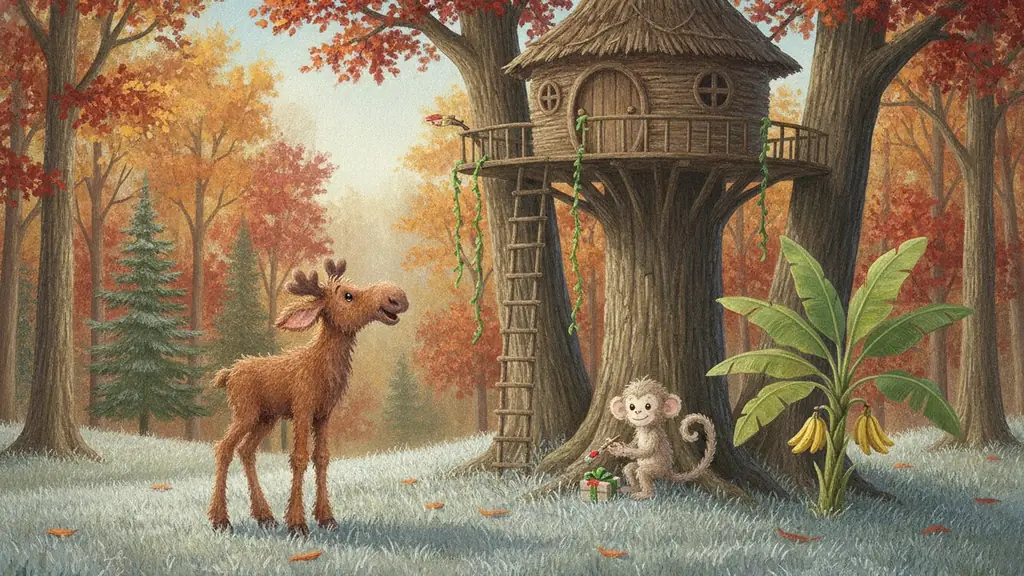
Mr. Monkey woke up warm. He ate his breakfast. He swung on the vines. He was busy painting a face on his Swap present, and he didn’t think about the wind at all.
Mr. Moose stood at the bottom of the treehouse and called up. “Mr. Monkey! The wind was so loud last night. Were you cold?”
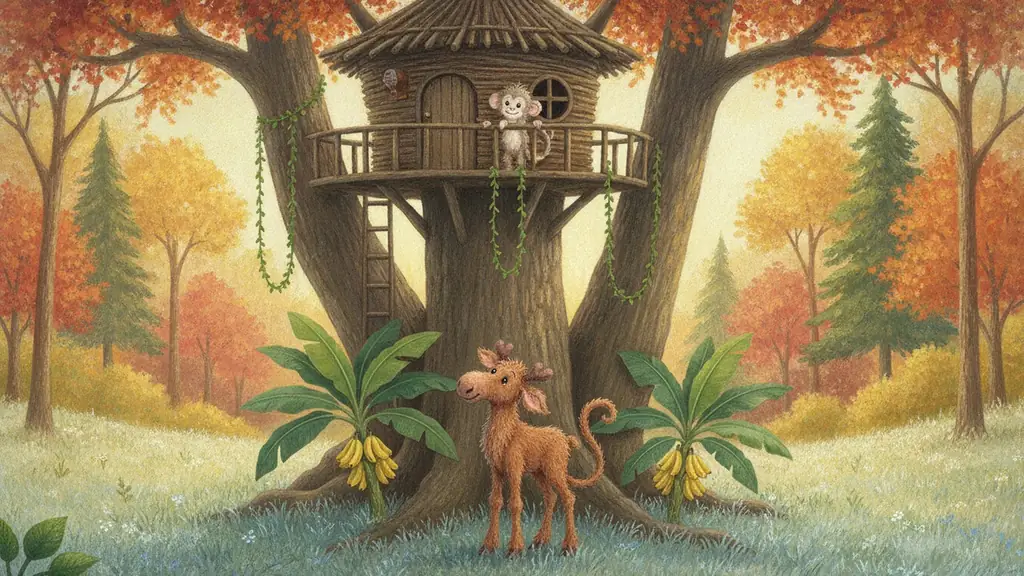
Mr. Monkey poked his head out. “Nope. I was warm.”
“But last time the wind blew like that,” said Mr. Moose, “it whistled through the cracks. Wheeeeoo. Remember?”
Mr. Monkey remembered. That was the night Mama Monkey gave him her striped blanket. He pulled his head back inside and listened.
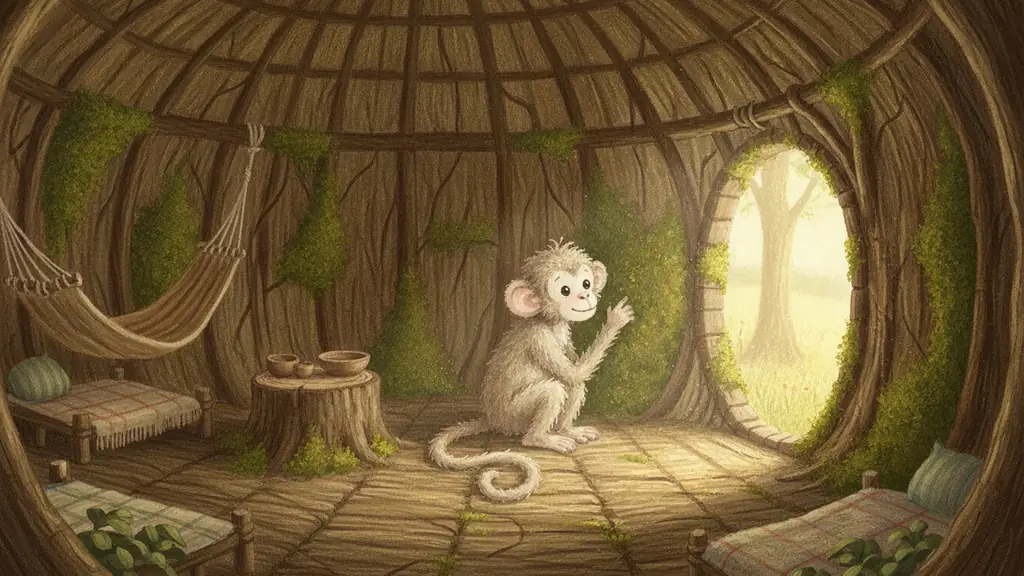
The wind was blowing. But nothing was whistling. Not one crack. He went to the wall and looked. Every single crack in the whole treehouse was stuffed full of soft, green, squishy moss. Hundreds of cracks. Hundreds of little moss plugs.
“Mr. Moose!” he called down. “Somebody fixed it! And I didn’t even notice!”
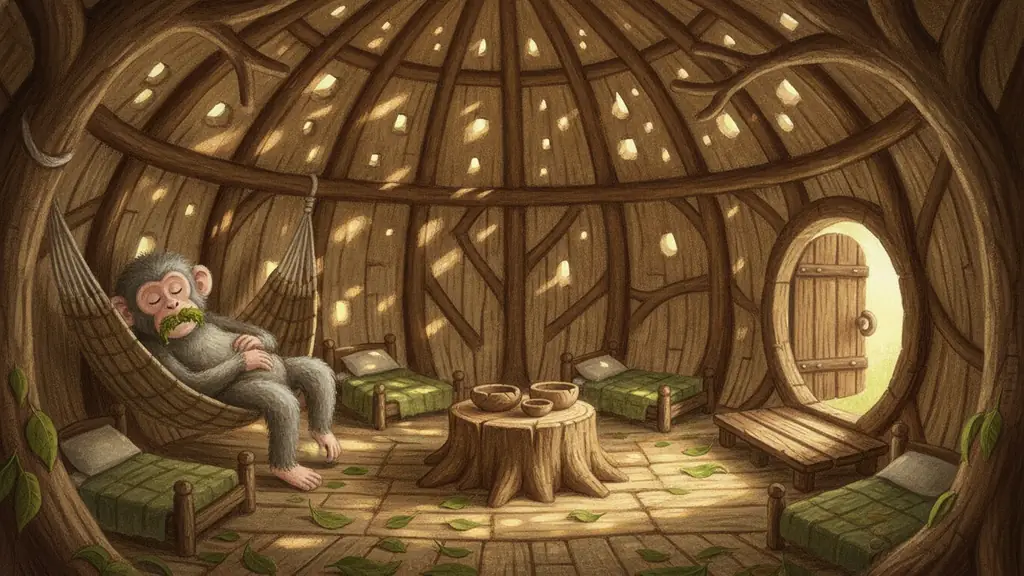
Then he heard a snore. Over in the corner, in the hammock, Daddy Monkey was fast asleep in the middle of the morning. He had moss in his fur. He had moss behind his ears. He had a little green moss mustache, and a long piece of moss hanging off the end of his tail.
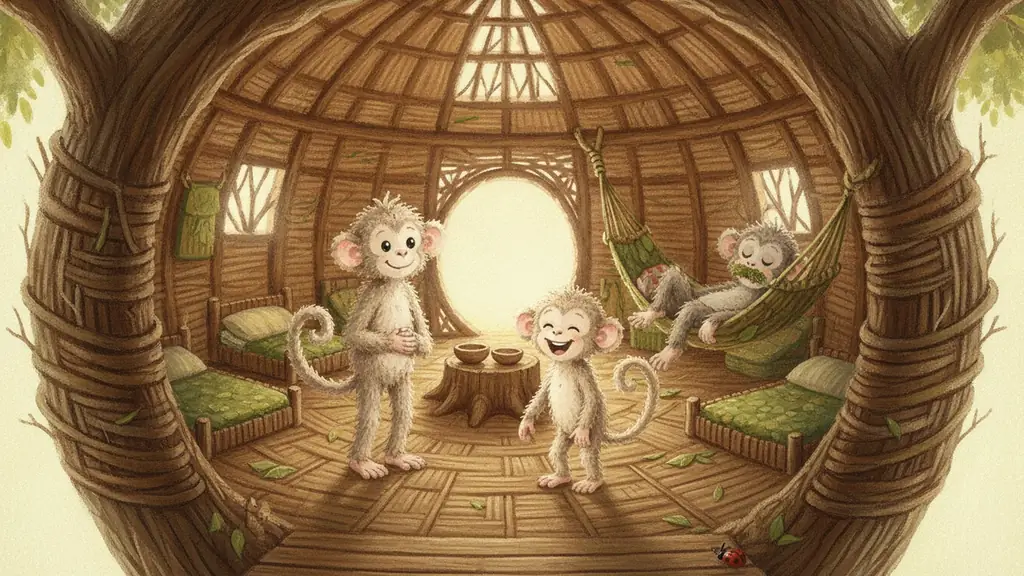
“He was up late every night this week,” said Mama Monkey softly, “filling a few cracks at a time.”
Daddy Monkey opened one eye. “Hm?” he said. The moss mustache wiggled.
“Daddy!” said Mr. Monkey. “You’re the MOSS BOSS!”
“Hee hee hee!” went Daddy Monkey. Then he rolled over and went right back to sleep, moss mustache and all.
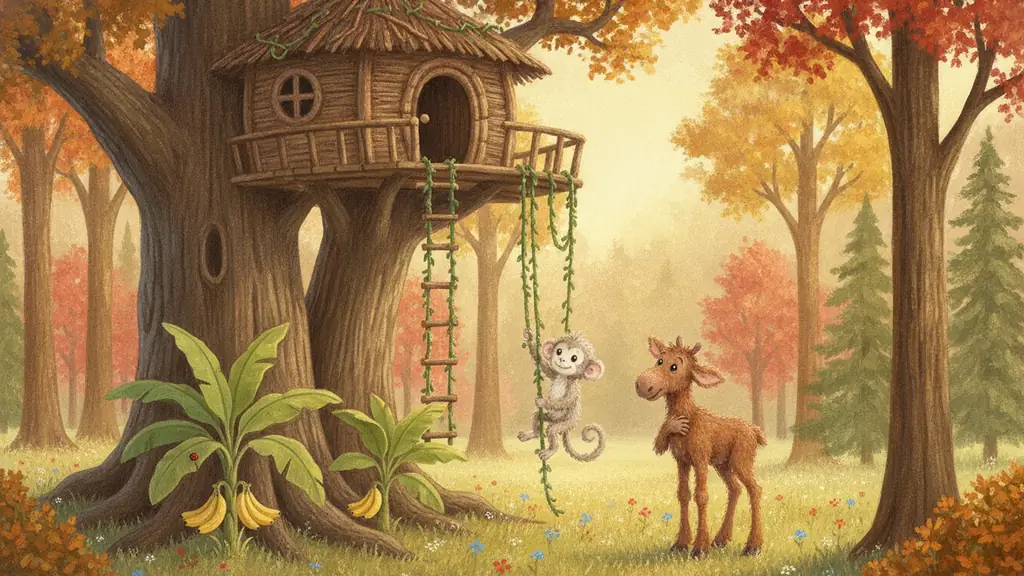
Mr. Monkey climbed down the vines with a funny feeling in his chest. The treehouse had been warm all week. Every night, he had snuggled in and never once wondered why. Somebody had been keeping him warm, and he never even saw it happen.
“Mr. Moose,” he said, “what if there are more?”
“More what?”
“More things somebody’s doing that nobody notices.”
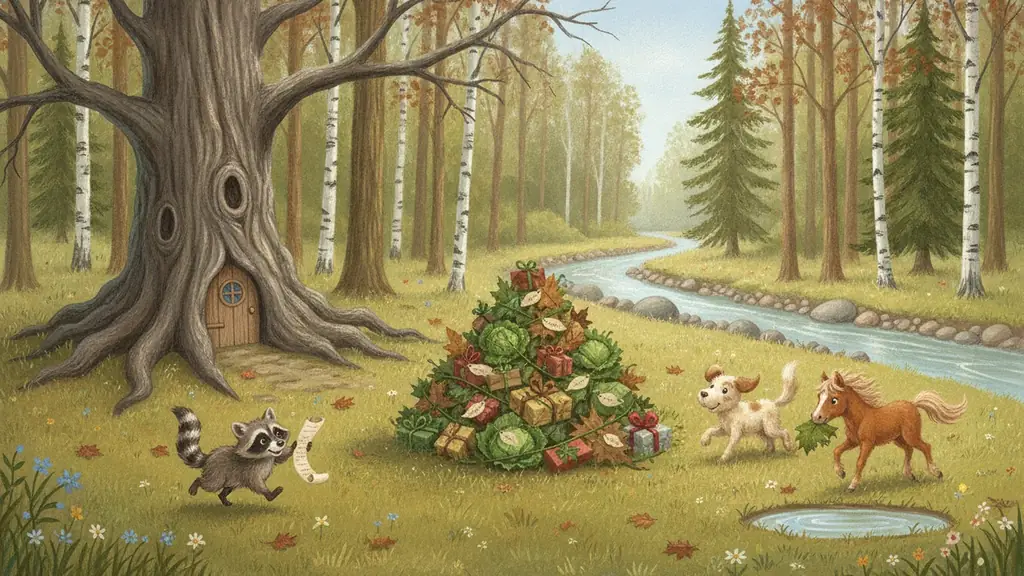
Mr. Moose looked around Sunny Square. It was very busy. In the middle stood Ricky’s Swap pile, already as tall as Bruno, and Ricky was running around it with his list. Dottie was running her present to the river and back again. Hazel was trying to wrap a puddle. Everybody was thinking about the Swap.
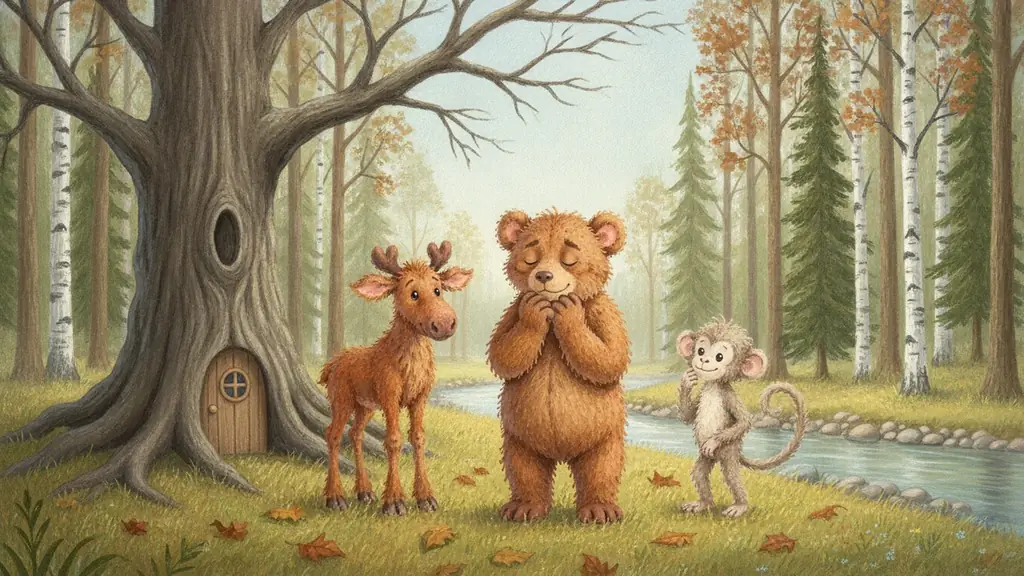
“The Feast is the day after tomorrow,” said Mr. Moose slowly. “Who’s making the food?”
Nobody had thought about it. Bruno thought about it right then, very hard.
“The Feast just comes,” he said. “Every year. It’s always there.”
“But who brings it?” asked Mr. Monkey.
Bruno thought some more. “The Feast,” he said.
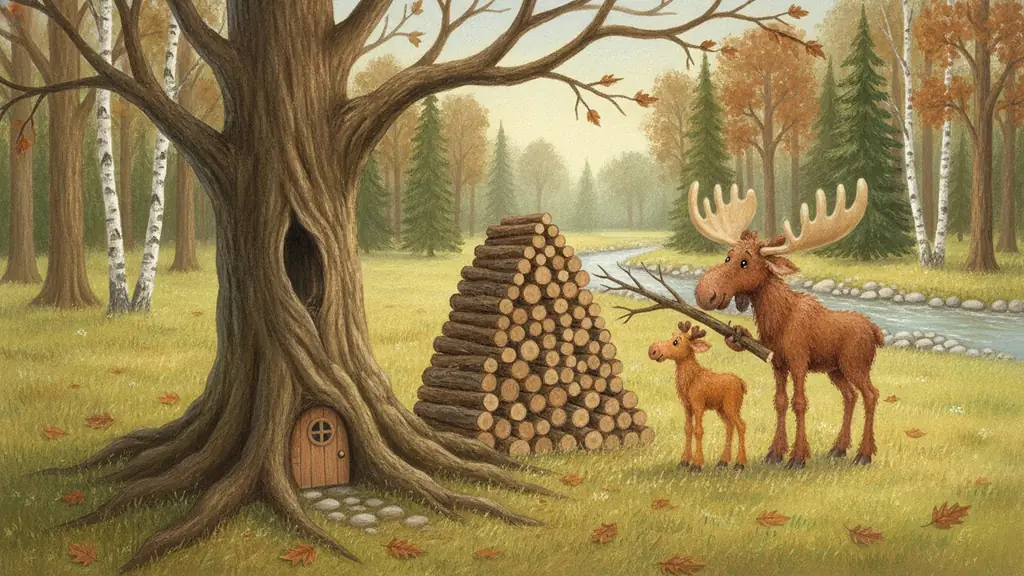
“Let’s go find out,” said Mr. Moose. “Let’s look for all the things nobody notices. On purpose.”
So they went hunting.
Behind the big maple, they found a woodpile taller than Mr. Moose’s antlers, every stick stacked neat and tight.
“Daddy,” asked Mr. Moose, “when did you make all this?”
Daddy Moose dragged one more branch onto the top. “A little every day,” he said. “Since summer.”
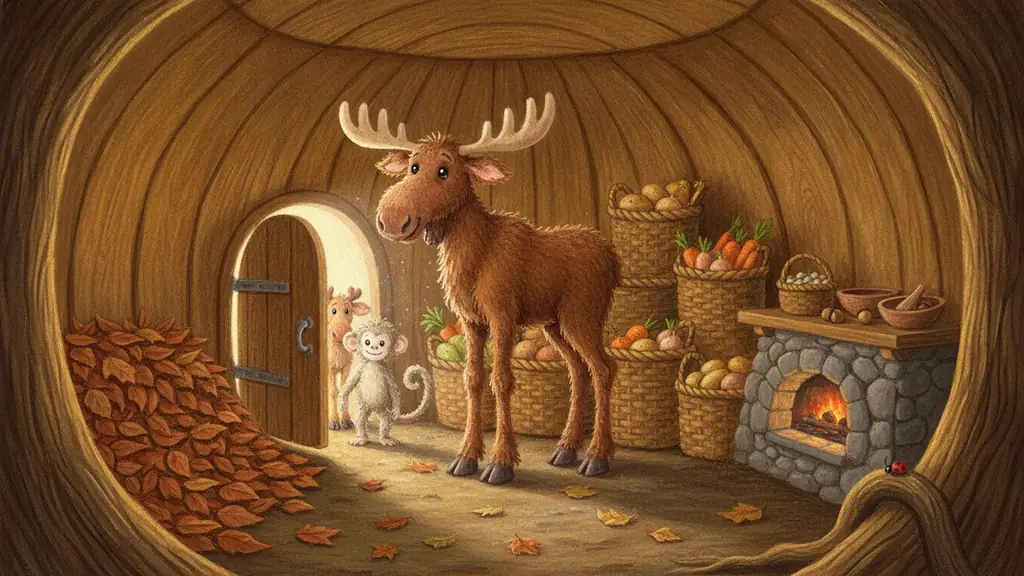
Under the maple’s roots, they found the cellar. Mama Moose was down there, in the cool and the dark, with baskets of potatoes and carrots and onions stacked to the ceiling. “I’ve been digging since the leaves were green,” she said.
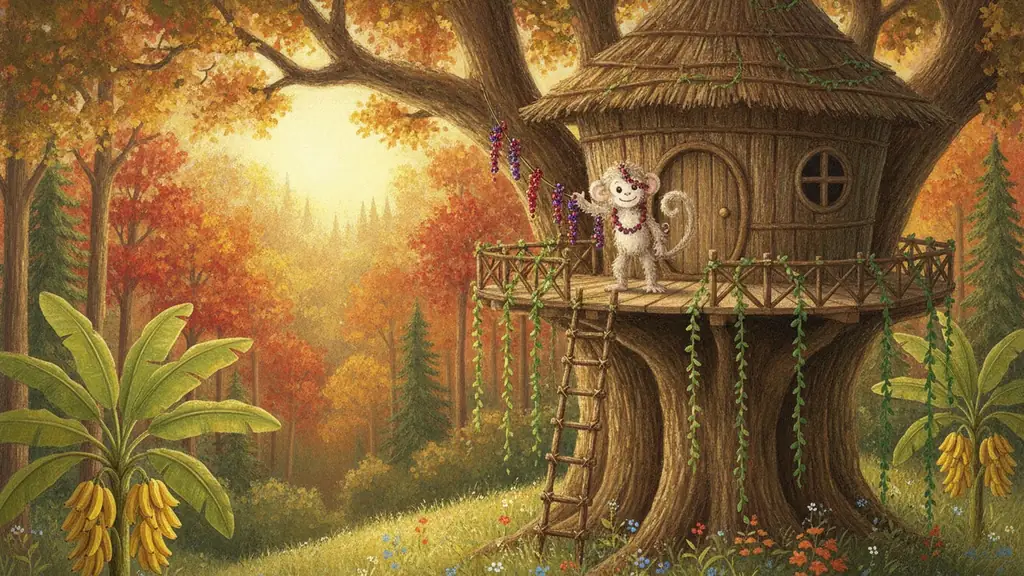
Up in the treehouse branches, they found long strings of berries, hung up to dry in the sun like red and purple beads. Mr. Monkey swung right through them on his way to see, and when he came out the other side, he was wearing every single one. Berry strings around his neck. Berry strings around his tail. A berry string hanging over one eye.
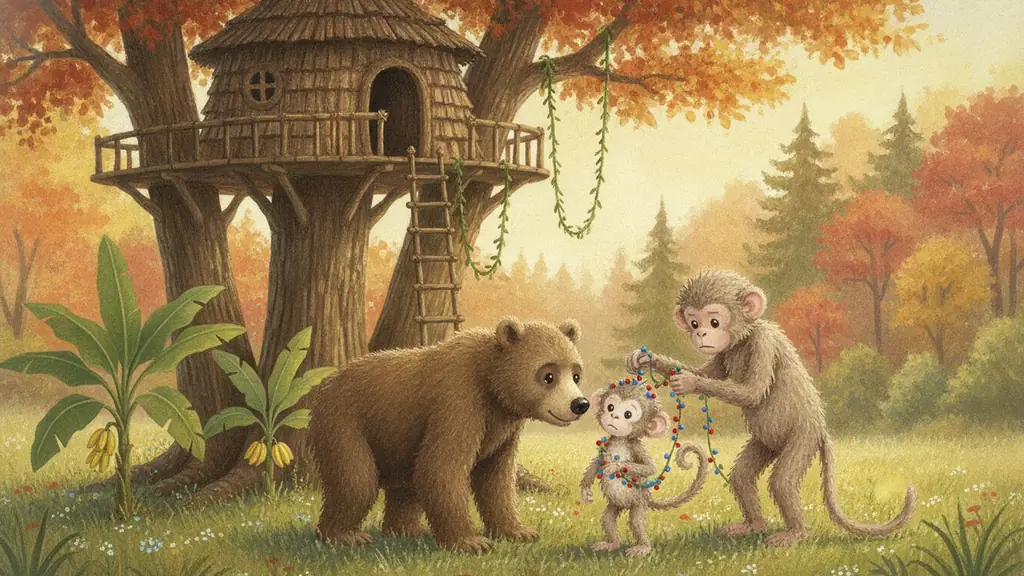
Bruno sniffed him. “Is that a snack?”
“No,” said Mr. Monkey. “It’s me.”
“Haw haw haw!” went Bruno.
“Ha-ha-ha!” laughed Mr. Moose. “You’re a berry bush.”
Mama Monkey helped him out of the berries, one string at a time, and hung them all back up. “I’ve been drying these since the summer, too,” she said.
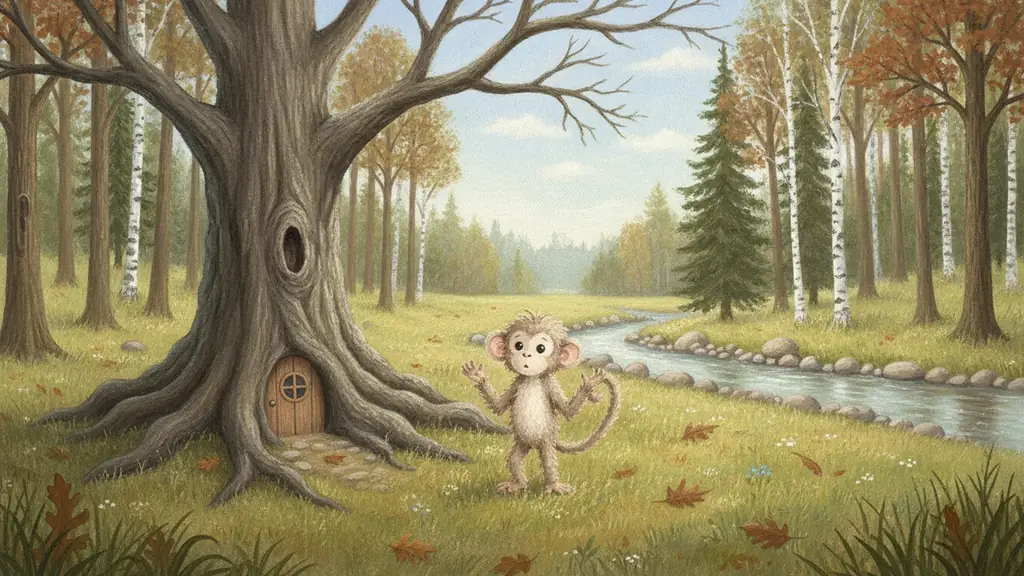
Mr. Monkey looked at all of it: the wood, the cellar, the berries, the moss. Every year, the Feast just came. And every year, somebody had been getting it ready the whole time.
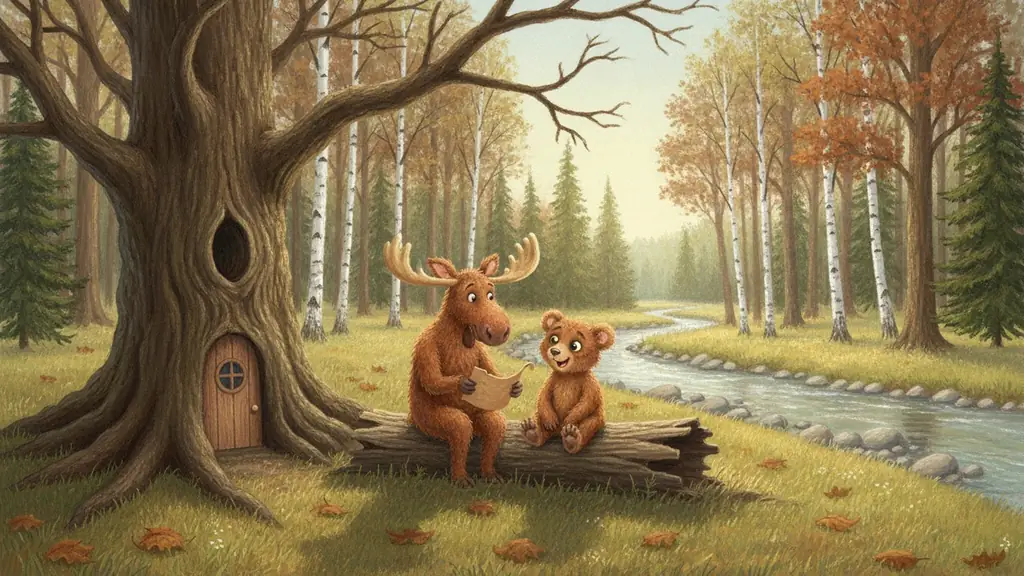
Back in Sunny Square, Mama Moose sat down on the long log with a piece of bark. “Now we plan the menu,” she said. “So we know what to make. Stew, of course, with the big squash. Potatoes. Berry pies. Bruno, could you please bring something for the gravy?”
Bruno’s eyes lit up. “Gravel?”
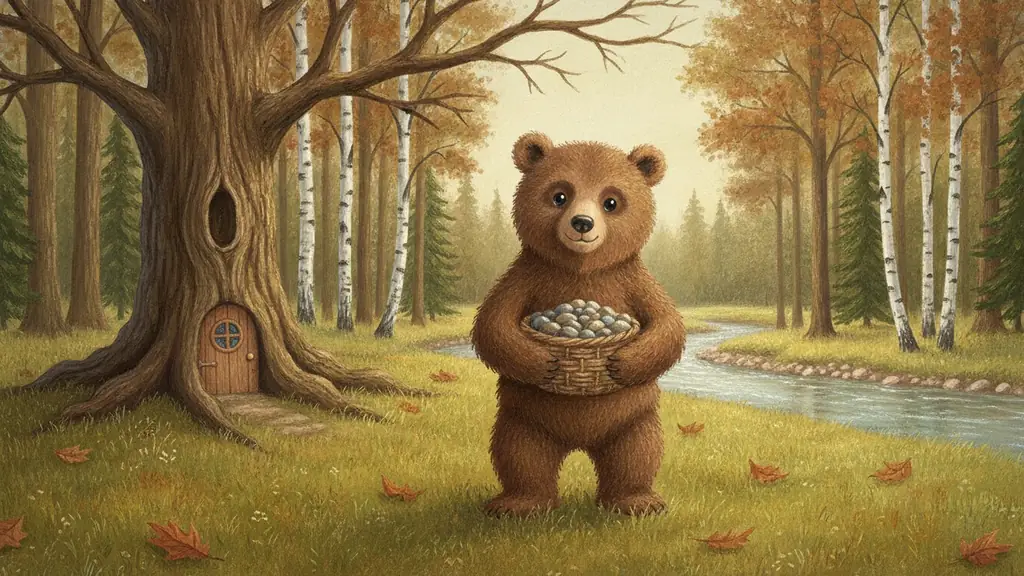
And before anybody could say anything, he was gone, down to the river. A little while later he came back with a whole basket of shiny, wet river gravel, very proud.
“For the gravel,” he said.
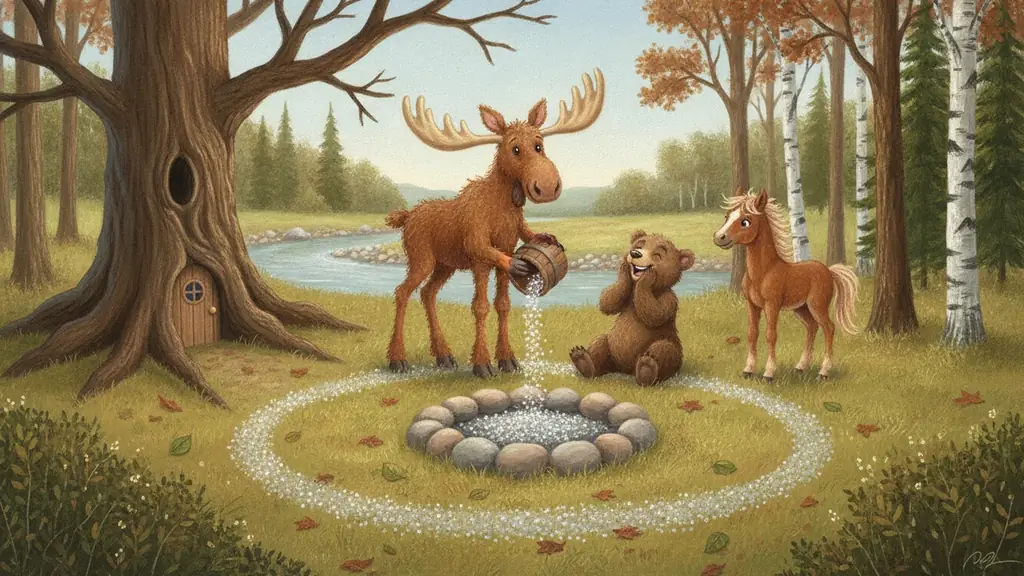
Mama Moose looked into the basket for a long moment. Then she smiled. “Bruno,” she said, “this is just what the fire ring needed.” And she poured the gravel in a neat circle all the way around the fire pit, where it sparkled.
“Hee hee hee… SNORT!” went Hazel.
“Haw haw haw!” went Bruno, happy as anything. “Is there more gravel on the menu?”
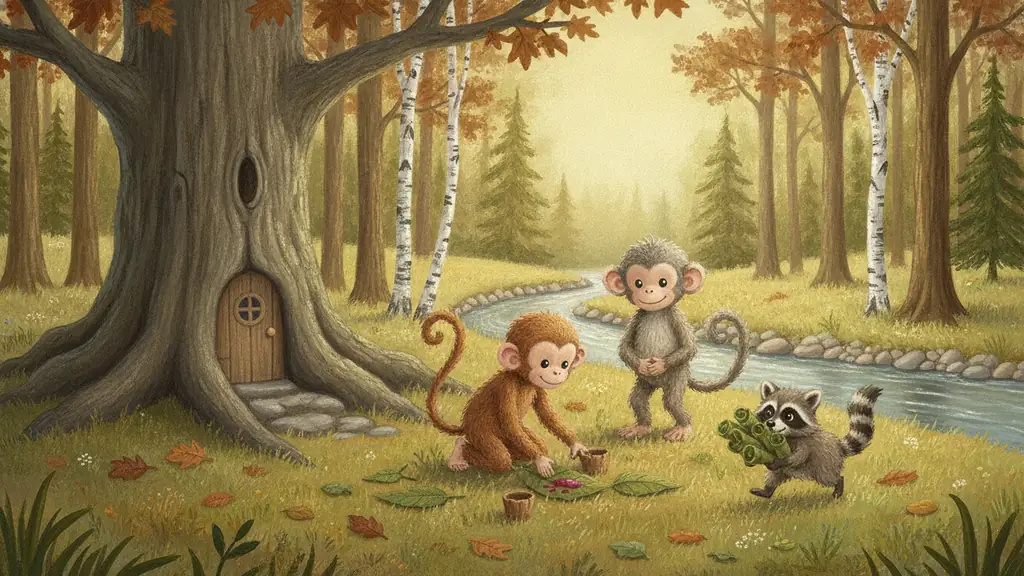
“Only around the fire,” said Mama Moose.
Ricky came rushing by with an armful of wrapping leaves. “Can’t stop! No time for food! I need WRAPPING!” And he was gone.
That afternoon, Mama Monkey brought out the paint. “These will be the very last new leaves before the Feast,” she said. “Today, we paint the things that help us so quietly that we forget they’re there.”
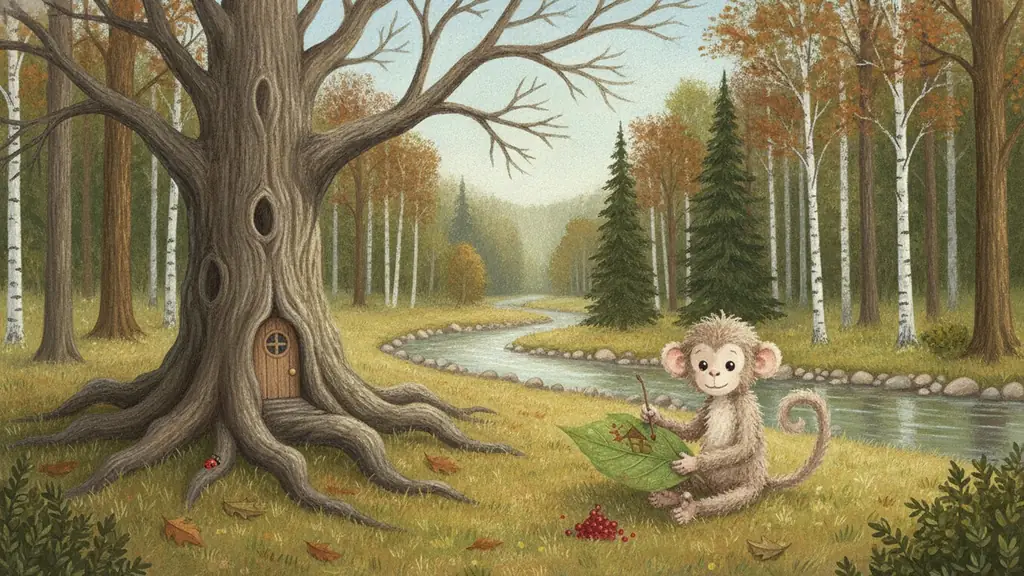
Mr. Monkey painted the front of his leaf: the treehouse, with its little round windows. Then he turned it over. On the back, he painted a little monkey shivering, with the wind going wheeeeoo through the walls. Then, right next to it, the same little monkey, snug and warm, with green moss in every crack.
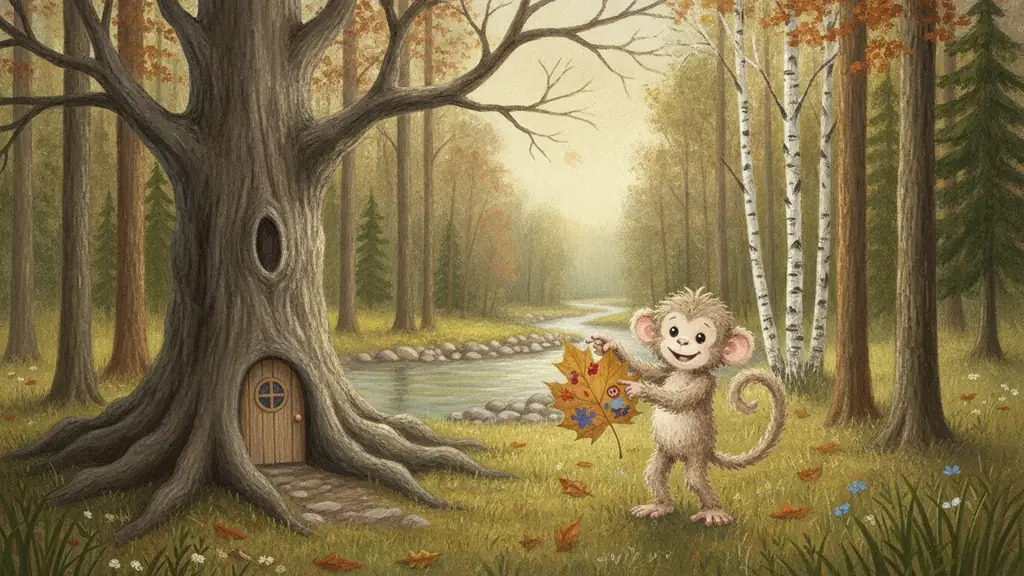
“That’s what it’s like without it,” he said, pointing at the shivering one. “And that’s what it’s like with it.”
Then, way down in the corner, he painted one more thing: a tiny, sleepy monkey with a moss mustache.
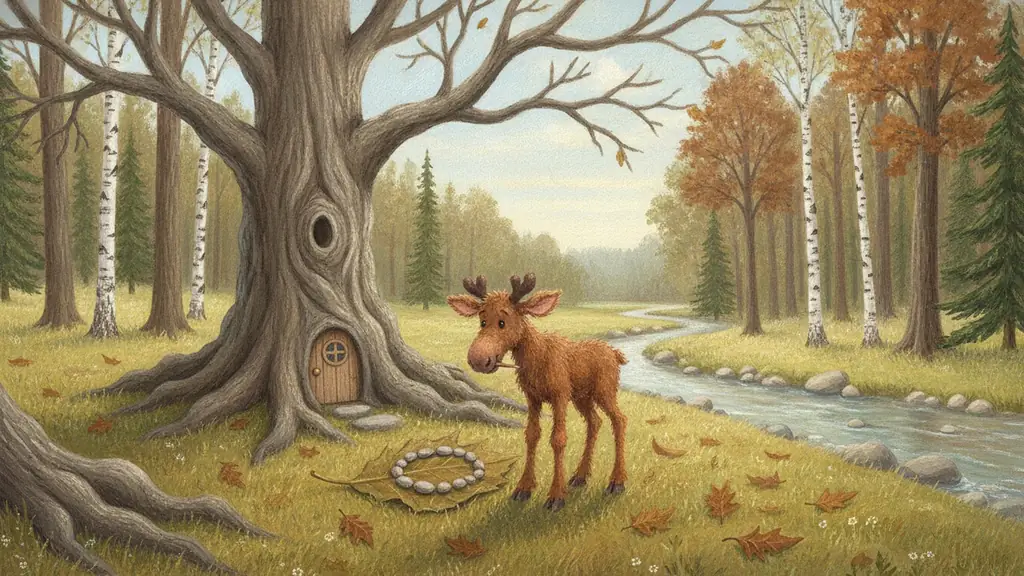
Mr. Moose painted the woodpile on the front of his leaf. On the back, he painted a cold, dark fire ring with nobody around it. And next to that, the same fire ring, crackling and bright, with everybody sitting close, and a sparkly circle of gravel all the way around.
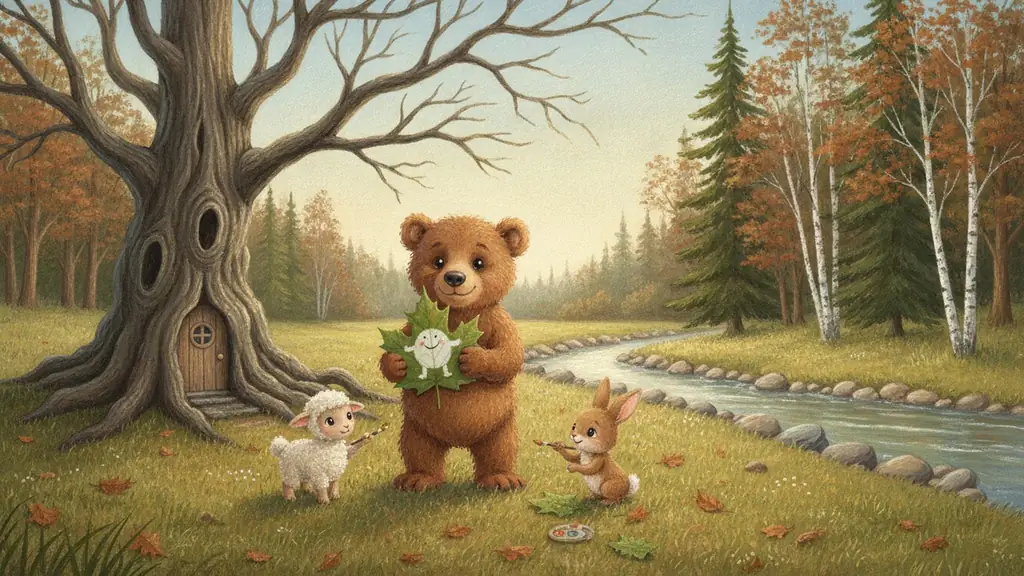
Benji painted the cellar. Shiloh painted the berry strings. And Bruno painted the Feast, a big, round, happy blob with legs, walking into Sunny Square all by itself.
“That’s the Feast,” said Bruno. “Bringing itself.”
“Hee hee hee!” went Mr. Monkey. “It has legs!”
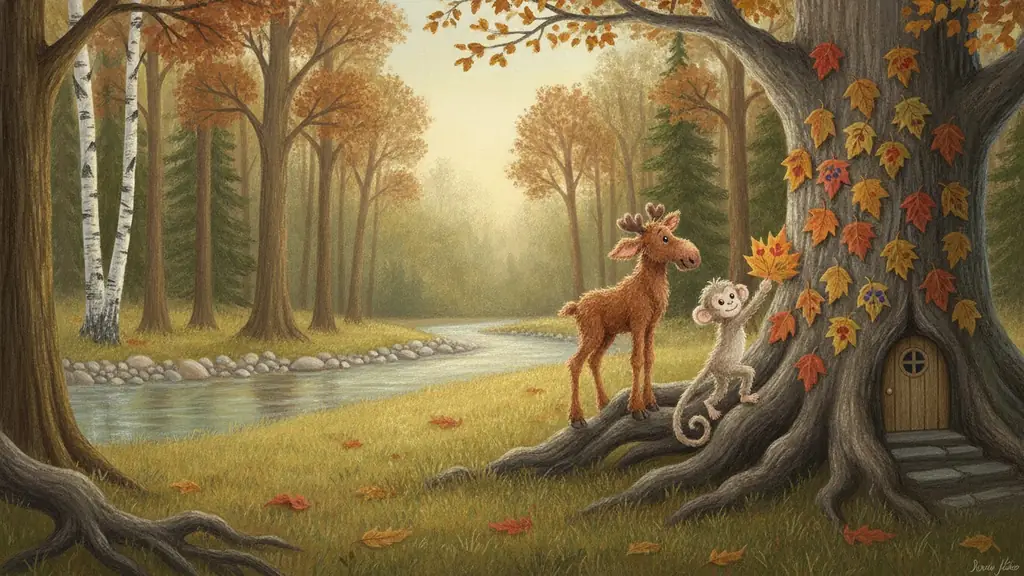
They tied all the leaves to the trunk of the Wishing Tree with two knots each, faces out, secrets in. The tree was so full now that the trunk was almost covered.
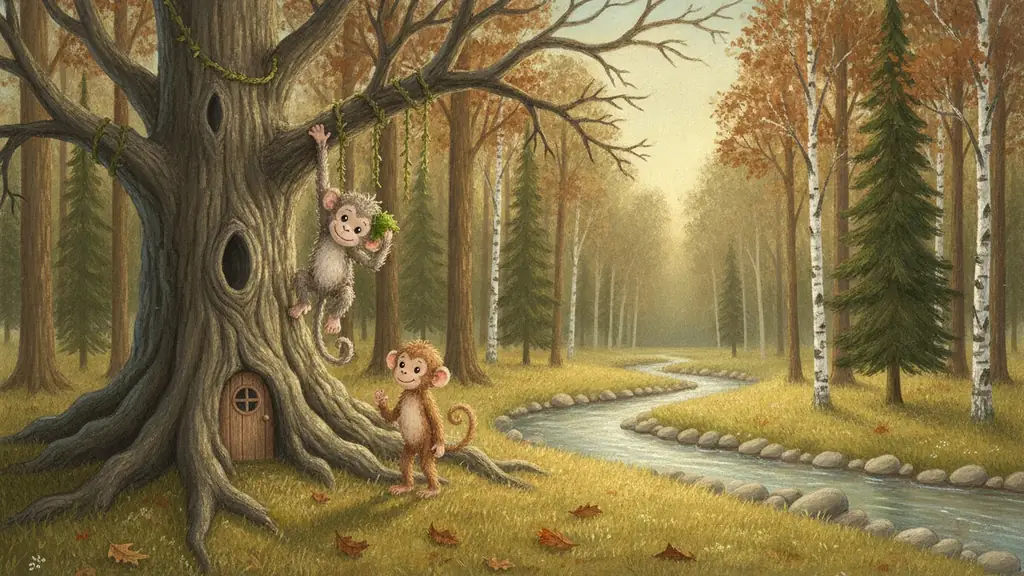
When they were done, Daddy Monkey came climbing down the vines at last, rubbing his eyes, with one piece of moss still stuck behind his ear. He saw the new leaves on the tree. He saw the treehouse on the front of one.
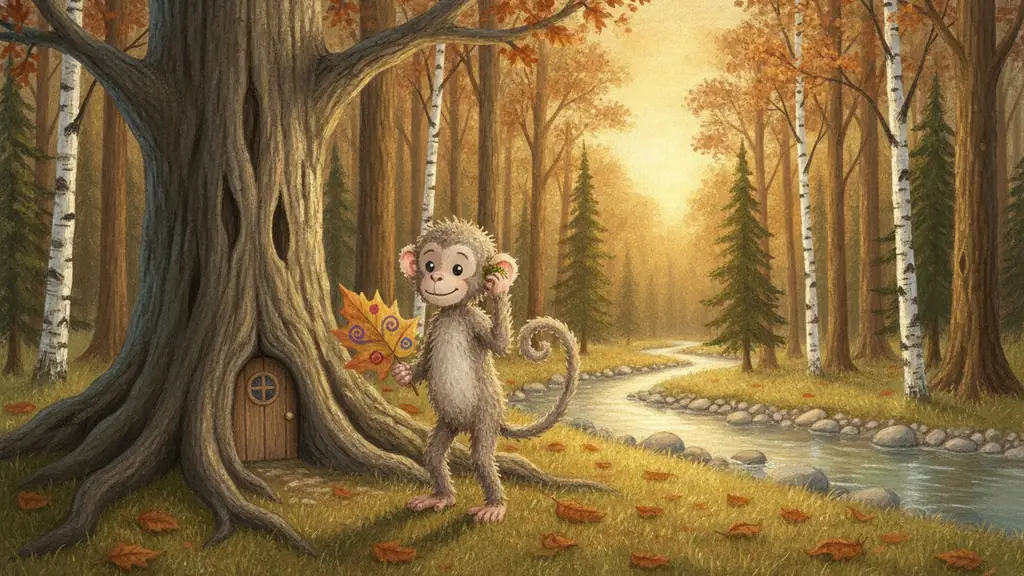
He didn’t peek. He just looked at it for a long time. Then he reached up and took the last bit of moss off his ear.
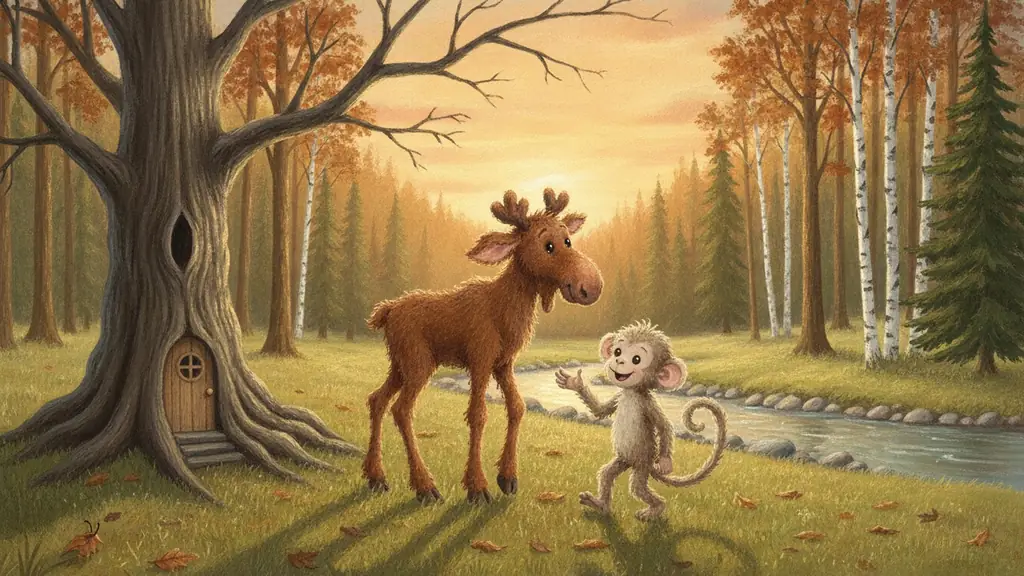
“What a day!” said Mr. Monkey as the sun went down. “Daddy filled every crack with moss, and he’s the Moss Boss. I swung through the berries and turned into a berry bush. Bruno brought gravel for the gravy, and now the fire has a sparkly ring. And we painted leaves for all the things nobody notices.”
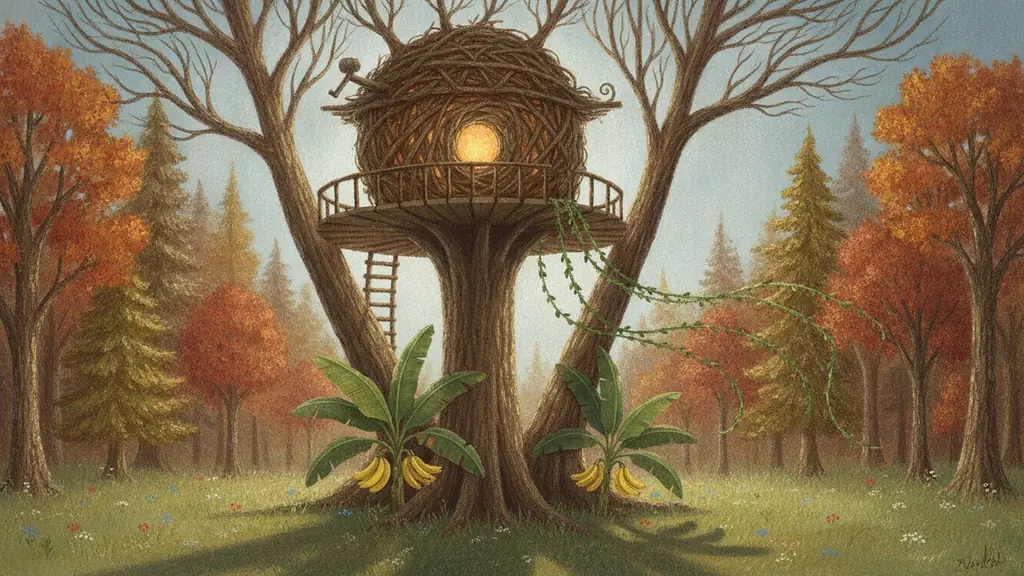
Mr. Monkey whistled, and Mr. Moose hummed, and together they sang:
We are better together,
Moose and Monkey forever.
And that night, the wind went whoo-OOO-ooo around the treehouse all night long, but not one single crack whistled back.