Who in this house chose a cost for my good this year?
Who took the hard path for my sake this year?
All four green layers are up, so Love week doesn't add one. Instead, on December 29 the tree gets its crown, the Star of Agape, and the rest of the week fills the space around it with stars. Generosity gave us something for the journey, Hope picked the path, Peace kept us on it, and Joy was the arrival. Love is the choice to set out again for someone else. For the next seven days, we look at agape, the kind of love that chooses a cost for another person's good, and at the people who loved us that way this year.
December 29 to 31: Saturate. These three days are for receiving, one circle each: the people in your house (Core) on December 29, the people within your reach (Community) on December 30, and the good that comes from beyond anyone's grip (Cosmos) on December 31. Each day ends with a star.
January 1: Celebrate. The fifth and last candle is lit from the fourth, and everyone reads the gold stars with their own name on them, gathered beneath the Star of Agape.
January 2 to 4: Participate. These three days are for giving love, one currency at a time: time on January 2, resources on January 3, and words on January 4, when everyone writes a Love Letter.
Every daily reading has the same three parts: a picture for the heart, a point for the head, and a practice for the hands. On the giving days, the picture is a story, then a song, then a scene from a film.
Picture a living room a few minutes after midnight on New Year's Eve. The furniture is pushed against the walls, the music is loud, and everybody is dancing however the song makes them feel. Nobody trained for this, and nobody is keeping count. When somebody gets tired, they sit down and grab another cookie. It's a great way to start a year.
Now picture a ballerina standing in the wings of a theater, waiting for her cue. When she walks onstage, she'll look like she weighs nothing. The audience won't see what it took to get there: years of training, the same movements repeated thousands of times, feet that hurt inside those shoes. Tonight she's tired, and she doesn't especially feel like dancing. She's going to dance anyway, and precisely, because her partner is counting on her to be exactly where she's supposed to be when he leaps.
We call both of those things dancing, and they both are. But the second one is so different that English borrowed a word for it. Nobody calls it "serious dancing." We kept the French word, ballet, because it names a particular discipline with its own shape and its own cost.
On January 1, your family lights the fifth and last candle from the fourth, and agape completes the answer when the candle words ask, "What do we pass on?" This week is about a kind of love that needs its own word, and the people who gave it to us.
In English, we love God, we love our family, and we love pepperoni pizza. A word that means everything ends up meaning very little. Jesus once warned about salt that loses its saltiness: it still looks like salt, but it no longer does the job. "Love" has gone the same way.
The first followers of Jesus faced a version of that problem in Greek. To describe the love they had seen in him, they reached for a word, agape, which was almost never used outside the Greek translation of the Jewish scriptures. Imagine doing that with "fond," which nobody uses as a verb: "For God so fonded the world that he gave..." It sounds strange, and the only way to learn what it means is to look at what God did. The comparison only gives the feeling, though. In Greek it actually ran the other way: the verb in that famous sentence was an everyday word, and the rare one was the noun, agape. For non-Jewish readers, agape really was a brand-new word. For reference, Plato, writing about four hundred years before Jesus, used the ordinary Greek verb for love nearly 1,500 times and the noun agape not once. And it isn't only Plato: outside the Greek translation of the Jewish scriptures and a few other Jewish writings, the noun almost never turns up in Greek written before Jesus's time. The writings of his first followers use it more than a hundred times. For those readers, the story of Jesus became the word's definition, especially the part that even people today who know very little about him usually know: he chose to die on a Roman cross. His first followers pointed to that death as the clearest picture of agape there is.
So this week does what English did with ballet: it keeps the original word. Agape is love that chooses a cost for someone else's good, whether or not anything comes back. It works two ways: "I don't want to, but I will" (getting up at three in the morning with the sick kid) and "I want to, but I won't" (holding back the sharp comment you've been saving).
Jesus taught that loving your neighbor was one of the greatest commandments. In Luke's account, he teaches people the Golden Rule and even tells them to love their enemies. Later, a religious lawyer tests Jesus, and their conversation turns to the command to love your neighbor as yourself. But the lawyer, wanting to justify himself, asks, "And who is my neighbor?" Jesus answers with a story most of us met back in November, in the week called Important. A man is robbed and left half dead by a road. A priest and a temple assistant, the model of a devout religious life to his listeners, pass by on the other side. Then a Samaritan, from a group the listeners despised, stops, bandages him, and pays for his care at an inn. The man couldn't pay him back or even thank him. Jesus ends the story with a question: "Which of these three do you think was a neighbor to the man who fell into the hands of robbers?" Agape doesn't wait to find out who counts as a neighbor. It becomes one.
Who under your roof chose a cost for your good this year, and what did it cost them?
There's no new green layer today. Instead, the tree gets its crown: cut one large star from yellow or gold paper (or use the printable Star of Agape, if you have it) and tape it to the very top, above the Joy layer. Love week's ornaments are smaller stars, and they cluster around it.
The Star of Agape is drawn from three letters. Take a capital A. Turn a second one a fifth of the way around and lay it underneath. Turn a third the other way and do the same. The three As become one star. On January 1, the candle words sum it up: "Three As, one star." It's how the Advent Overflow star is drawn: loves received, laid one over another, giving off one light. Each A is for agape, and each stands for one of this week's three circles: the people in your house (Core), the people within your reach (Community), and the good that comes from beyond anyone's grip (Cosmos). Over the next three days, look for the agape that reached you from each one, starting tonight with the people under your roof. If you have the Workbook, its "Three As, One Star" page shows how the letters fit together.
Cut a gold or yellow paper star for each person in your house other than you. A lopsided star works fine.
On the front, write the person's name.
On the back, thank them for one time this year they chose a cost for your good: something they did when they didn't want to, or something they held back when they wanted to. "Thank you for driving back to school for my forgotten lunch, even though it made you late."
Tape it near the top of the tree, writing toward the wall.
Kids' story: read "The Storm Night" together, from The Overflow Adventure in Wanderful Woods.
Time: 15 to 20 minutes for the stars, plus a few minutes for the Star of Agape.
With kids: ask, "Has someone in our family done something hard for you, even when they didn't feel like it?" A child can draw that moment on the back of the star, or tell you what to write.
If you live alone: use the choice you made for line 6 of your plan in Prepare.
Hello, my wonderful story friends! Last time, Tessie climbed all the way to the top of Lookout Ledge, and from up there, the friends saw something nobody had ever seen before: one little home, far past the bramble patch, still dark. Tonight, a big storm is coming.
Have you ever done something you really didn’t want to do, because somebody needed you? Let’s go see what happens on the storm night.
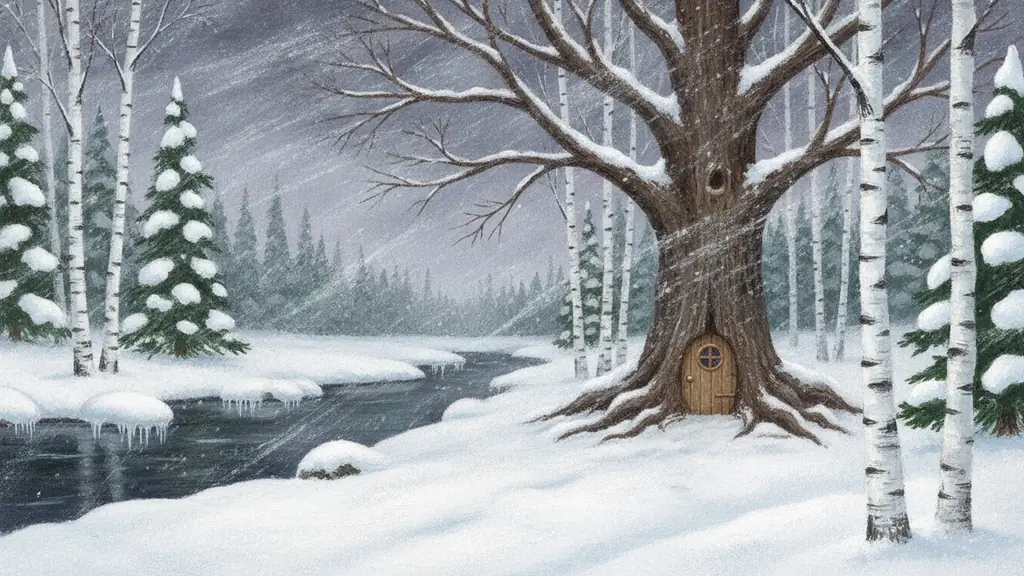
The sky turned gray in the afternoon, then darker gray, then almost purple. The wind started to howl around the Moose home, ooo-WOOO, ooo-WOOO, and the snow came down so thick and fast that you couldn’t see the Wishing Tree from the front door.
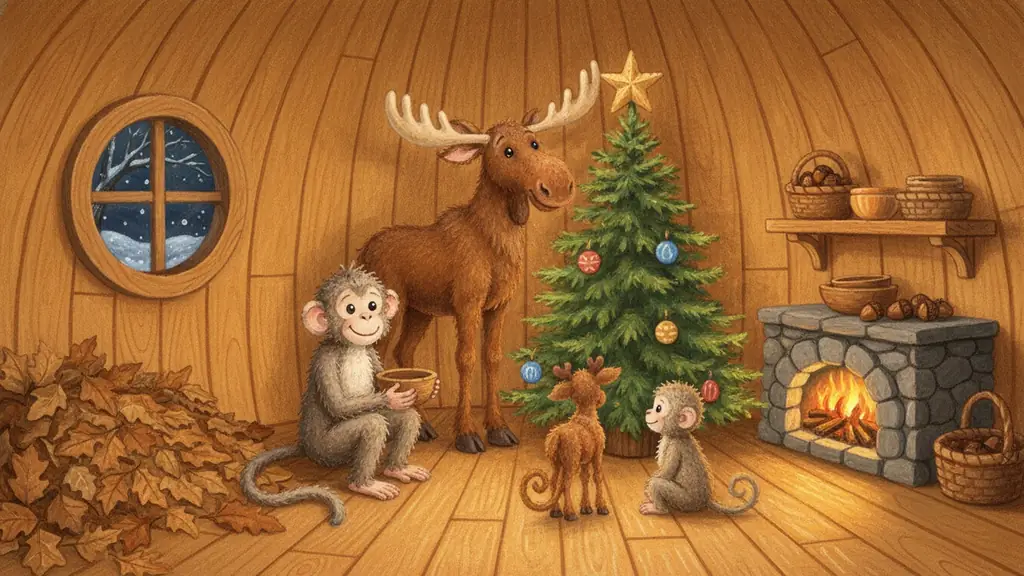
Both families were inside the Moose home, because the treehouse swayed too much in a storm like this. The fire was crackling. And on the little green pine by the door, Mama Moose had just put something new at the very top: a big gold star, cut from bark and painted bright, shining above all the circles.
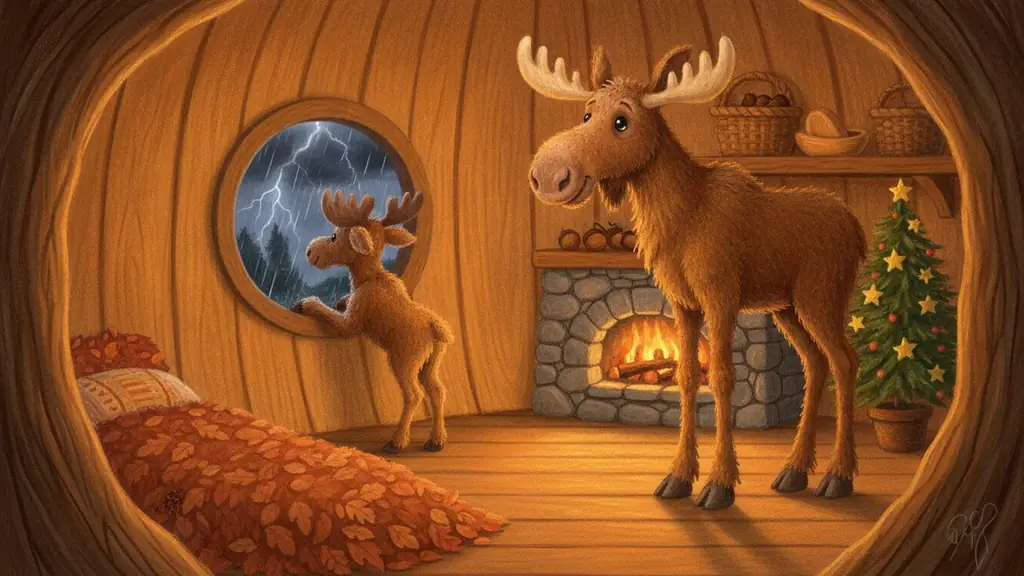
“There,” said Mama Moose. “Now the tree has its crown.”
Mr. Moose looked out the window, toward the far edge of the woods. He couldn’t see anything but snow. But he knew it was out there. The little dark home, past the bramble patch.
“It’s out there in the storm,” he said quietly.
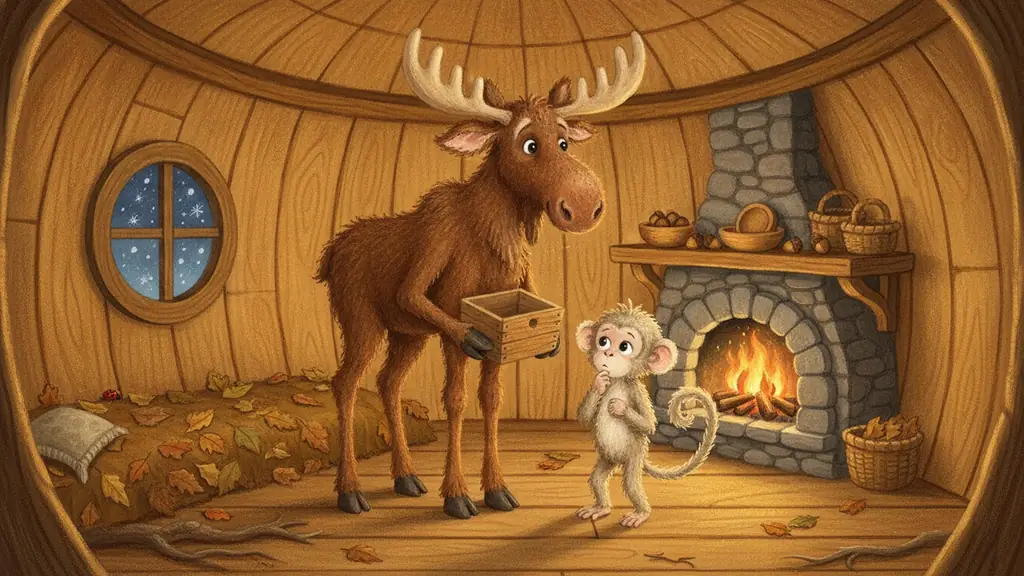
“Tomorrow,” said Mr. Monkey. “When the storm stops. We’ll find out whose it is.”
Then the fire made a small, sad sound, fssss, and got smaller.
Daddy Moose looked at it. He looked at the wood box. It was empty. “The woodpile’s out back,” he said. “We need more, or the fire won’t last the night.”
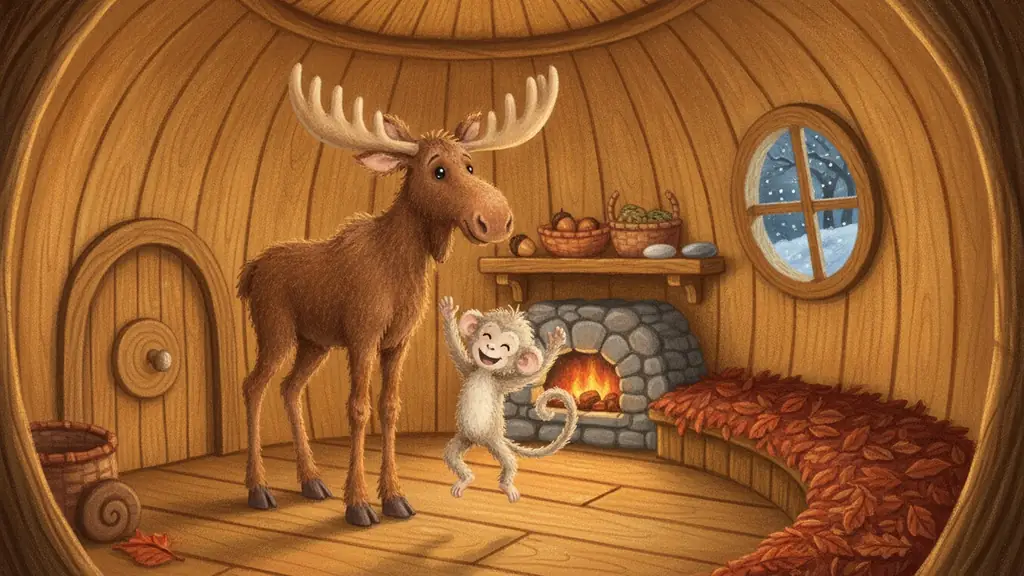
Everybody looked at the window. The wind howled. The snow went sideways.
“I’ll go,” said Daddy Moose. “But I could use a helper. Somebody to hold the door and carry a few logs.”
Mr. Monkey jumped up. “Me! I’ll go!”
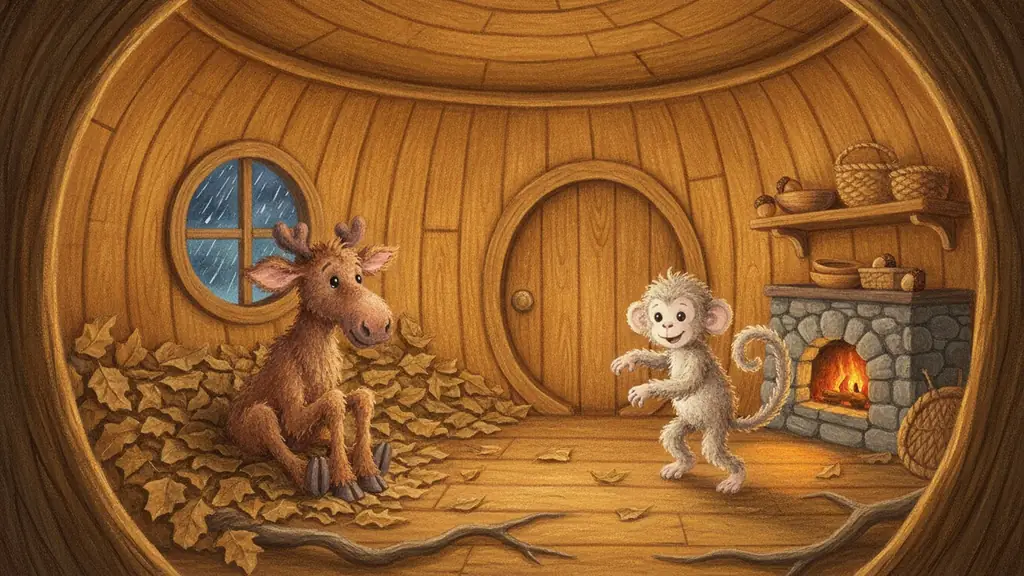
Mr. Moose didn’t jump up. He looked at the dark, howling window, and his tummy squeezed up tight. It was so cold out there. So loud. So dark. He did not want to go out in that. Not one bit.
Mr. Monkey was already at the door, bouncing. “Come ON, Mr. Moose! Hurry up! Don’t be such a scaredy-moose!”
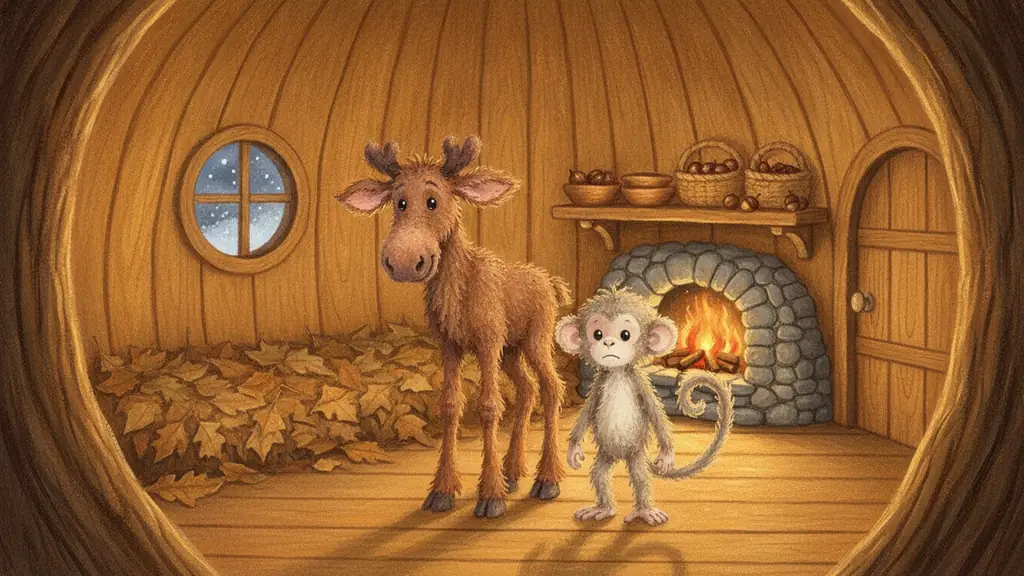
Mr. Moose’s ears went down flat. He didn’t say anything. He just looked at the floor.
And Mr. Monkey saw his face, and his bouncing stopped. His tummy dropped down to his toes. He had said something unkind. And Mr. Moose’s ears were all the way down because of it.
He came back from the door.
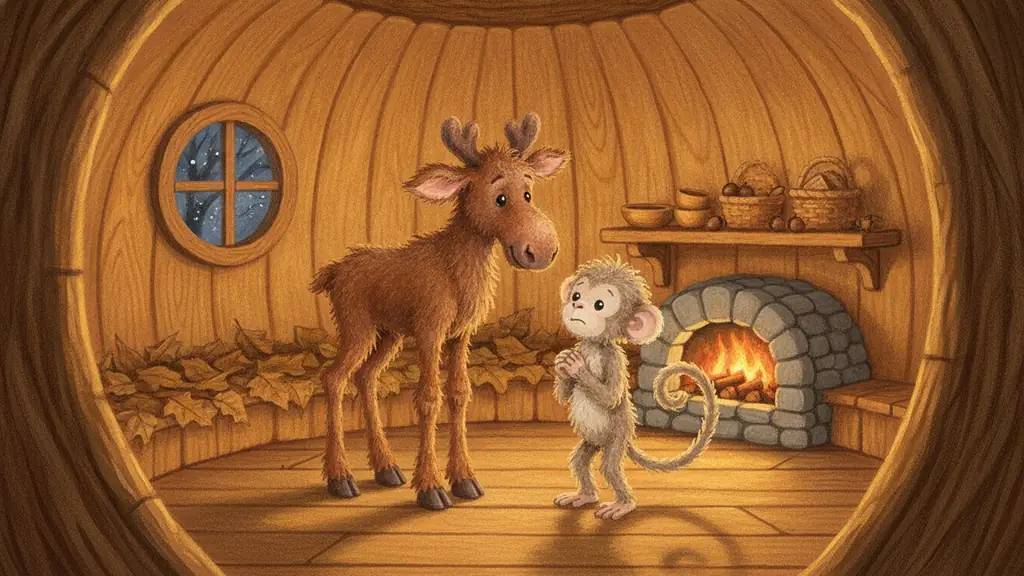
“I shouldn’t have called you that,” said Mr. Monkey. “It wasn’t kind. I’m sorry. I won’t say it again. How can I make it right?”
Mr. Moose looked up. “Yeah, I didn’t like that,” he said. “But we all make mistakes. Thank you for apologizing. I forgive you.”
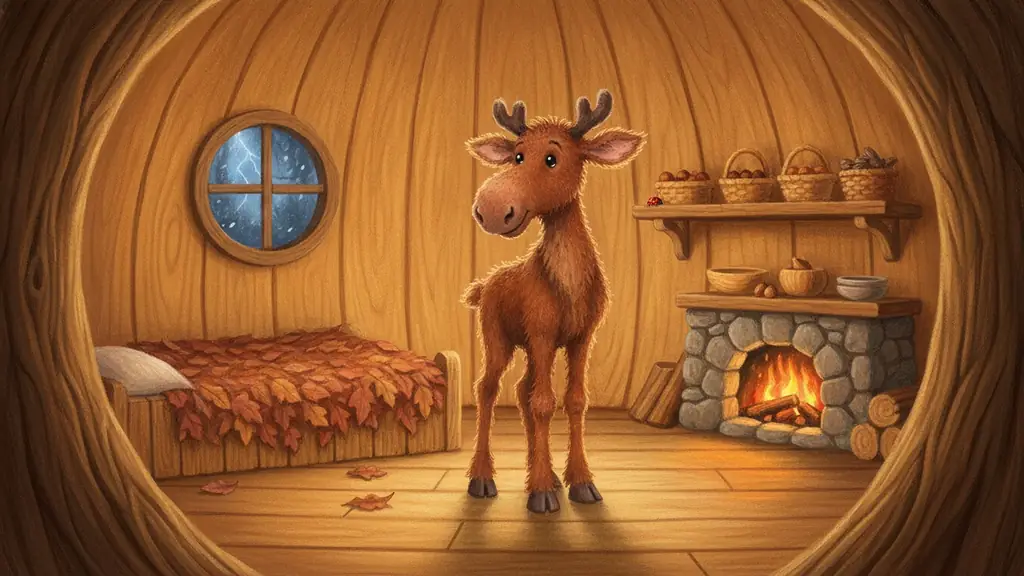
Then Mr. Moose thought about it. He thought about the fire going out, and everybody getting cold, and everybody waking up shivering. He thought about Daddy Moose, going out there with only one small helper.
He didn’t want to go. But that didn’t change anything.
He stood up. “I don’t want to,” said Mr. Moose. “But I will.”
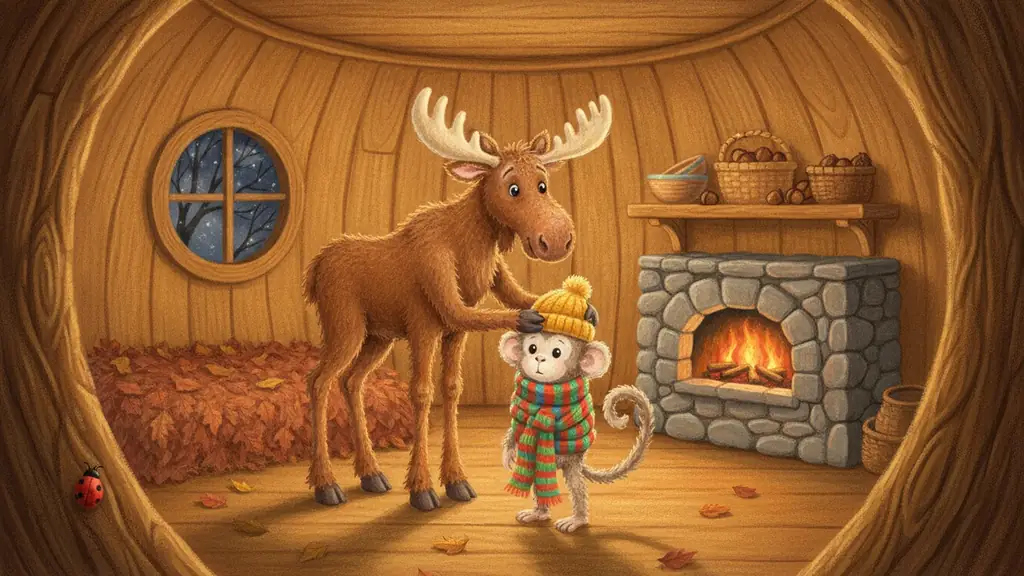
First, Mama Moose bundled them up. She pulled Mr. Monkey’s yellow hat down over his ears. She wrapped Mr. Moose’s scarf around his neck once, twice, three times, four times, five times, until all you could see of Mr. Moose was two eyes and two antlers poking out of a big round ball of scarf.
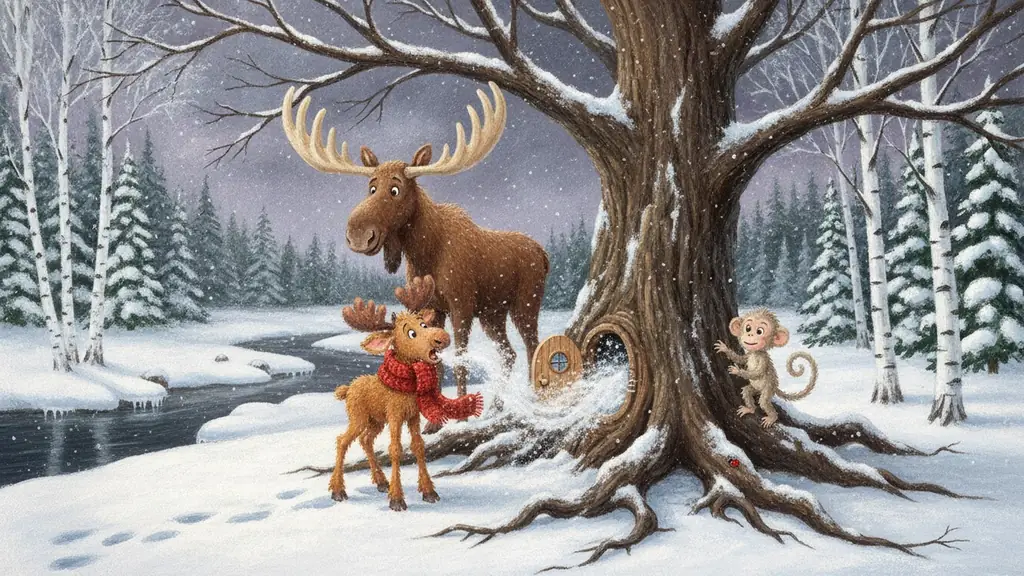
“I can’t turn my head,” said Mr. Moose, from inside the scarf.
“Hee hee hee! You’re a scarf with antlers!” said Mr. Monkey.
Then Daddy Moose opened the door, and the storm came in like a big cold hug that nobody asked for, FWOOOSH. Mr. Moose opened his mouth to say something, and a whole mouthful of snow blew right into it.
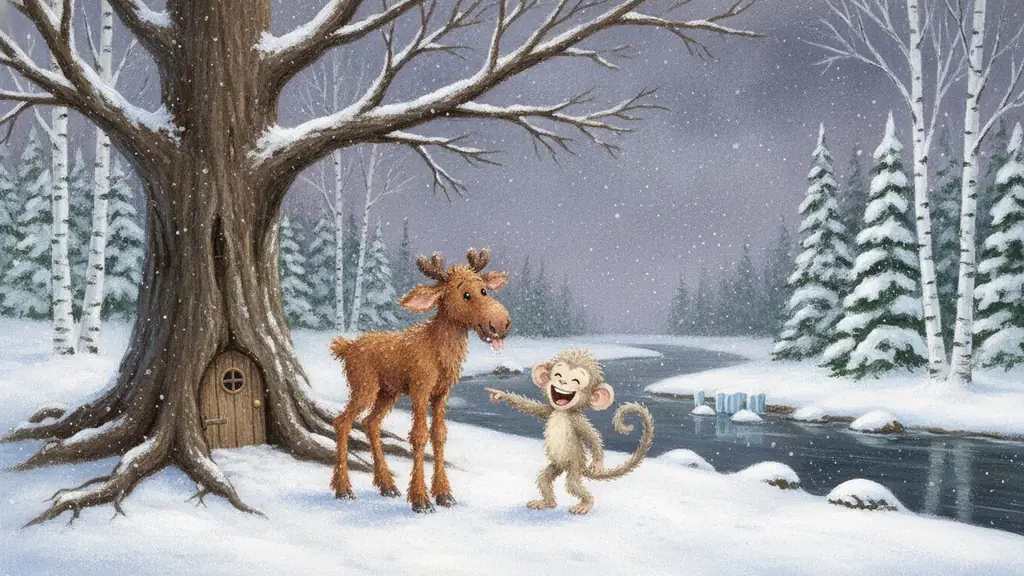
“Bleh,” said Mr. Moose, with snow on his tongue.
“Hee hee hee!” went Mr. Monkey. “Mr. Moose ate the storm!”
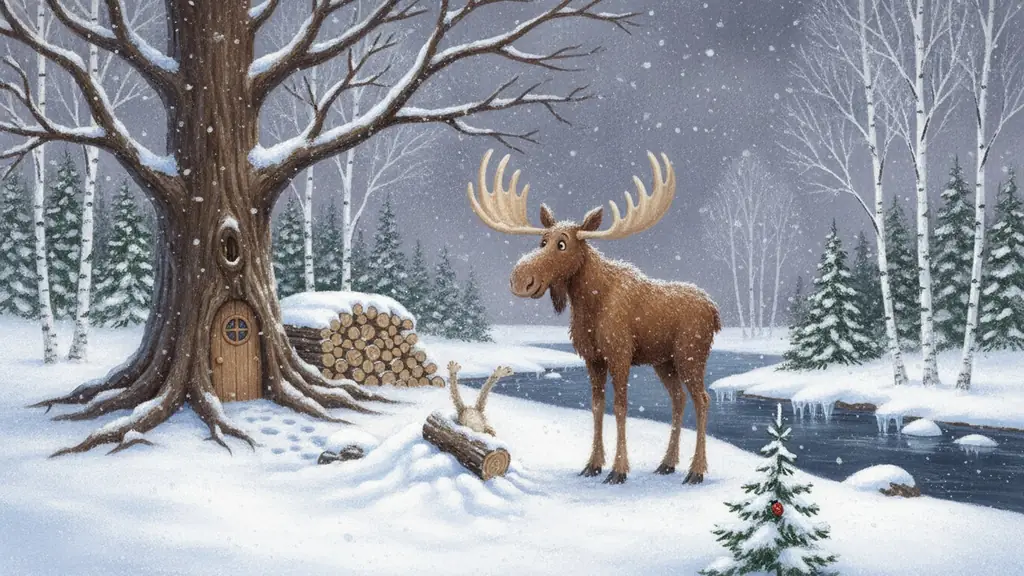
Out back, the woodpile was covered in snow. Daddy Moose dug out the logs. Mr. Monkey grabbed one, and the wind grabbed Mr. Monkey, and the log and Mr. Monkey went tumbling into a snowdrift together, POOMF. All that was left showing was two monkey feet sticking straight up out of the snow.
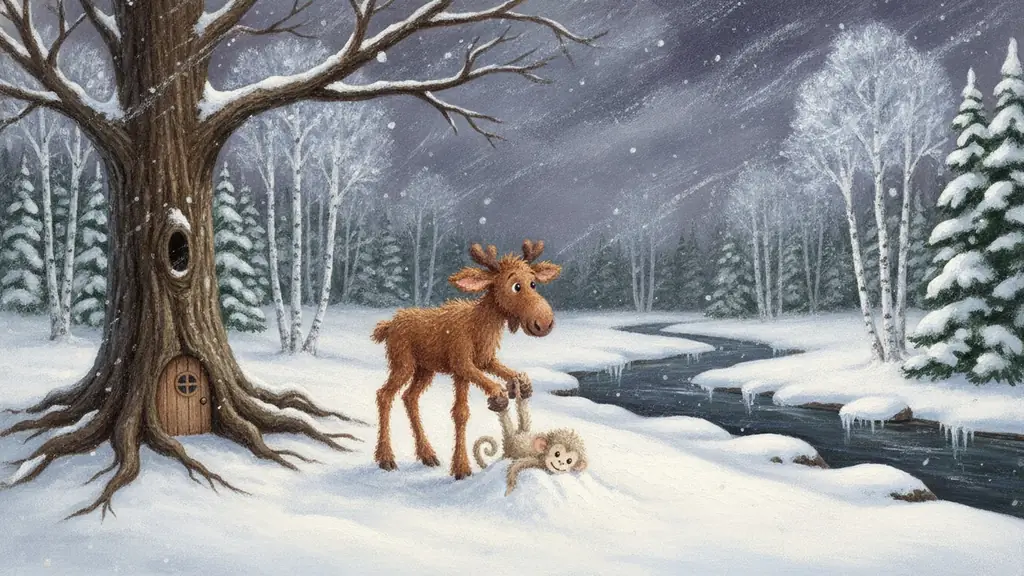
“Mr. Monkey!” called Mr. Moose. “Are you okay?”
The two feet wiggled. “I’m okay!” came a muffled voice from inside the drift. “I’m upside down! Hee hee hee!”
Mr. Moose pulled him out by the feet.
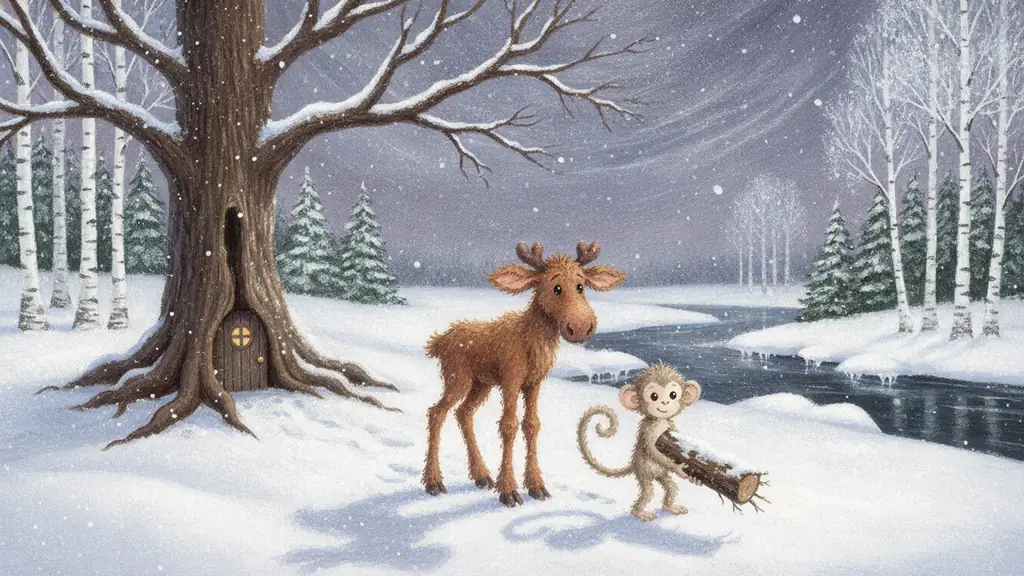
But Mr. Monkey was too small to carry many logs. He could only carry one at a time, and every time the wind blew, it tried to take him and the log away together. Mr. Moose thought about it. He had something Mr. Monkey didn’t.
“Put them on my antlers,” he said.
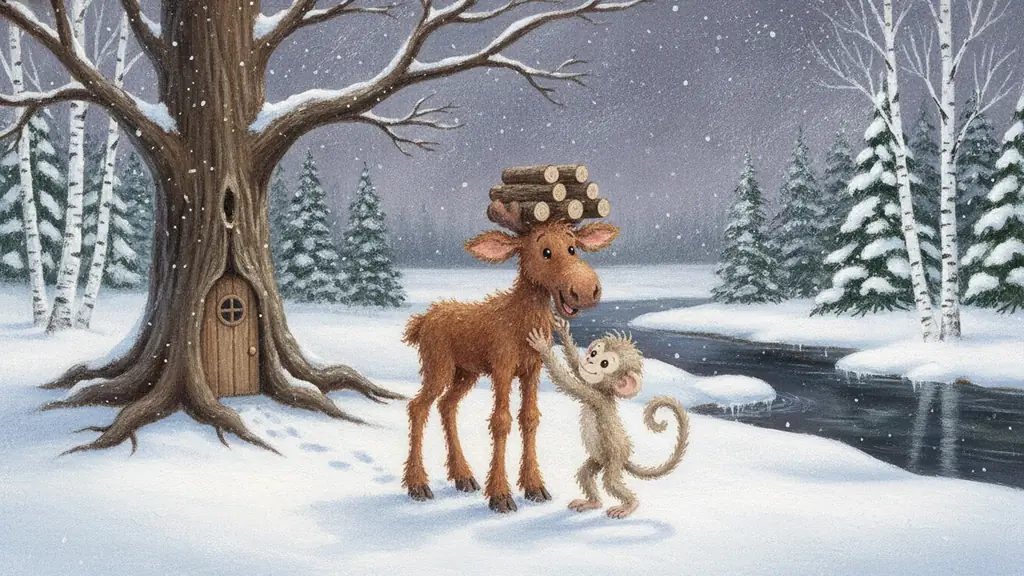
So Mr. Monkey climbed up and stacked the logs across Mr. Moose’s antlers, one, two, three, four, five, until Mr. Moose was wearing a whole woodpile on his head.
“Mr. Moose!” said Mr. Monkey. “You’re a walking woodpile!”
“Ha-ha-ha!” laughed Mr. Moose, very carefully, so the logs wouldn’t fall off.
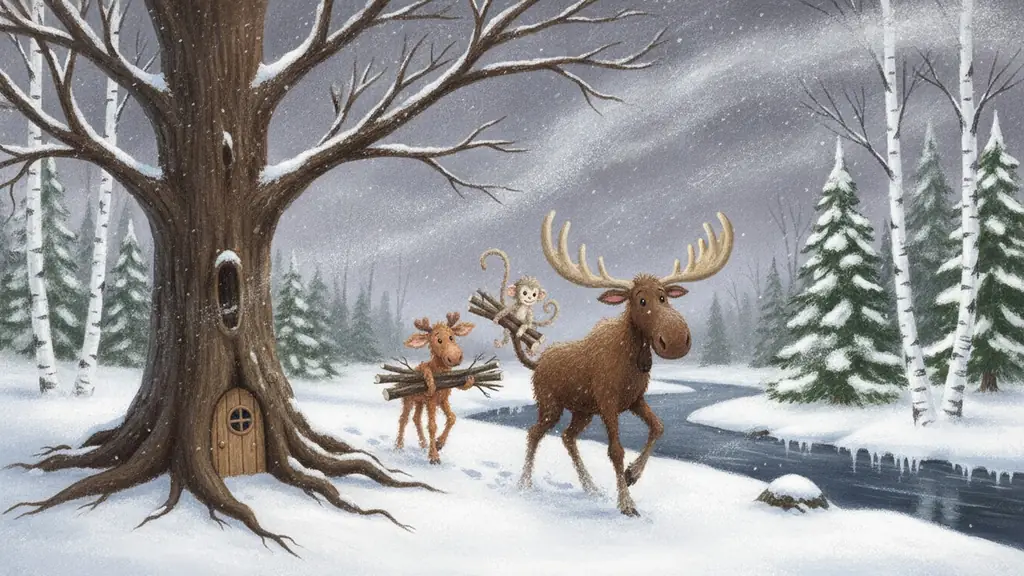
And they walked back through the storm together, slowly, Mr. Monkey holding on to Mr. Moose’s tail so he wouldn’t blow away, and Mr. Moose carrying his woodpile, with Daddy Moose behind them with his arms full.
The fire roared up big and warm again. Everybody cheered.
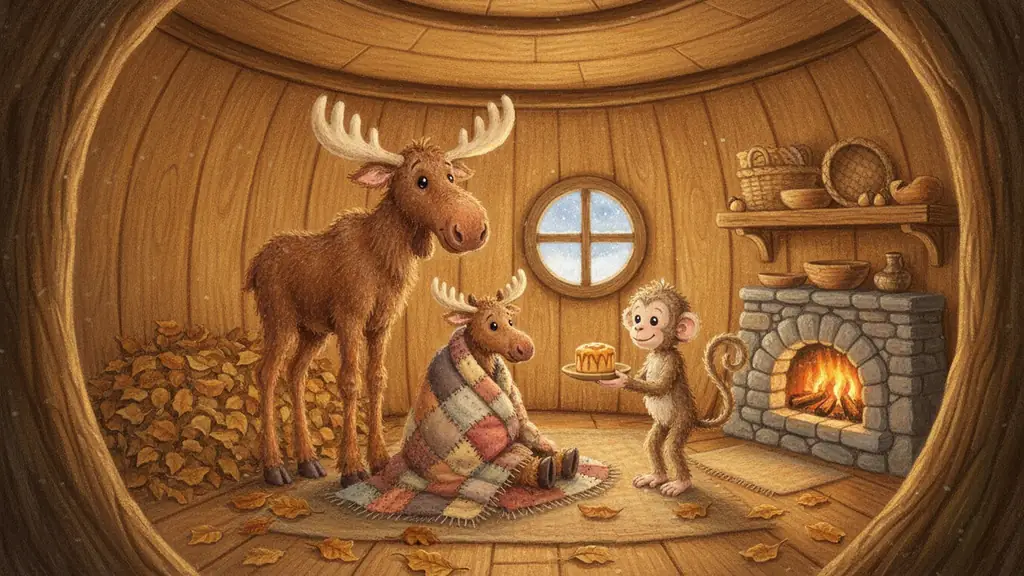
Mr. Moose sat down by the fire, still covered in snow, and shivered. Mama Moose wrapped him in a blanket.
Then Mama Monkey brought out a plate. On it was one honey cake. Just one. The very last one.
“For whoever went out in the storm,” said Mama Monkey.
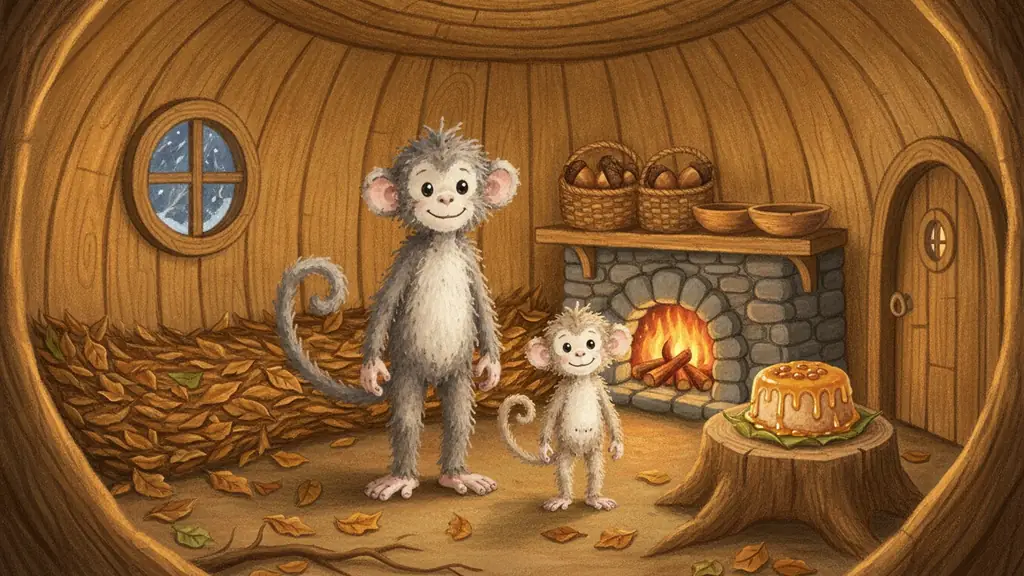
Mr. Monkey looked at the honey cake. He had gone out in the storm. He had been tumbled into a snowdrift. He was SO hungry. His tummy made a big loud noise, GRRRRRRUMBLE, so loud that Daddy Monkey looked around to see if it was the wind.
“Hee hee hee!” went Mr. Monkey. “That was my tummy!”
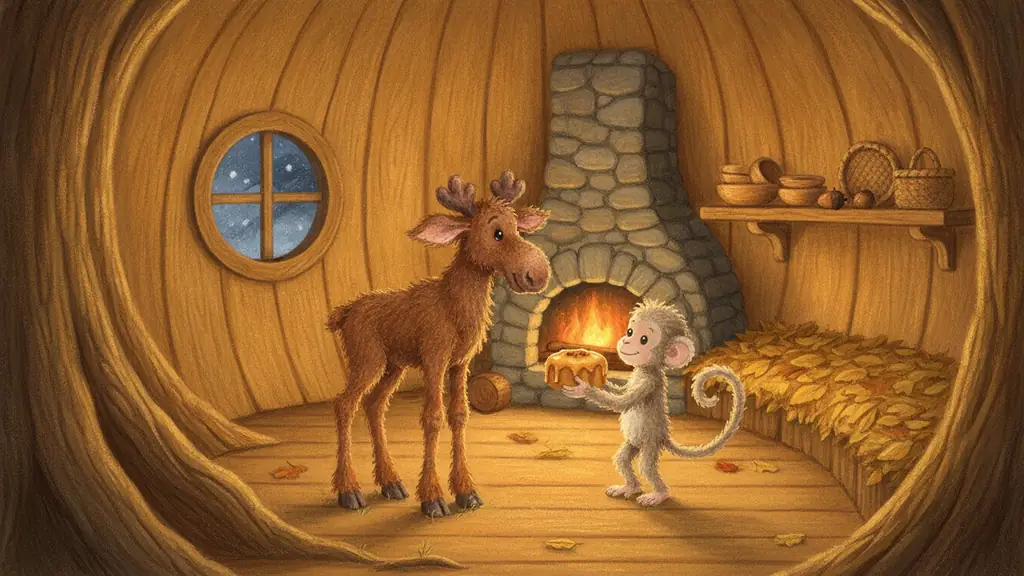
He wanted that honey cake so much.
But then he looked at Mr. Moose, shivering in his blanket. Mr. Moose, who hadn’t wanted to go out at all. Who went anyway. Who carried the whole woodpile on his head.
Mr. Monkey wanted to. But he wouldn’t.
He picked up the honey cake and gave it to Mr. Moose. “You carried the woodpile,” he said.
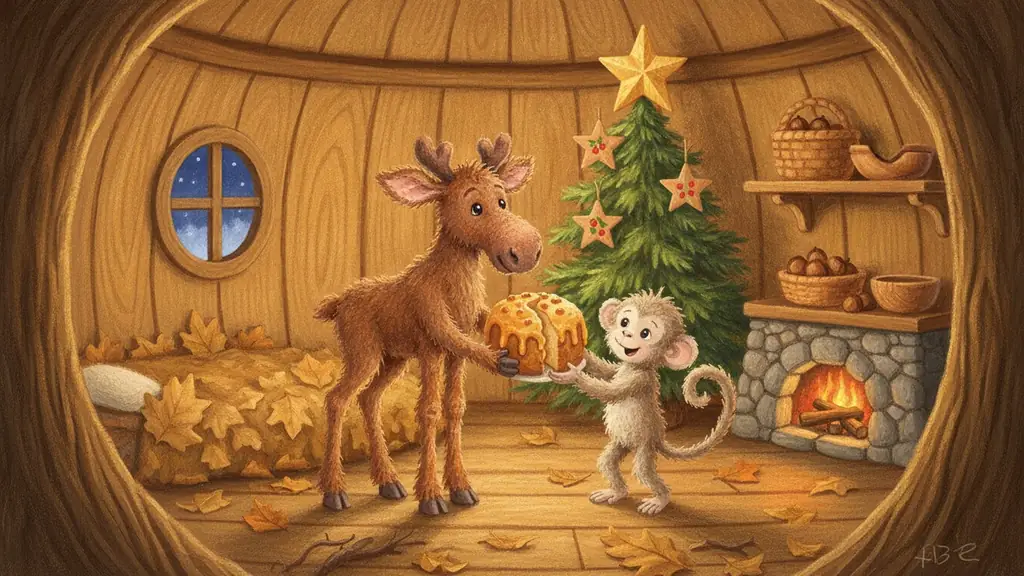
His tummy growled again. GRRRUMBLE.
“Your tummy doesn’t agree,” said Mr. Moose.
“My tummy can wait,” said Mr. Monkey.
Mr. Moose looked at the honey cake. Then he broke it right in half and gave the bigger half back.
That night, by the fire, the families painted little gold stars and hung them up near the top of the pine, under the big star.
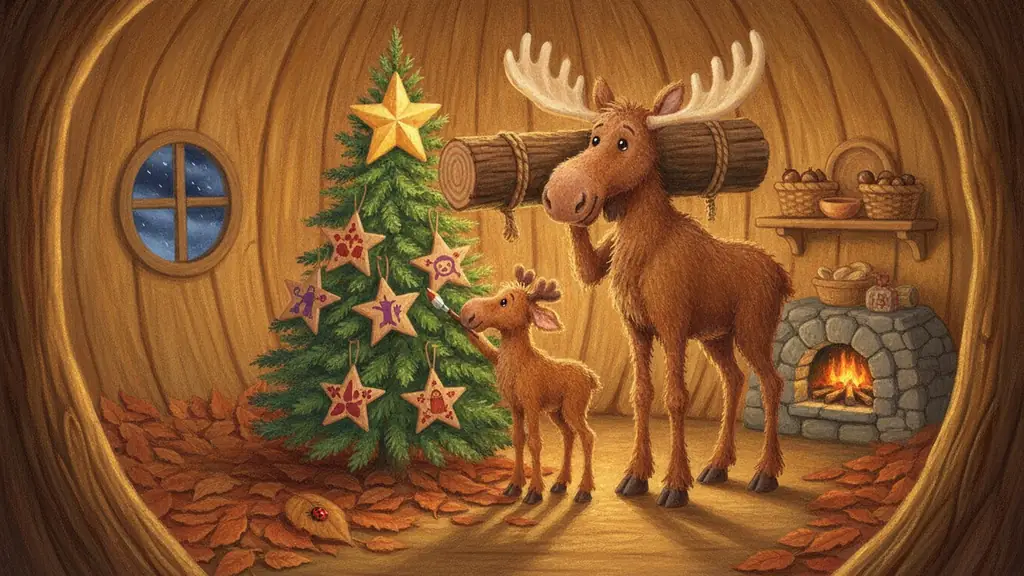
“Paint somebody in your house,” said Mama Moose, “who did something hard for you this year, even when they didn’t want to.”
Mr. Moose painted Daddy Moose on the front, with a log on each shoulder. On the back, he painted Daddy Moose going out into the storm first, every time, before anybody else had to.
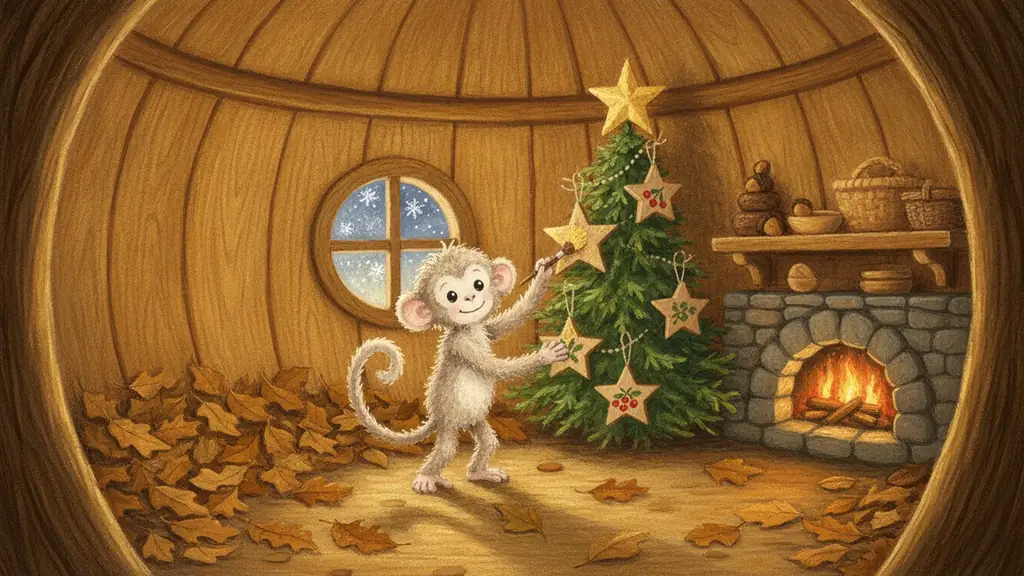
Mr. Monkey painted Mama Monkey, who had stayed up three whole nights when he had a sore throat in the fall, singing to him even though she was tired. He gave her ears that were extra big, so she could hear him.
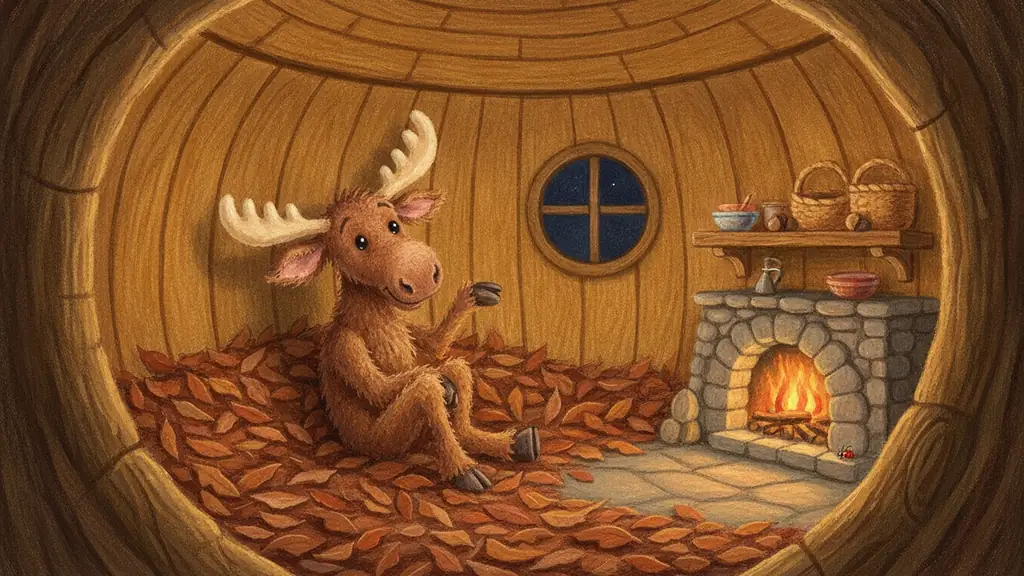
“What a day!” said Mr. Moose, all tucked in. “A big storm came, and the fire got small. Mr. Monkey called me a scaredy-moose, and he said sorry, and I forgave him.
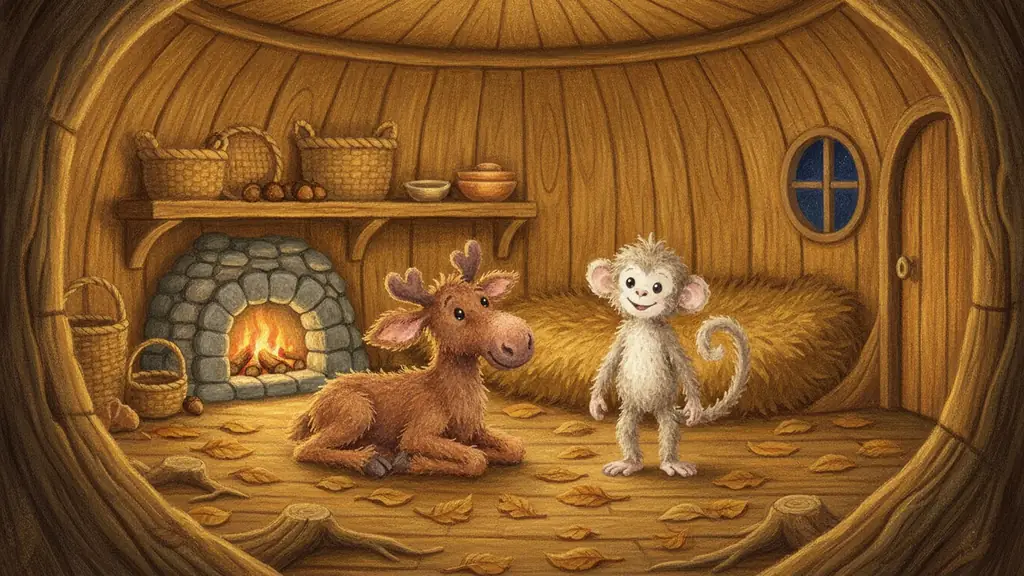
I didn’t want to go out, but I did. Mama made me into a scarf with antlers. I ate a mouthful of storm. Mr. Monkey got stuck upside down in a snowdrift, and I was a walking woodpile. Mr. Monkey gave me the last honey cake, even though his tummy said no.”
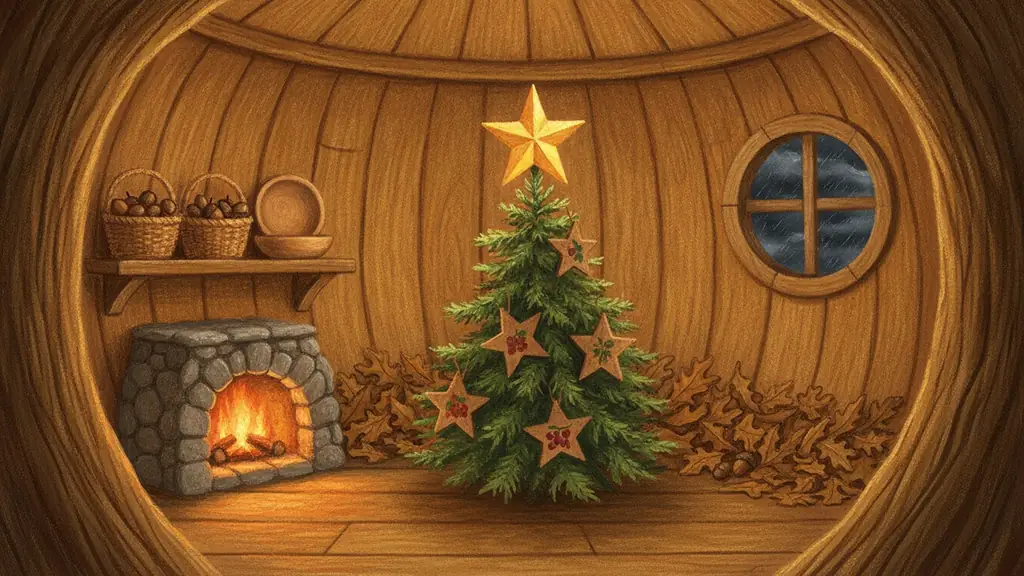
Mr. Monkey whistled, and Mr. Moose hummed, and together they sang:
We are better together,
Moose and Monkey forever.
And all night long, the storm howled around the Moose home, while inside, the fire burned big and warm, and the gold star at the top of the little pine caught every flicker of it.